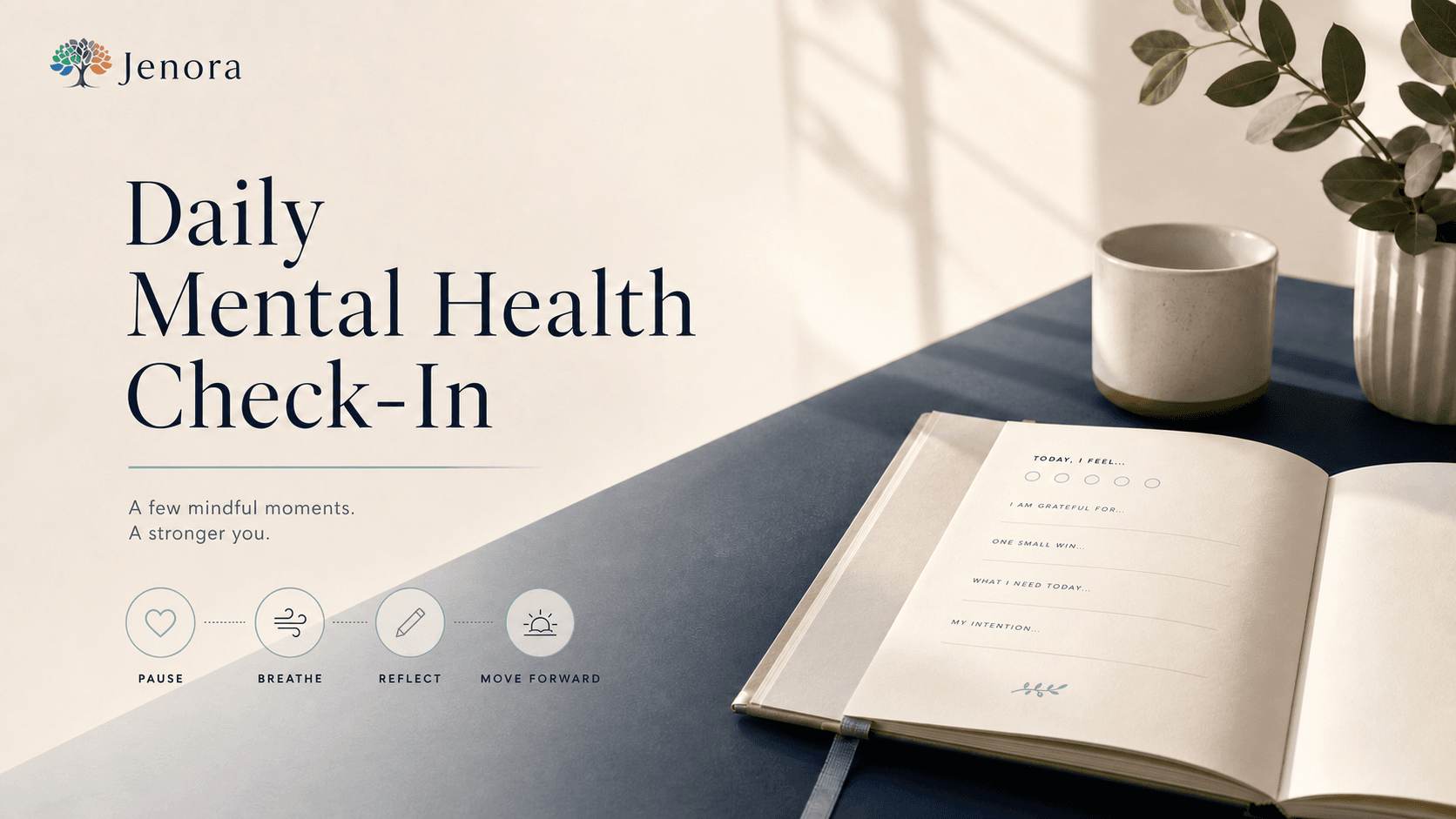
La mayoría de las personas no notan su salud mental en tiempo real. La notan después, cuando duermen peor, tienen menos paciencia o todo empieza a sentirse más difícil de lo habitual. Para entonces, el patrón ya lleva un tiempo formándose.
Un chequeo diario de salud mental es una forma de detectarlo antes. No tiene que ser complicado. De hecho, la mejor versión suele ser breve, constante y honesta.
Por qué ayuda hacer un chequeo
La salud mental cambia de forma lo bastante gradual como para que sea fácil no darse cuenta, especialmente cuando la vida está ocupada. Unos días de mal sueño, más irritabilidad o saltarte tus rutinas habituales pueden no parecer gran cosa por separado. Pero, juntas, pueden señalar estrés, desconexión o agotamiento que merecen atención.
Un chequeo breve te da una referencia. En lugar de preguntarte: "¿Cómo estoy en general?", te preguntas: "¿Qué es cierto hoy?"
Eso importa porque observar con claridad lleva a tomar mejores decisiones. Cuando puedes nombrar lo que está pasando, se vuelve más fácil responder antes de que el día se te vaya de las manos.
Qué notar
No necesitas una evaluación formal. Basta con hacer un repaso simple de algunas áreas:
- ¿Cómo está mi estado de ánimo en este momento?
- ¿Cómo está mi nivel de energía?
- ¿Cómo se siente mi cuerpo?
- ¿Qué pensamientos siguen apareciendo?
- ¿Qué necesito más hoy?
Algunos días la respuesta será: "Estoy bien". Otros días puede ser: "Estoy cansado, tenso y evitando a la gente". Ambas respuestas son útiles. El objetivo no es forzar una conclusión. Es decir la verdad con suficiente anticipación como para poder usarla.
Un formato útil
Si quieres que el hábito se mantenga, hazlo pequeño. Un chequeo de un minuto puede funcionar mejor que una consigna larga de reflexión que dejas de hacer después de tres días.
Prueba esto:
- Califica tu estado de ánimo del 1 al 5.
- Nombra una emoción.
- Nombra una señal corporal.
- Nombra una cosa que te ayudaría hoy.
Puede sonar casi demasiado simple, pero lo simple suele ser lo que hace que un hábito sea sostenible. Con el tiempo, la repetición se vuelve más útil que cada nota individual.
Por qué importa en la recuperación
Para las personas en recuperación o que están trabajando en cambiar conductas, un chequeo no es solo autocuidado. Es una señal de alerta temprana.
El estrés, el aislamiento, el bajo estado de ánimo, los problemas de sueño y el cansancio emocional pueden hacer más difícil mantenerte alineado con tu plan. Un chequeo diario te ayuda a notar cuándo estás pasando de "un día difícil" a "un patrón más difícil".
Ese es exactamente el tipo de conciencia que Jenora está diseñada para apoyar: no un automonitoreo perfecto, sino suficiente claridad para actuar antes.
Qué hacer con la información
El chequeo solo se vuelve útil cuando te lleva a algún lugar.
Si notas que no estás bien, elige una respuesta:
- Descansar
- Buscar apoyo
- Comer algo
- Salir a caminar
- Reducir los estímulos por un rato
- Revisar tu plan
La acción correcta no tiene que ser dramática. Los pequeños ajustes suelen ser más efectivos que las grandes promesas.
Un objetivo mejor que "sentirse bien"
El objetivo de un chequeo no es sentirte bien todos los días. Eso no es realista, y no es el estándar de una vida saludable.
El objetivo es mantenerte informado. Cuando sabes qué está pasando dentro de ti, puedes tomar mejores decisiones sobre qué hacer después.
Esa es una medida más honesta del bienestar que el estado de ánimo por sí solo.