Centro de Aprendizaje · /es/recursos
Empieza con lo que estás enfrentando y elige el siguiente paso útil
El Centro de Aprendizaje de Jenora organiza recursos de recuperación, salud mental y apoyo práctico alrededor de necesidades reales. Los formatos siguen disponibles, pero ya no son el punto de partida.
Empieza aquí
¿Con qué necesitas ayuda?
Estos son grupos públicos de temas. El contenido conserva temas internos más específicos para búsqueda, recursos relacionados, rutas y crecimiento futuro.
Navegación secundaria
Refinar por formato
Los formatos ayudan cuando la necesidad ya está clara. No son la arquitectura principal.
Mostrando 69 recursos
Urge Surfing: cómo atravesar un deseo intenso (o cualquier impulso abrumador) sin pelear con él
Cuando aparece un deseo intenso, un impulso o una ola de malestar, la reacción suele ser pelear con eso, distraerse o ceder. Esta guía presenta una cuarta opción, basada en urge surfing y enfoques de aceptación: atravesarlo con apoyo y curiosidad.
Mejor para
Útil cuando alguien necesita apoyo práctico para atravesar deseos intensos, impulsos o momentos de malestar sin actuar de inmediato.
Ruta
Volver a casa después de rehab
Una ruta secuenciada formada con recursos existentes. Cada paso conserva su URL pública actual.
Paso 1 · Comprender
¿Qué pasa el primer fin de semana después de salir de rehabilitación?
See what the first weekend home usually looks like, so nothing catches you off guard.
Abrir pasoPaso 2 · Preparar
Lista de verificación de Jenora para las primeras 72 horas en casa
Walk through the first 72 hours with a simple checklist.
Abrir pasoPaso 3 · Planificar
Planificador de Jenora para mi primera semana en casa
Plan mornings, daytime, and evenings for the week ahead.
Abrir pasoPaso 4 · Conectar
Mi plan de apoyo y seguridad de Jenora
Decide now who and what will help if things get hard.
Abrir pasoPaso 5 · Reflexionar
Revisión de Jenora de mi primera semana
Look back at the first week and adjust without judging yourself.
Abrir pasoPaso 6 · Continuar
Encontrar tu ritmo después de la rehabilitación
Keep building a routine that can actually hold up.
Abrir pasoExplora la serie Entender la adicción
Una secuencia clara de siete partes sobre lo que cambia en el cerebro durante la adicción, por qué los cravings pueden sentirse tan fuertes y cómo la responsabilidad puede existir sin vergüenza.
¿Enfermedad o elección?
Una introducción clara a la adicción como una condición del cerebro sin quitar la responsabilidad, empezando por la pieza intermedia que falta entre enfermedad y elección.
El cerebro de supervivencia
Cómo el cerebro de supervivencia, más antiguo, usa la dopamina para marcar lo que importa, motivar la acción y recordar cómo volver a acercarse a ello.
Cuando el sistema queda secuestrado
Por qué la adicción empieza con el aprendizaje de la recompensa: el cerebro responde al tamaño y la fiabilidad de una señal, no al significado moral del hecho.
Por qué el subidón se desvanece
Cómo las subidas repetidas de dopamina llevan al cerebro a adaptarse, por qué el subidón se desvanece y cómo consumir para sentirse bien puede convertirse en consumir para sentirse normal.
La alarma del craving
Cómo un nivel de base bajo, el querer activado por señales y la expectativa de alivio pueden convertir el craving en una alarma aprendida y urgente.
Dos caminos
Una metáfora basada en la neurociencia sobre la recuperación: la vieja autopista sigue ahí, pero el camino nuevo se fortalece con el uso repetido.
Lo que esto significa para ti
El artículo final de la serie: cómo la biología explica la atracción sin eliminar la responsabilidad, y por qué la culpa puede apuntar hacia la reparación mientras la vergüenza empuja a esconderse.
Explora la serie de significado y propósito
Una secuencia de cinco partes sobre significado, propósito, importancia y lo que puede venir después de sobrevivir cuando la vida vuelve a pedir dirección.
¿Qué le da sentido a la vida?
Un marco para entender el sentido a través de la coherencia, el propósito y la trascendencia, y por qué el sentido suele venir de formar parte de una historia que no es del todo nuestra.
Cuando Has Perdido Tu Sentido de Propósito
Una guía para recuperar el sentido de propósito mediante decisiones pequeñas, conexión y acciones alineadas con lo que importa.
Darle sentido a tu experiencia
Una forma práctica de separar lo que ocurrió de lo que concluiste sobre ello, y de decidir qué conservar, qué reconsiderar y qué construir a partir de ahí.
Ser parte de la historia de otra persona
Una reflexión sobre cómo la conexión, la contribución y los límites pueden dar sentido a nuestra vida y a la de otras personas.
¿Qué viene después de sobrevivir?
Pasar del afrontamiento y la protección hacia la identidad, el rumbo, la conexión y una vida más plena cuando sobrevivir deja de ser la única tarea.
Explore the Understanding Depression Series
An eight-part plain-language series about what depression is, how it affects the brain, body, motivation, and identity, and how recovery can be rebuilt through evidence-based support and small steps.
Parte 1: ¿Qué es la depresión? Entender que es más que tristeza
Una introducción en lenguaje claro a la depresión como una condición de salud frecuente y tratable que afecta el estado de ánimo, el cuerpo, el pensamiento y la percepción.
Parte 2: El cerebro deprimido: entender qué cambia — y por qué la recuperación es posible
Una explicación accesible de cómo la depresión afecta las redes cerebrales, el sistema de recompensa, las hormonas del estrés y la neuroplasticidad.
Parte 3: Cómo la depresión cambia la forma en que sientes, piensas y vives: entender los efectos ocultos de la depresión
Una guía sobre los efectos ocultos de la depresión y por qué los cambios en el pensamiento, las emociones, la conducta y la conexión son síntomas, no fallas personales.
Parte 4: Tratamientos basados en la evidencia para la depresión: la recuperación es posible — y hay muchas formas de lograrla
Un panorama de los caminos de recuperación de la depresión, incluidos la terapia cognitivo-conductual, la activación conductual, la medicación, los hábitos de vida, el apoyo y la autocompasión.
Parte 5: Síntomas más allá de la tristeza: cómo la depresión afecta la mente, el cuerpo y la vida cotidiana
Una guía centrada en los síntomas sobre las muchas formas en que la depresión puede aparecer en el ánimo, el pensamiento, el cuerpo, el sueño, el apetito, la conducta y la identidad.
Parte 6: Habilidades prácticas para vivir con depresión: las pequeñas acciones pueden generar grandes cambios
Una guía práctica sobre pasos pequeños, activación conductual, hábitos diarios, movimiento, autocuidado y cómo cuestionar la voz de la depresión.
Parte 7: Mantenerse bien y prevenir recaídas: la recuperación es una práctica, no un destino
Una guía de prevención de recaídas en la recuperación de la depresión, con señales tempranas de alerta, zonas verde-amarilla-roja, hábitos protectores, tropiezos y planificación del apoyo.
Parte 8: Tu historia no ha terminado: esperanza, sentido y vida después de la depresión
Una guía sobre la vida después de la depresión, con reflexiones sobre identidad, valores, relaciones, esperanza y sentido.
Explora la serie sobre amor y expectativas
Una serie de dos partes sobre amor, expectativas, límites y la diferencia entre cuidar a alguien y construir tu vida alrededor de esa persona.
¿Cómo defines el amor?
Una definición práctica del amor basada en el bienestar, la aceptación y la libertad, y por qué amar a alguien no siempre significa compartir tu vida con esa persona.
Amor sin contrato
Por qué algunas personas permanecen en relaciones que ya no les convienen, cómo la expectativa convierte el amor en espera y qué significa volver a tu propia vida.
Explora la serie de reflexión
Una serie de seis partes sobre aprender de los días difíciles, notar el progreso silencioso y convertir patrones en próximos pasos más amables y útiles.
¿Reflexión o rumiación?
Una guía práctica para notar cuándo la reflexión se convierte en rumiación y cómo volver a un pensamiento más claro y útil.
¿Qué puedes aprender de un día difícil?
Una reflexión guiada para aprender de un día difícil sin convertirlo en un juicio sobre ti ni borrar el progreso alcanzado.
Explore the Understanding Anxiety Series
An eight-part plain-language series about what anxiety is, how it affects the mind and body, why it can feel so convincing, and how recovery grows through evidence-based skills and small daily steps.
Parte 1: ¿Qué es la ansiedad y por qué ocurre?
Una introducción clara a la ansiedad como sistema de alarma protector, incluida la diferencia entre miedo y ansiedad, y por qué el cerebro puede responder a la incertidumbre como si fuera peligro.
Parte 2: Reconocer los síntomas de la ansiedad
Una guía práctica sobre cómo la ansiedad puede afectar los pensamientos, las emociones, la conducta y el cuerpo, y por qué sus síntomas pueden sentirse tan físicos.
Parte 3: Por qué la ansiedad se siente tan real: entender el ciclo de la ansiedad
Una explicación sencilla del ciclo de ansiedad, la evitación, las conductas de seguridad y cómo el cerebro aprende poco a poco que está a salvo mediante nuevas experiencias.
Parte 4: Comprender los diferentes tipos de trastornos de ansiedad
Un panorama de patrones frecuentes de trastornos de ansiedad y de lo que comparten: sobreestimar el peligro, subestimar la capacidad de afrontamiento y aprender algo nuevo.
Parte 5: Cómo afecta la ansiedad al cuerpo: por qué los síntomas físicos se sienten tan reales
Una explicación centrada en el cuerpo sobre los síntomas de ansiedad, las hormonas del estrés, la conexión intestino-cerebro y cómo su interpretación puede hacer que las sensaciones asusten.
Parte 6: Tratamientos para la ansiedad basados en la evidencia: ¿qué funciona de verdad?
Un panorama equilibrado de tratamientos y apoyos para la ansiedad, como la TCC, la terapia de exposición, la ACT, la atención plena, los medicamentos, los hábitos y los pasos pequeños y repetidos.
Parte 7: Estrategias prácticas de autoayuda: habilidades que puedes empezar a usar hoy
Estrategias prácticas para la ansiedad: hacer una pausa, respirar, usar técnicas de anclaje, cuestionar pensamientos, reducir la evitación, crear rutinas y enfocarte en lo que importa.
Parte 8: Vivir más allá de la ansiedad: la recuperación consiste en construir una vida, no en pelear con el miedo
El artículo final de la serie: la recuperación como construcción de una vida más amplia, actuar desde tus valores, pedir ayuda y seguir adelante un paso pequeño a la vez.
Explora la biblioteca
Recursos recientes del Centro de Aprendizaje
Preparado para el volumen actual y para crecer sin agregar más ruido arriba.
Basado en evidencia
Valores y crecimiento
La Búsqueda de Autodescubrimiento: descubre los valores que realmente impulsan tus decisiones
Una búsqueda interactiva, breve y gratuita que te ayuda a nombrar los valores que realmente guían tus decisiones en este momento, no los que crees que deberías tener. Responde 10 preguntas rápidas basadas en escenarios y obtén tus resultados al instante.
Mejor para
Útil para obtener una lectura rápida y honesta de lo que más te importa ahora, antes de decidir en qué trabajar a continuación.
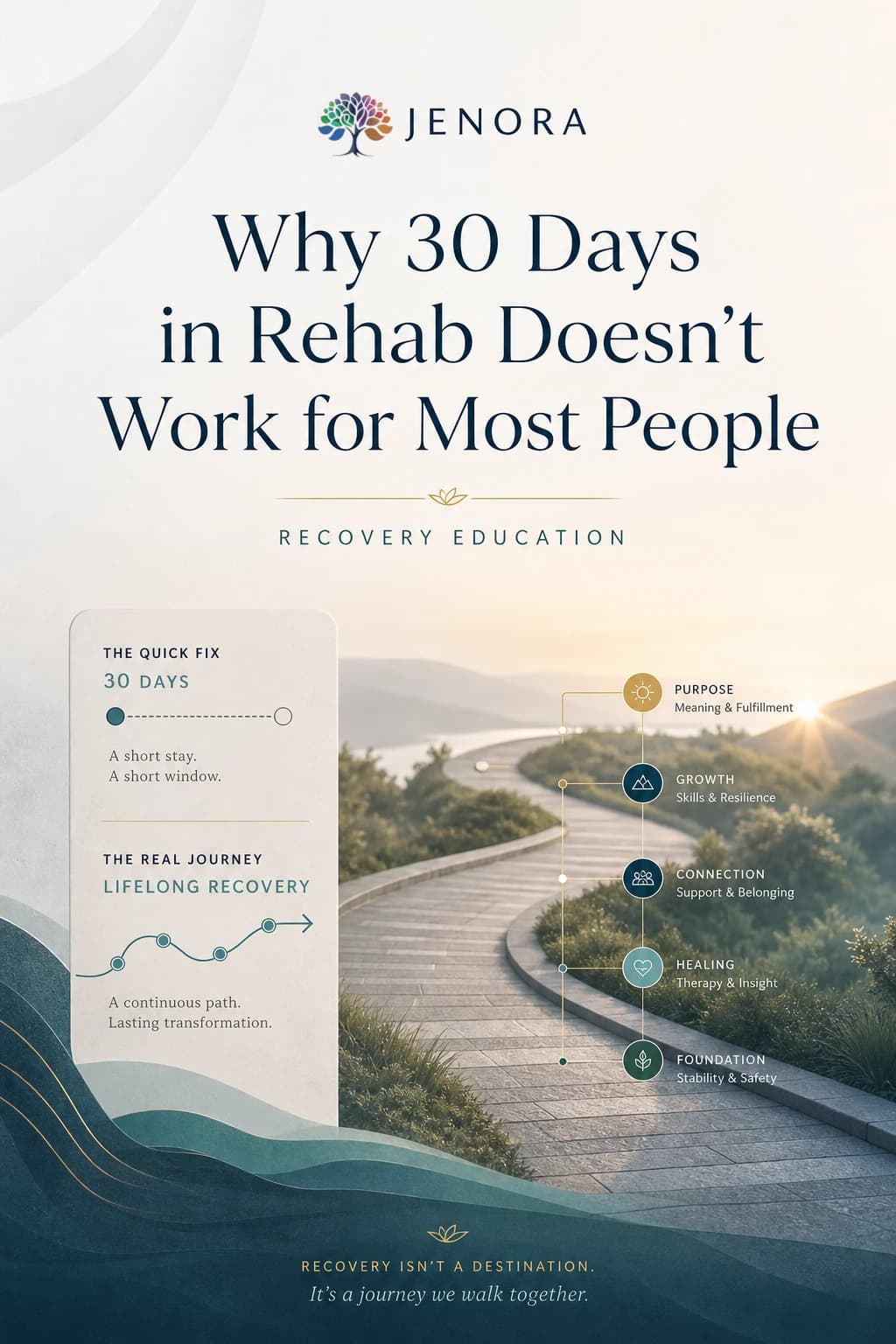
Por qué 30 días en rehabilitación no funcionan para la mayoría de las personas
Un análisis más realista del tratamiento, la continuidad de los cuidados y por qué la recuperación duradera suele requerir más que un programa breve.
Mejor para
Ayuda a personas, familias y profesionales a tener expectativas más realistas sobre el tratamiento, el seguimiento y el apoyo continuo.

¿Enfermedad o elección?
Una introducción clara a la adicción como una condición del cerebro sin quitar la responsabilidad, empezando por la pieza intermedia que falta entre enfermedad y elección.
Mejor para
Útil para quien intenta entender si la adicción es una enfermedad, una elección o algo más matizado.
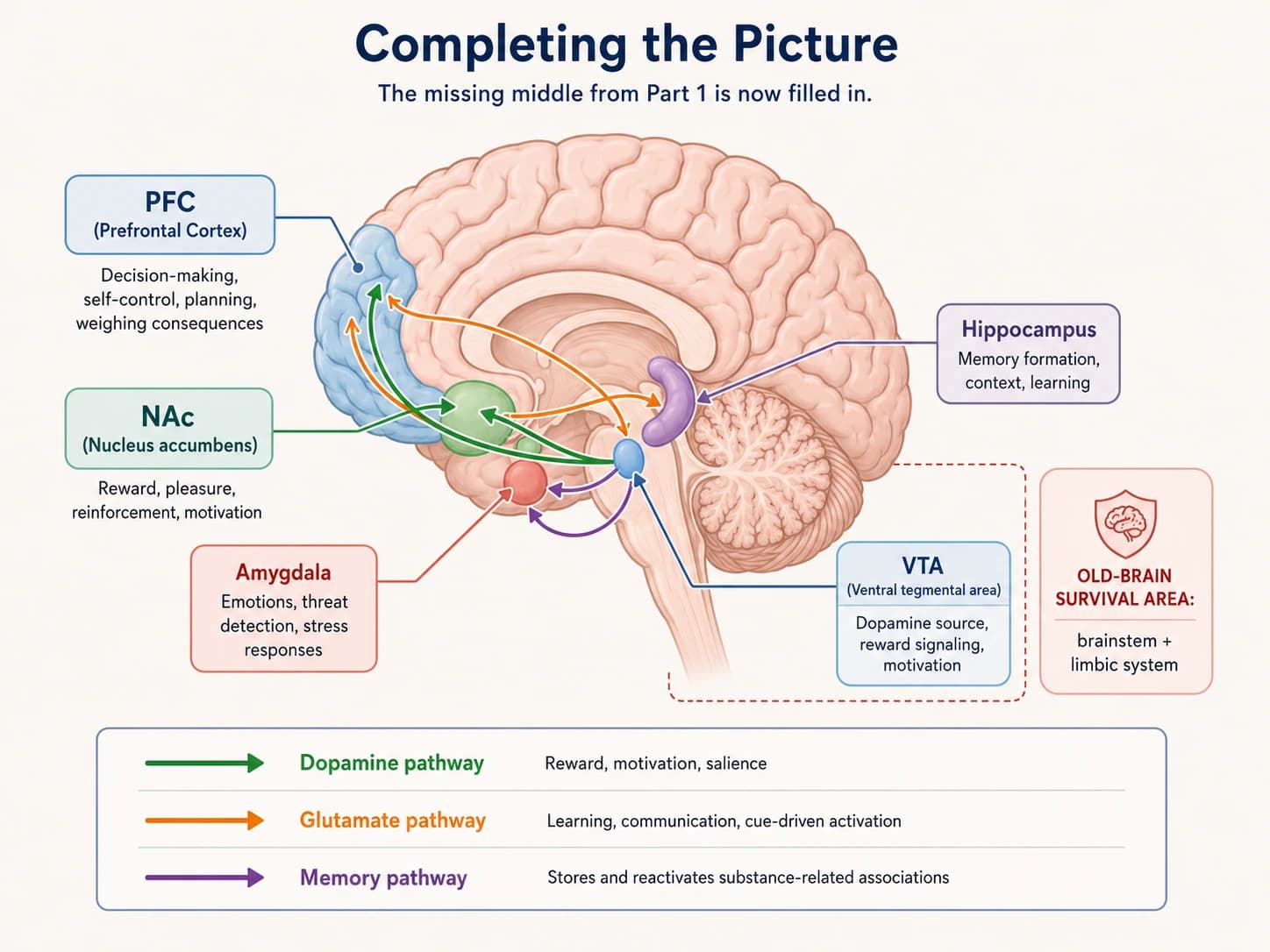
El cerebro de supervivencia
Cómo el cerebro de supervivencia, más antiguo, usa la dopamina para marcar lo que importa, motivar la acción y recordar cómo volver a acercarse a ello.
Mejor para
Útil para entender cómo el cerebro de supervivencia usa la dopamina para impulsar la motivación, la memoria y la conducta repetida.
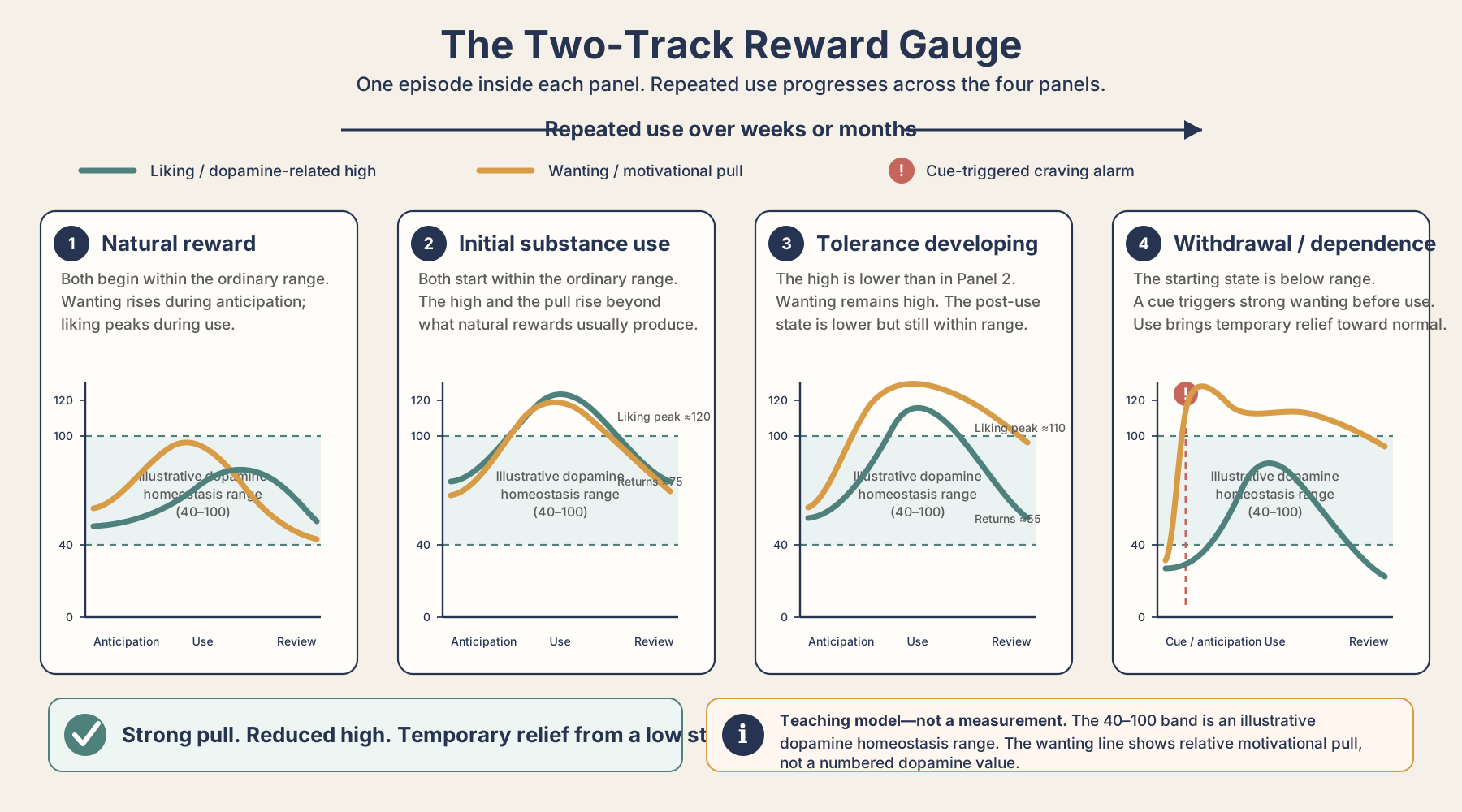
Cuando el sistema queda secuestrado
Por qué la adicción empieza con el aprendizaje de la recompensa: el cerebro responde al tamaño y la fiabilidad de una señal, no al significado moral del hecho.
Mejor para
Útil para entender cómo señales de recompensa inusualmente fuertes pueden enseñar al cerebro a darle demasiada importancia a una sustancia.
Por qué el subidón se desvanece
Cómo las subidas repetidas de dopamina llevan al cerebro a adaptarse, por qué el subidón se desvanece y cómo consumir para sentirse bien puede convertirse en consumir para sentirse normal.
Mejor para
Útil para entender la tolerancia, la abstinencia y por qué el intento del cerebro de recuperar el equilibrio puede dificultar la recuperación.
La alarma del craving
Cómo un nivel de base bajo, el querer activado por señales y la expectativa de alivio pueden convertir el craving en una alarma aprendida y urgente.
Mejor para
Útil para entender los cravings sin caer en la vergüenza ni suponer que la persona simplemente dejó de importarle.

Dos caminos
Una metáfora basada en la neurociencia sobre la recuperación: la vieja autopista sigue ahí, pero el camino nuevo se fortalece con el uso repetido.
Mejor para
Útil para entender la recuperación como el proceso de construir un camino nuevo mientras el anterior todavía se siente familiar.
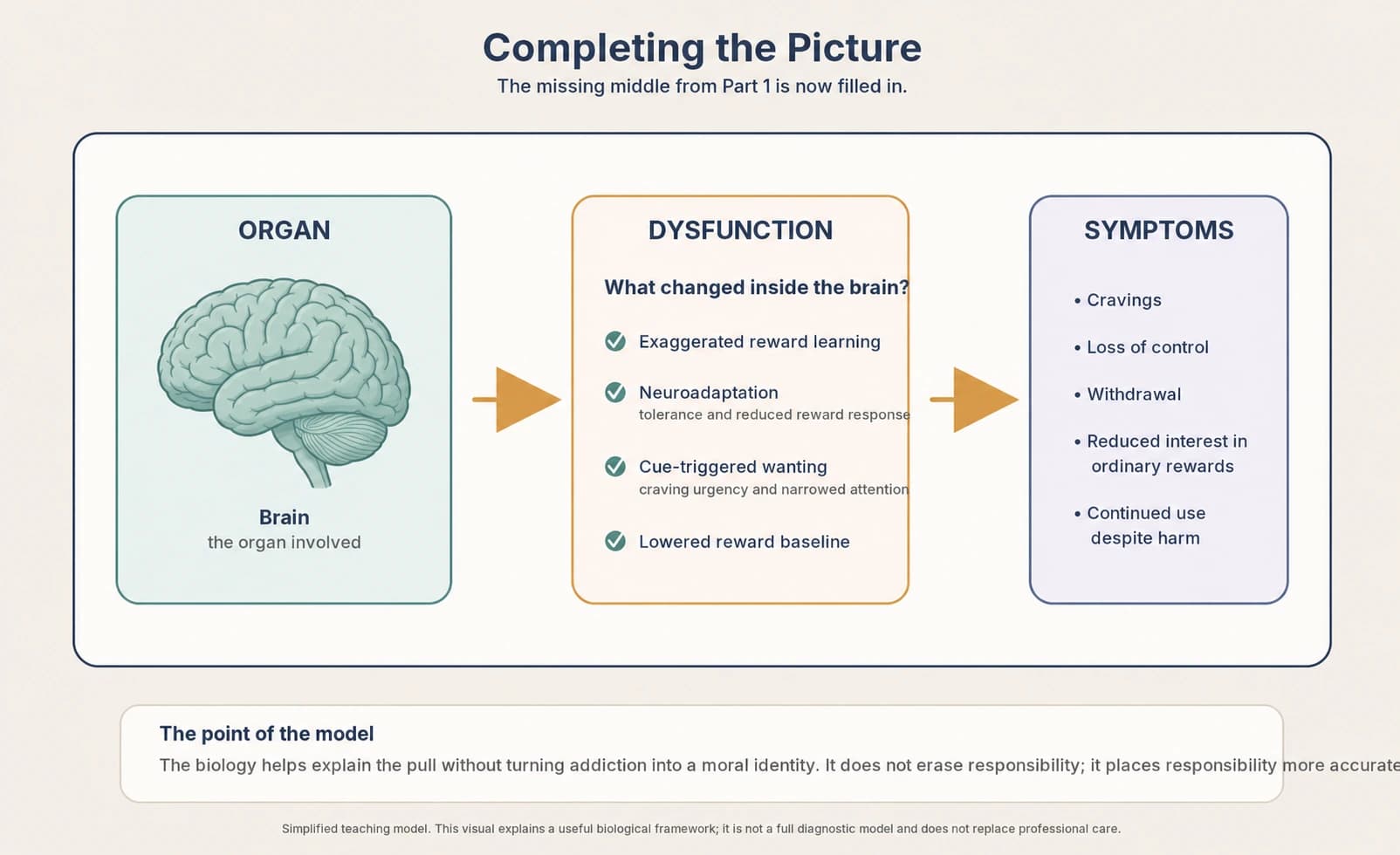
Lo que esto significa para ti
El artículo final de la serie: cómo la biología explica la atracción sin eliminar la responsabilidad, y por qué la culpa puede apuntar hacia la reparación mientras la vergüenza empuja a esconderse.
Mejor para
Útil para separar la biología de la vergüenza y mantener la responsabilidad y los próximos pasos en el lugar correcto.
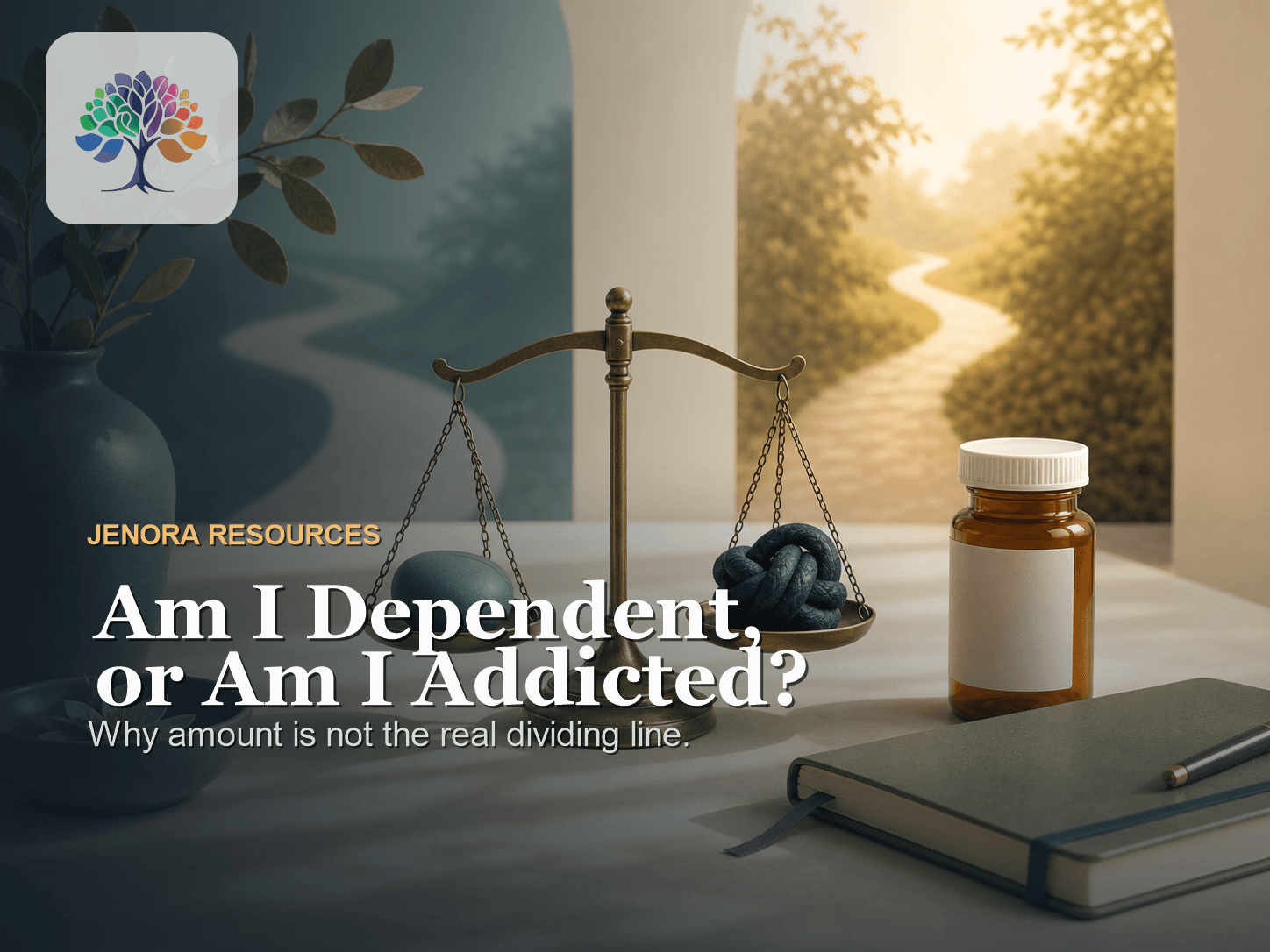
¿Soy dependiente o soy adicto?
Una guía en lenguaje claro sobre la diferencia entre tolerancia, dependencia física y adicción, y por qué las consecuencias y el control importan más que la cantidad.
Mejor para
Útil para distinguir entre tolerancia, dependencia física y adicción sin basarse solo en la cantidad o la frecuencia.
Lectura guiada
Reflexión y autoconocimiento
El método de reinicio "Ancla + 1": cómo corregir el rumbo sin vergüenza cuando te desvías
Por qué las reformas de todo o nada fracasan y cómo elegir un ancla fundamental te devuelve un impulso constante cuando te desvías.
Mejor para
Útil para quien se ha desviado de su rutina y busca una forma sin culpa ni presión de corregir el rumbo.

Ser parte de la historia de otra persona
Una reflexión sobre cómo la conexión, la contribución y los límites pueden dar sentido a nuestra vida y a la de otras personas.
Mejor para
Útil para explorar cómo apoyar a otras personas sin perder de vista tus propias necesidades y límites.

Chequeo diario de salud mental: un hábito simple para tener claridad emocional
Un hábito sencillo para notar emociones, necesidades y patrones diarios con más claridad y menos juicio.
Mejor para
Útil para crear una práctica breve de reflexión diaria y decidir qué apoyo o cuidado necesitas.

Parte 1: ¿Qué es la depresión? Entender que es más que tristeza
Una introducción en lenguaje claro a la depresión como una condición de salud frecuente y tratable que afecta el estado de ánimo, el cuerpo, el pensamiento y la percepción.
Mejor para
Útil para entender la depresión como algo más que tristeza, incluido por qué aparece y por qué la recuperación es realista.
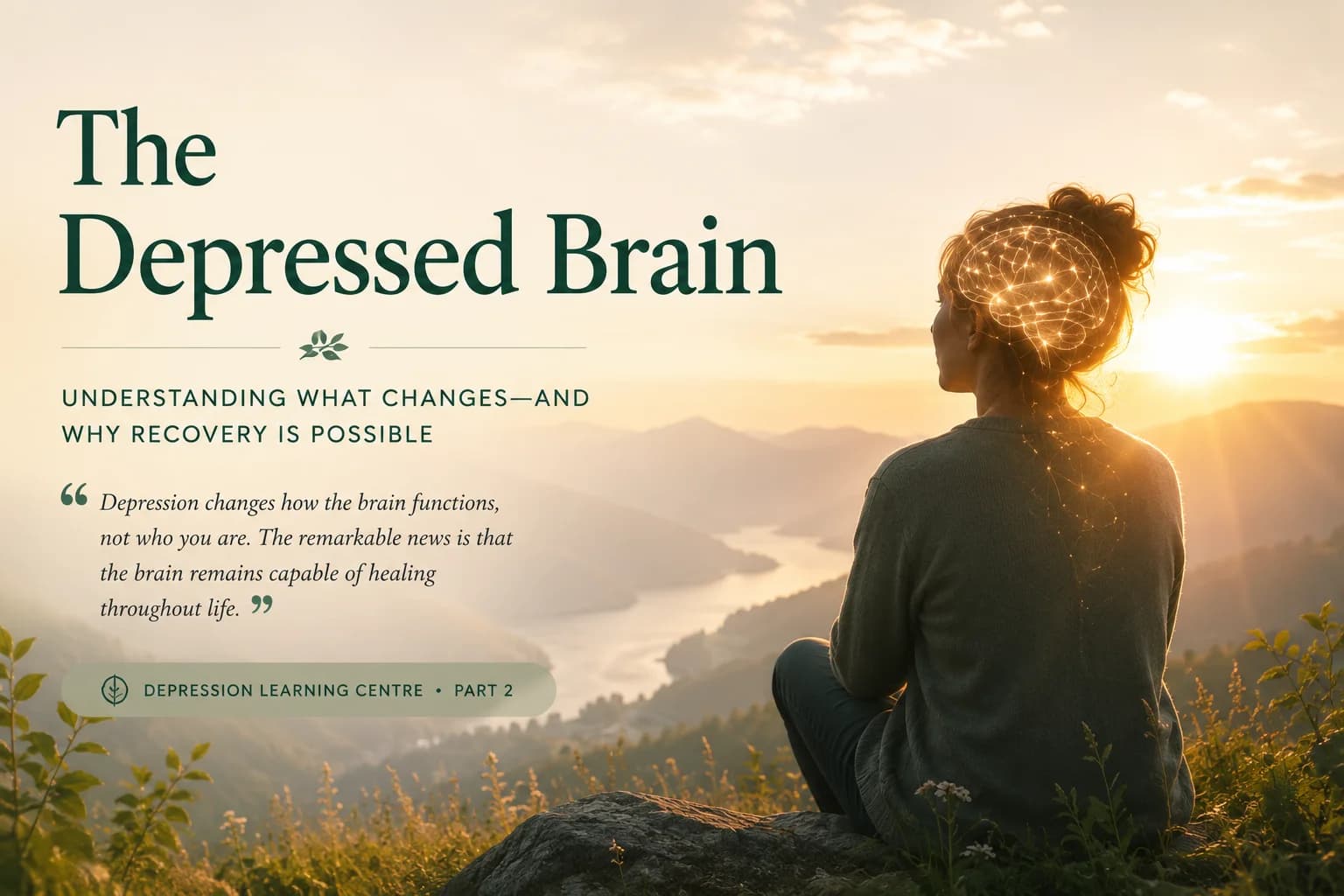
Parte 2: El cerebro deprimido: entender qué cambia — y por qué la recuperación es posible
Una explicación accesible de cómo la depresión afecta las redes cerebrales, el sistema de recompensa, las hormonas del estrés y la neuroplasticidad.
Mejor para
Útil para entender qué cambia en el cerebro deprimido y por qué la recuperación sigue siendo posible.
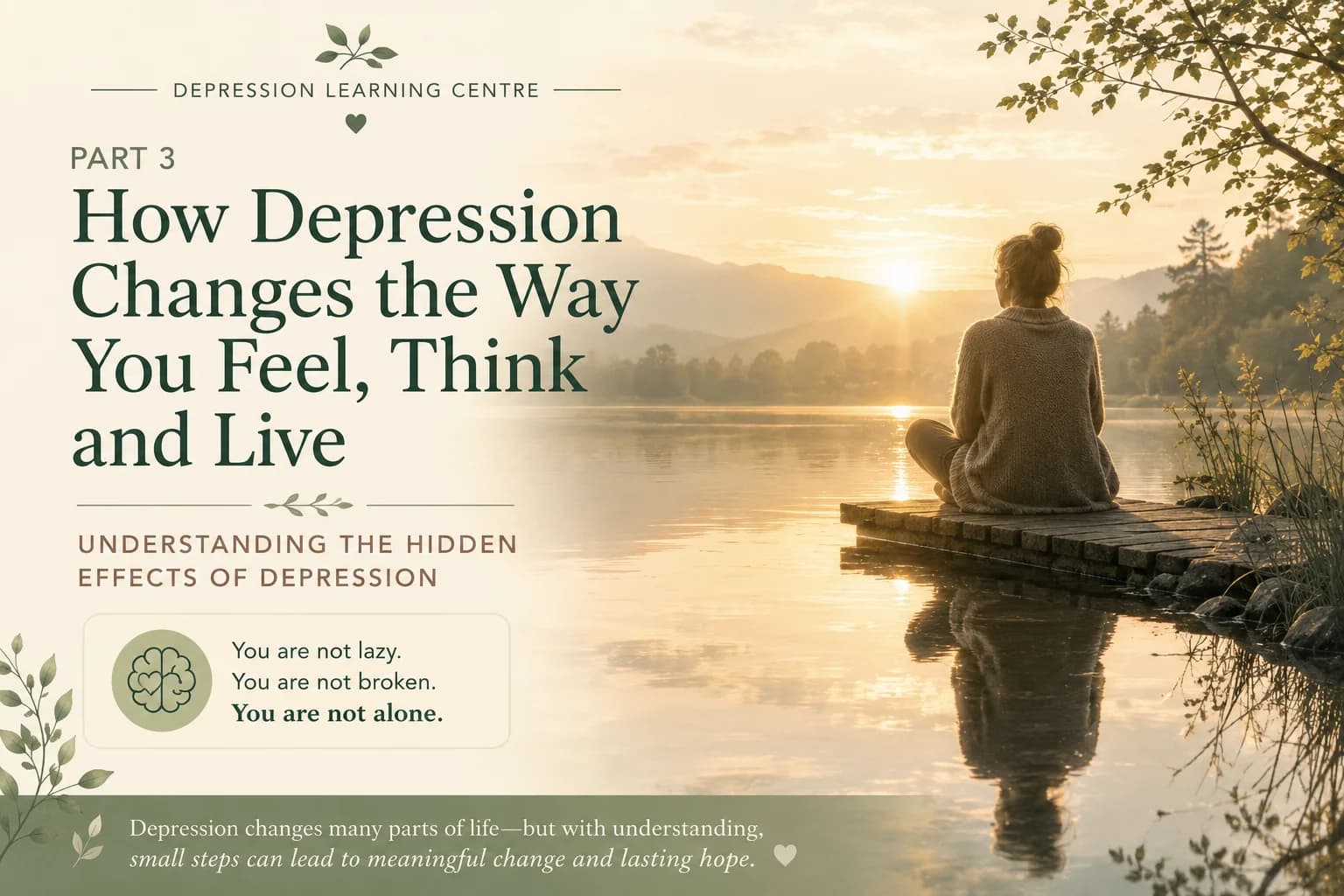
Parte 3: Cómo la depresión cambia la forma en que sientes, piensas y vives: entender los efectos ocultos de la depresión
Una guía sobre los efectos ocultos de la depresión y por qué los cambios en el pensamiento, las emociones, la conducta y la conexión son síntomas, no fallas personales.
Mejor para
Útil para reconocer cómo la depresión afecta los pensamientos, las emociones, la motivación, el cuerpo, las relaciones y la identidad.
Parte 4: Tratamientos basados en la evidencia para la depresión: la recuperación es posible — y hay muchas formas de lograrla
Un panorama de los caminos de recuperación de la depresión, incluidos la terapia cognitivo-conductual, la activación conductual, la medicación, los hábitos de vida, el apoyo y la autocompasión.
Mejor para
Útil para entender los tratamientos de la depresión basados en la evidencia: terapia, medicación, estilo de vida, conexión y autocompasión.

Parte 5: Síntomas más allá de la tristeza: cómo la depresión afecta la mente, el cuerpo y la vida cotidiana
Una guía centrada en los síntomas sobre las muchas formas en que la depresión puede aparecer en el ánimo, el pensamiento, el cuerpo, el sueño, el apetito, la conducta y la identidad.
Mejor para
Útil para entender los muchos síntomas de la depresión: emocionales, cognitivos, físicos, sexuales, conductuales y ocultos.

Parte 6: Habilidades prácticas para vivir con depresión: las pequeñas acciones pueden generar grandes cambios
Una guía práctica sobre pasos pequeños, activación conductual, hábitos diarios, movimiento, autocuidado y cómo cuestionar la voz de la depresión.
Mejor para
Útil para elegir pasos prácticos de recuperación cuando la motivación es baja y las tareas diarias se sienten demasiado grandes.
Parte 7: Mantenerse bien y prevenir recaídas: la recuperación es una práctica, no un destino
Una guía de prevención de recaídas en la recuperación de la depresión, con señales tempranas de alerta, zonas verde-amarilla-roja, hábitos protectores, tropiezos y planificación del apoyo.
Mejor para
Útil para mantenerse bien después de la depresión, reconocer señales tempranas de alerta, prevenir recaídas y construir un plan de bienestar.

Parte 8: Tu historia no ha terminado: esperanza, sentido y vida después de la depresión
Una guía sobre la vida después de la depresión, con reflexiones sobre identidad, valores, relaciones, esperanza y sentido.
Mejor para
Útil para pensar en la recuperación como algo más que sentirse mejor y reconocer posibilidades para seguir adelante.
¿Necesitas rehabilitación para dejar una sustancia?
Un marco práctico para decidir si necesitas supervisión médica, tratamiento residencial, apoyo ambulatorio u otro nivel de atención.
Mejor para
Útil para pensar en la seguridad médica, la reducción gradual, la desintoxicación, la atención ambulatoria y cuándo podría hacer falta un tratamiento residencial.
Lectura guiada
Salud mental y regulación
Desenmascaramiento emocional en la recuperación temprana: por qué las emociones se sienten tan intensas y cómo mantenerte con los pies en la tierra
Entiende por qué las emociones vuelven con tanta intensidad al inicio de la recuperación, cómo se recalibra el sistema nervioso y cómo practicar el anclaje sin vergüenza.
Mejor para
Útil cuando las emociones se sienten abrumadoras, intensas o impredecibles después de dejar las sustancias o hábitos de afrontamiento.
Encontrar tu ritmo después de la rehabilitación
Dejar el tratamiento suele significar pasar de un entorno muy organizado a la vida cotidiana.
Mejor para
Útil cuando ya pasaron los primeros días y estás creando una rutina que pueda sostenerte de verdad.

¿Cómo defines el amor?
Una definición práctica del amor basada en el bienestar, la aceptación y la libertad, y por qué amar a alguien no siempre significa compartir tu vida con esa persona.
Mejor para
Útil para quien atraviesa una relación difícil (con una pareja, un familiar o una amistad) y busca claridad sobre lo que el amor exige y lo que no.

Cómo afecta el sueño a la recuperación y a la salud mental
El sueño suele tratarse como un tema secundario, pero es parte de la base de la recuperación y de la salud mental. Cuando no está bien, todo lo demás se vuelve más difícil.
Mejor para
Ayuda a entender por qué el sueño es una habilidad central de la recuperación y no un asunto secundario.

Cómo regular las emociones sin sustancias
Muchas personas usan sustancias u otras conductas compulsivas para aliviar emociones demasiado intensas o difíciles de sostener. Eso no las hace débiles; suele significar que encontraron una forma rápida de reducir el dolor.
Mejor para
Útil cuando alguien necesita formas más saludables de atravesar emociones intensas.
Lectura guiada
Relaciones y apoyo
Entre sesiones: cómo dar seguimiento a tu progreso y aprovechar al máximo tus 50 minutos
Cómo cubrir las 167 horas entre citas, evitar el sesgo de recuerdo y compartir con tu terapeuta tu progreso a lo largo del tiempo.
Mejor para
Ayuda a las personas en terapia a registrar patrones significativos entre citas para aprovechar al máximo sus 50 minutos.

Amor sin contrato
Por qué algunas personas permanecen en relaciones que ya no les convienen, cómo la expectativa convierte el amor en espera y qué significa volver a tu propia vida.
Mejor para
Útil para quien sigue esperando que una relación se convierta en algo que no es y busca una forma más clara de salir de ese ciclo.

Darle sentido a tu experiencia
Una forma práctica de separar lo que ocurrió de lo que concluiste sobre ello, y de decidir qué conservar, qué reconsiderar y qué construir a partir de ahí.
Mejor para
Útil para quien siente que su vida ya no encaja con la historia que solía contar y quiere entender qué significó una experiencia sin justificarla ni revivirla.

Una copa pequeña
Un artículo personal e informado por la investigación sobre las mujeres, el trabajo invisible, la cultura del vino para madres y cómo una copa puede convertirse poco a poco en dependencia.
Mejor para
Útil para mujeres, madres, padres y personas cuidadoras que notan que beber pasó de ser un gusto a ser una forma de alivio.
Lectura guiada
Recuperación y adicción
Guía práctica de Urge Surfing: cómo atravesar cravings y olas de malestar en la vida diaria
Instrucciones paso a paso para usar un mapa corporal, la respiración y la desfusión cognitiva para atravesar los deseos intensos hasta que alcancen su punto máximo y pasen.
Mejor para
Una guía práctica paso a paso para atravesar deseos intensos, impulsos y malestar agudo en situaciones cotidianas.
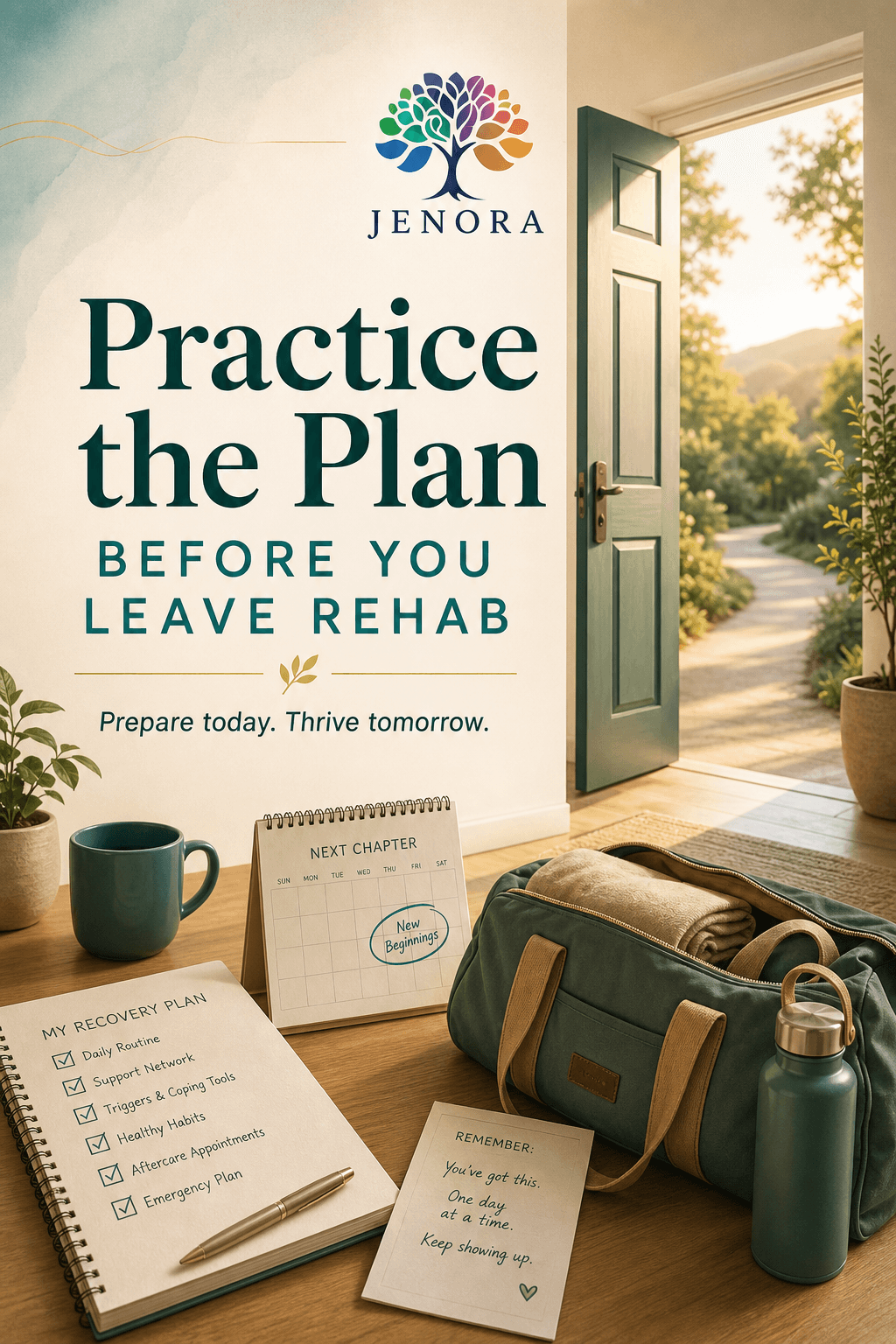
Practica el plan antes de salir de rehabilitación
Cerca del final del tratamiento, muchas personas elaboran un plan saludable de recuperación. Anotan cosas como:
Mejor para
Útil para quienes todavía están en tratamiento y quieren que su plan de recuperación funcione también al volver a casa.

¿Reflexión o rumiación?
Una guía práctica para notar cuándo la reflexión se convierte en rumiación y cómo volver a un pensamiento más claro y útil.
Mejor para
Útil para quien quiere distinguir entre la reflexión que ayuda y la rumiación que atrapa.
Lectura guiada
Recuperación y adicción
Los primeros 30 días en casa después de rehabilitación: qué esperar y cómo construir tu ritmo
Una guía completa para afrontar el impacto de la transición, las horas sin estructura y la creación de una rutina En Sintonía durante el primer mes en casa después de la rehabilitación.
Mejor para
Lectura esencial para quienes vuelven a casa desde un tratamiento residencial o atraviesan las primeras semanas de cuidados posteriores.

El poder del apoyo entre pares en la recuperación
La recuperación puede sentirse solitaria cuando se vive como una prueba privada de fuerza de voluntad. El apoyo entre pares cambia eso: recuerda que no eres la única persona que intenta hacer cambios difíciles.
Mejor para
Explica por qué el apoyo en la recuperación suele funcionar mejor cuando se comparte.

El papel de la familia en la recuperación
Una guía honesta sobre cómo las familias pueden apoyar la recuperación sin sobrepasar límites, y por qué su propio bienestar también cuenta.
Mejor para
Ayuda a las familias a entender cómo apoyar la recuperación sin sobrepasar límites.
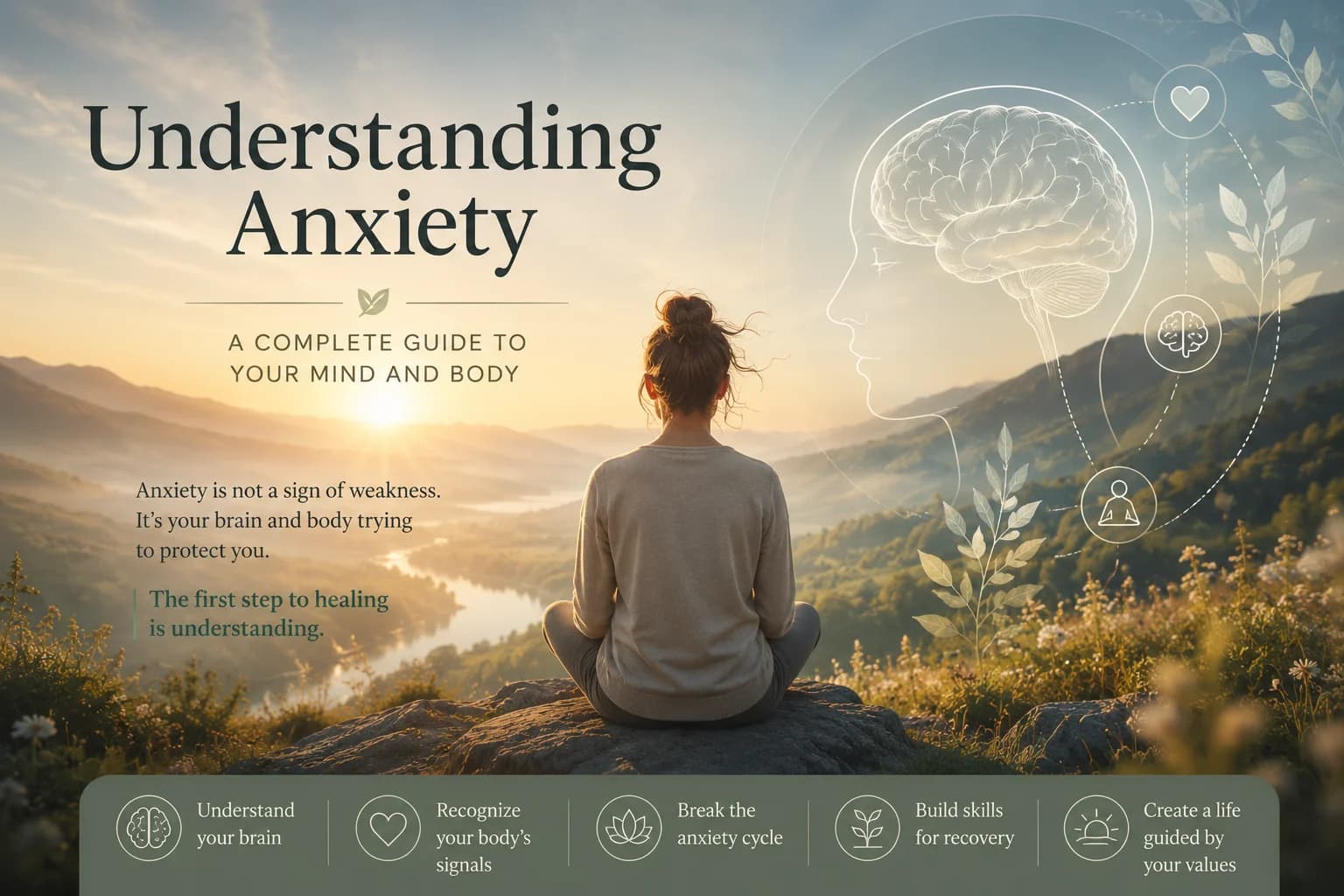
Parte 1: ¿Qué es la ansiedad y por qué ocurre?
Una introducción clara a la ansiedad como sistema de alarma protector, incluida la diferencia entre miedo y ansiedad, y por qué el cerebro puede responder a la incertidumbre como si fuera peligro.
Mejor para
Útil para entender qué es la ansiedad, por qué aparece y cómo el sistema de alarma del cerebro puede volverse demasiado protector.

Parte 2: Reconocer los síntomas de la ansiedad
Una guía práctica sobre cómo la ansiedad puede afectar los pensamientos, las emociones, la conducta y el cuerpo, y por qué sus síntomas pueden sentirse tan físicos.
Mejor para
Útil para reconocer síntomas emocionales, cognitivos, físicos y conductuales de ansiedad sin asumir que algo está mal contigo.
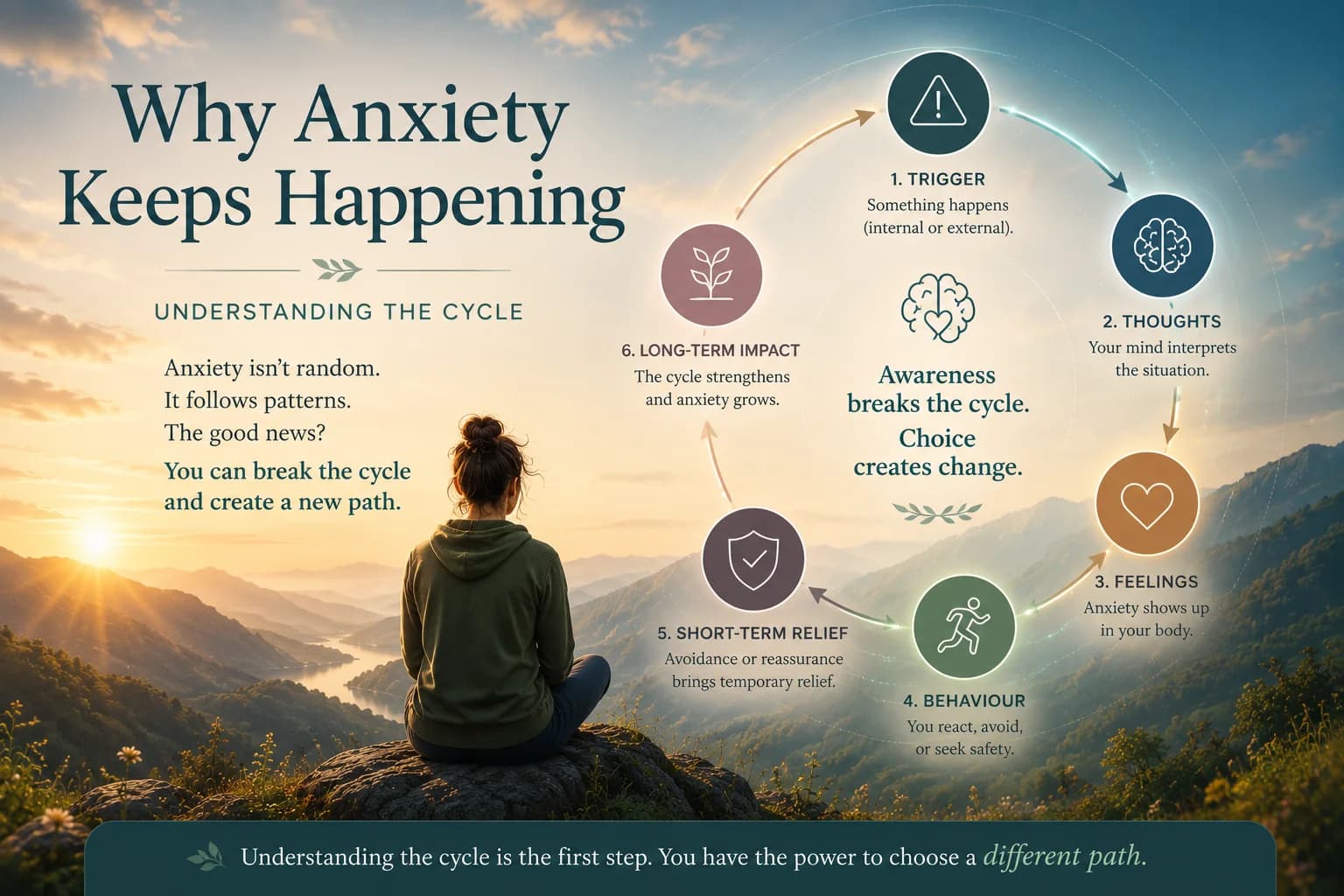
Parte 3: Por qué la ansiedad se siente tan real: entender el ciclo de la ansiedad
Una explicación sencilla del ciclo de ansiedad, la evitación, las conductas de seguridad y cómo el cerebro aprende poco a poco que está a salvo mediante nuevas experiencias.
Mejor para
Útil para entender por qué la ansiedad parece tan real y cómo evitar situaciones puede enseñar, sin querer, al cerebro a seguir teniendo miedo.
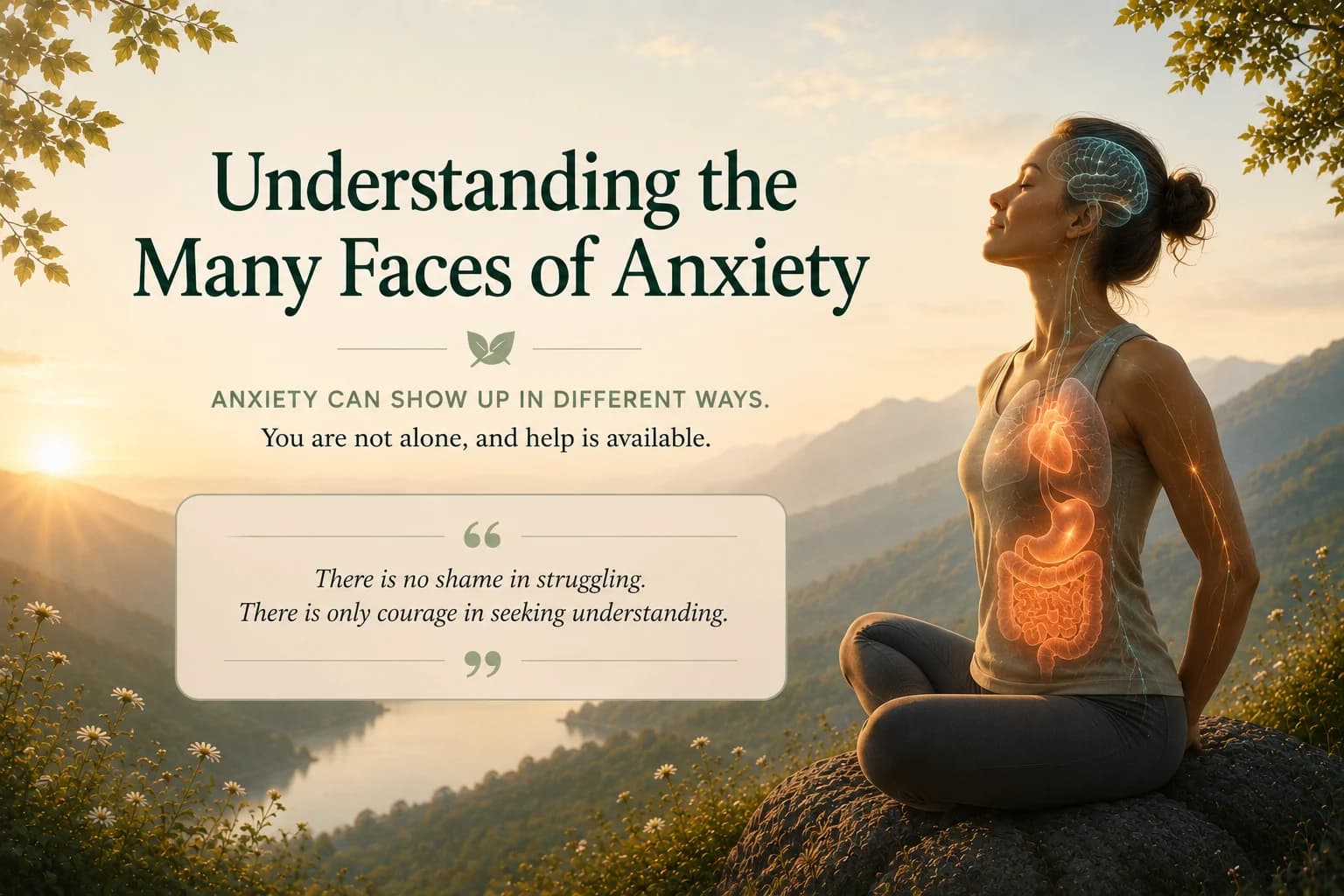
Parte 4: Comprender los diferentes tipos de trastornos de ansiedad
Un panorama de patrones frecuentes de trastornos de ansiedad y de lo que comparten: sobreestimar el peligro, subestimar la capacidad de afrontamiento y aprender algo nuevo.
Mejor para
Útil para comprender distintos patrones de ansiedad, como ansiedad generalizada, pánico, ansiedad social, ansiedad por la salud, fobias, ansiedad por separación y agorafobia.

Parte 5: Cómo afecta la ansiedad al cuerpo: por qué los síntomas físicos se sienten tan reales
Una explicación centrada en el cuerpo sobre los síntomas de ansiedad, las hormonas del estrés, la conexión intestino-cerebro y cómo su interpretación puede hacer que las sensaciones asusten.
Mejor para
Útil para entender las palpitaciones, la opresión en el pecho, los síntomas estomacales, los mareos, el hormigueo y otras sensaciones físicas de ansiedad.
Parte 6: Tratamientos para la ansiedad basados en la evidencia: ¿qué funciona de verdad?
Un panorama equilibrado de tratamientos y apoyos para la ansiedad, como la TCC, la terapia de exposición, la ACT, la atención plena, los medicamentos, los hábitos y los pasos pequeños y repetidos.
Mejor para
Útil para comparar apoyos para la ansiedad basados en evidencia, como TCC, terapia de exposición, ACT, atención plena, medicamentos y cambios de hábitos.

Parte 7: Estrategias prácticas de autoayuda: habilidades que puedes empezar a usar hoy
Estrategias prácticas para la ansiedad: hacer una pausa, respirar, usar técnicas de anclaje, cuestionar pensamientos, reducir la evitación, crear rutinas y enfocarte en lo que importa.
Mejor para
Útil para elegir estrategias sencillas de autoayuda para la ansiedad y practicarlas en la vida diaria.
Parte 8: Vivir más allá de la ansiedad: la recuperación consiste en construir una vida, no en pelear con el miedo
El artículo final de la serie: la recuperación como construcción de una vida más amplia, actuar desde tus valores, pedir ayuda y seguir adelante un paso pequeño a la vez.
Mejor para
Útil para pasar de luchar contra la ansiedad a construir una vida guiada por tus valores, que puede incluir el miedo sin ser gobernada por él.
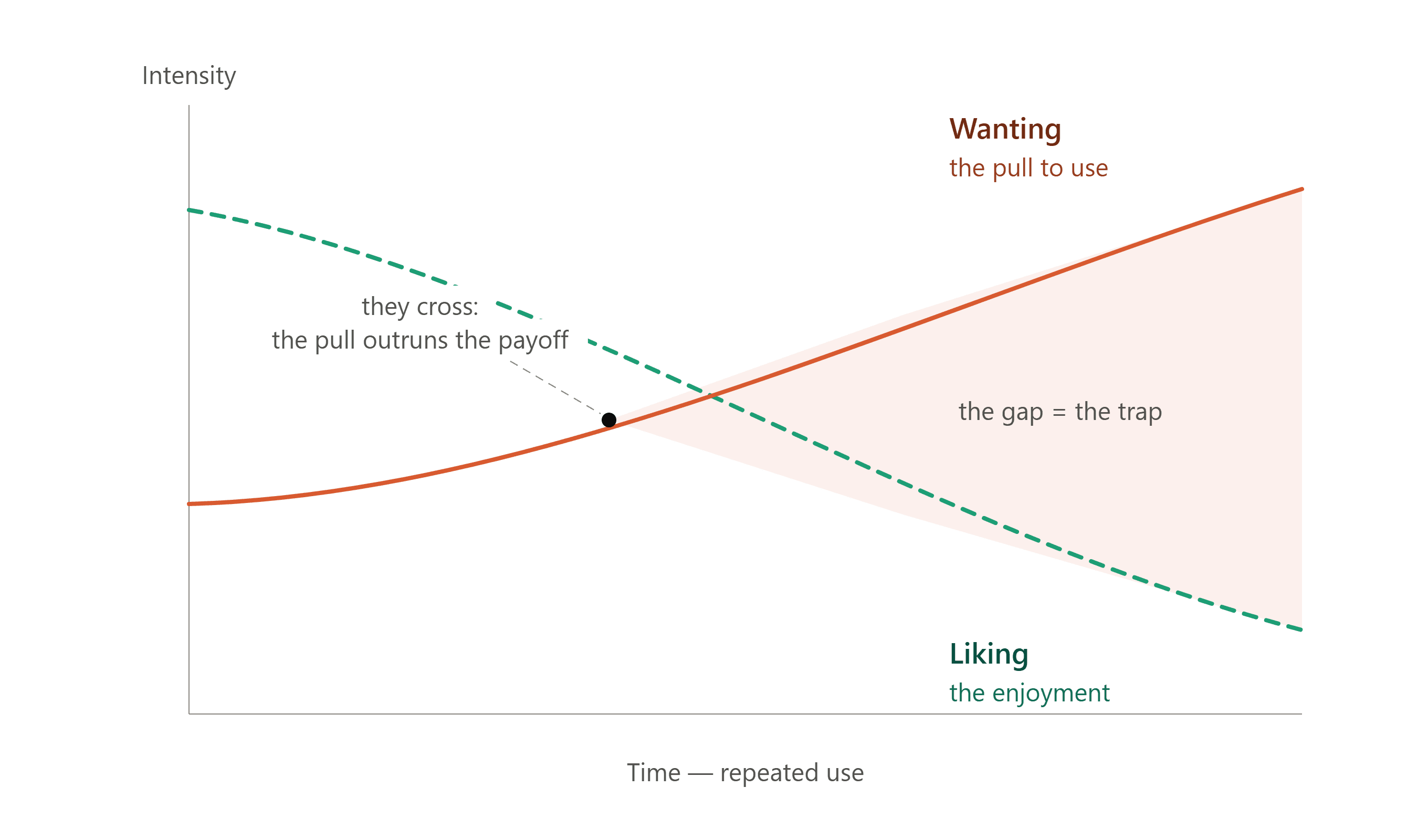
Por qué seguimos queriendo lo que ya no disfrutamos: el verdadero papel de la dopamina en la adicción
Por qué la dopamina impulsa la búsqueda de una sustancia más que el placer que produce, y cómo la diferencia entre querer y disfrutar ayuda a explicar los deseos intensos.
Mejor para
Útil para entender por qué los deseos pueden intensificarse aunque la sustancia ya no se disfrute, sin concluir que hay algo malo en ti.

¿Qué puedes aprender de un día difícil?
Una reflexión guiada para aprender de un día difícil sin convertirlo en un juicio sobre ti ni borrar el progreso alcanzado.
Mejor para
Útil para entender qué influyó en un día difícil, qué ayudó y qué pequeño ajuste podría servir la próxima vez.

¿Qué viene después de sobrevivir?
Pasar del afrontamiento y la protección hacia la identidad, el rumbo, la conexión y una vida más plena cuando sobrevivir deja de ser la única tarea.
Mejor para
Útil para quien se ha estabilizado tras un periodo difícil y se pregunta qué sigue, más allá de mantenerse a salvo.

¿Qué le da sentido a la vida?
Un marco para entender el sentido a través de la coherencia, el propósito y la trascendencia, y por qué el sentido suele venir de formar parte de una historia que no es del todo nuestra.
Mejor para
Útil para quien siente que tiene éxito pero se siente vacío, o busca un marco para entender qué hace que la vida tenga sentido.
¿Qué pasa el primer fin de semana después de salir de rehabilitación?
Dejar la rehabilitación puede ser una experiencia extraña.
Mejor para
Útil para quienes están en los primeros días después de dejar el tratamiento o acompañan a alguien que lo está.
Cuando la adicción afecta a toda la familia
Una guía compasiva sobre por qué la adicción afecta a toda la familia, cómo los seres queridos pueden cargar con estrés crónico y por qué también merecen apoyo para su recuperación.
Mejor para
Útil para parejas, madres, padres, hijos adultos y otros seres queridos que cargan con el estrés de la adicción en la familia.

Cuando Has Perdido Tu Sentido de Propósito
Una guía para recuperar el sentido de propósito mediante decisiones pequeñas, conexión y acciones alineadas con lo que importa.
Mejor para
Útil cuando alguien se siente sin rumbo y quiere explorar pasos concretos hacia una vida con más sentido.

¿Por qué le doy vueltas a todo?
Una guía honesta sobre por qué ocurre el exceso de pensamiento, cómo la ansiedad y el perfeccionismo pueden alimentarlo y qué ayuda a que la mente se calme.
Mejor para
Útil cuando tu mente da vueltas a las preocupaciones, repite conversaciones o persigue una certeza que en realidad no puedes obtener.
Por qué la recuperación se siente tan difícil (incluso cuando sabes que te está salvando la vida)
Un artículo honesto sobre por qué la recuperación puede sentirse aburrida, apagada y dolorosamente difícil, incluso cuando sabes que es lo adecuado para tu vida.
Mejor para
Útil para quienes están en recuperación, se sienten desanimados o sin energía y buscan una explicación más honesta de por qué el proceso puede ser tan difícil.
Por qué una recaída no significa fracaso
Una recaída puede sentirse devastadora, y también puede desatar una segunda ola de vergüenza que lleva a esconderse, abandonar o decidir que todo está arruinado.
Mejor para
Útil para replantear los tropiezos sin restar seriedad a la recaída.

Hoja de clarificación de límites
Una hoja imprimible para aclarar qué límites necesitas, notar cuándo se están cruzando y planear qué decir o hacer después.
Mejor para
Ideal para reflexionar sobre los límites que quieres fortalecer y practicar cómo nombrarlos con más claridad.
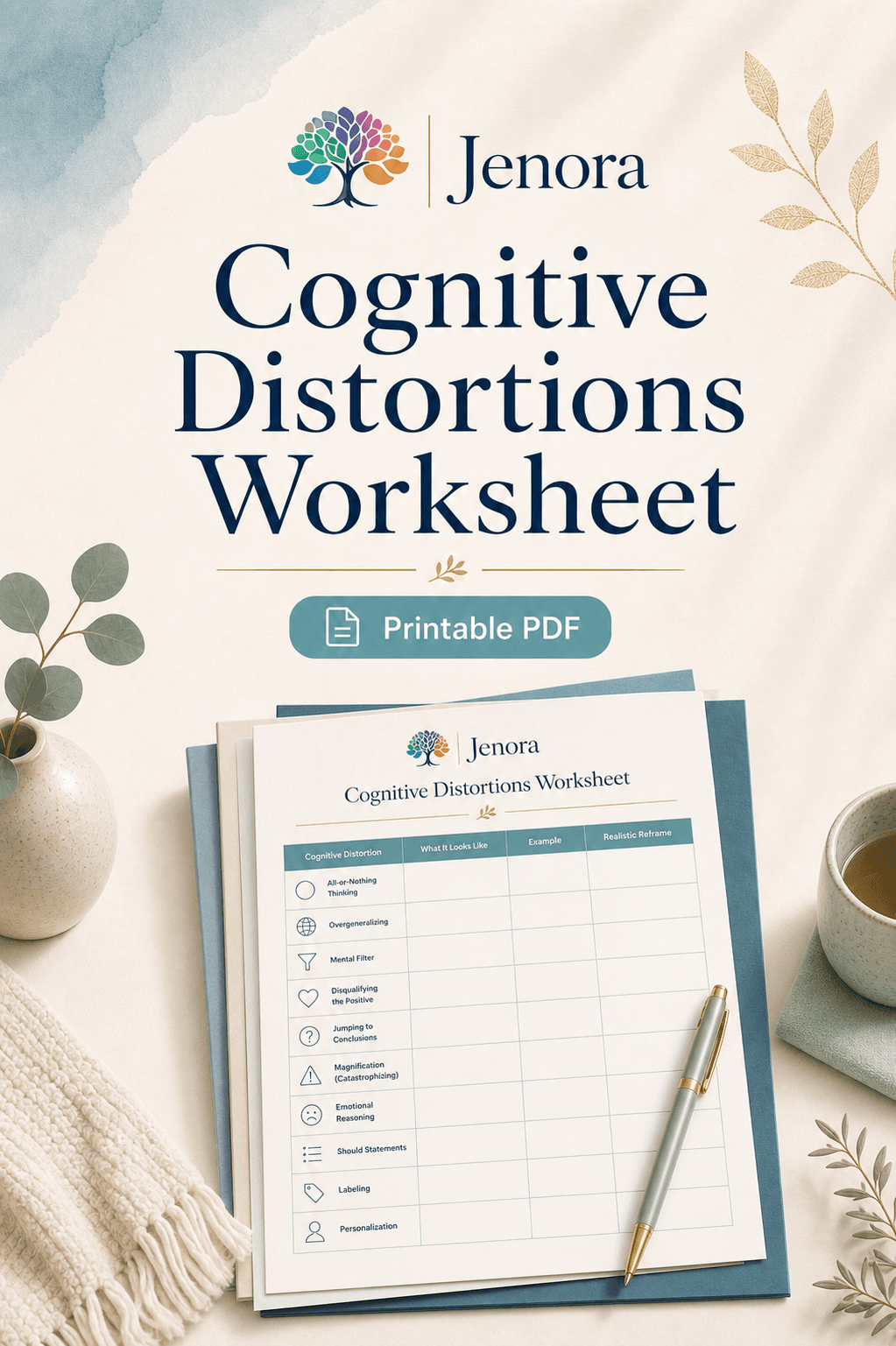
Hoja de distorsiones cognitivas
Una hoja imprimible para notar distorsiones cognitivas comunes y reformularlas en algo más realista.
Mejor para
Ideal para identificar patrones de pensamiento poco útiles y practicar una forma de hablarte con más equilibrio.

Lista de verificación de Jenora para las primeras 72 horas en casa
Una lista imprimible para volver a casa que cubre las primeras 72 horas después del tratamiento, incluido un plan de apoyo y seguridad y señales tempranas de alerta.
Mejor para
Ideal para las primeras 72 horas después de dejar el tratamiento: organizar apoyos, planificar el fin de semana y notar pronto las señales de alerta.

Folleto de Jenora: de sobrevivir a vivir
Una guía imprimible de una página que resume el paso de la supervivencia al crecimiento, con un breve ejercicio para elegir un siguiente paso pequeño.
Mejor para
Ideal como resumen de consulta rápida del paso de sobrevivir a crecer y para planear un siguiente paso pequeño.

Planificador de Jenora para mi primera semana en casa
Un planificador imprimible para organizar las mañanas, el día y las noches durante los primeros siete días después del tratamiento.
Mejor para
Ideal para planificar los primeros siete días en casa en bloques de mañana, día y noche.

Revisión de Jenora de mi primera semana
Una hoja imprimible para revisar la primera semana, notar qué ayudó, qué conviene ajustar y qué llevar a la semana siguiente.
Mejor para
Ideal para revisar tu primera semana en casa y ajustar el plan sin juzgarte.
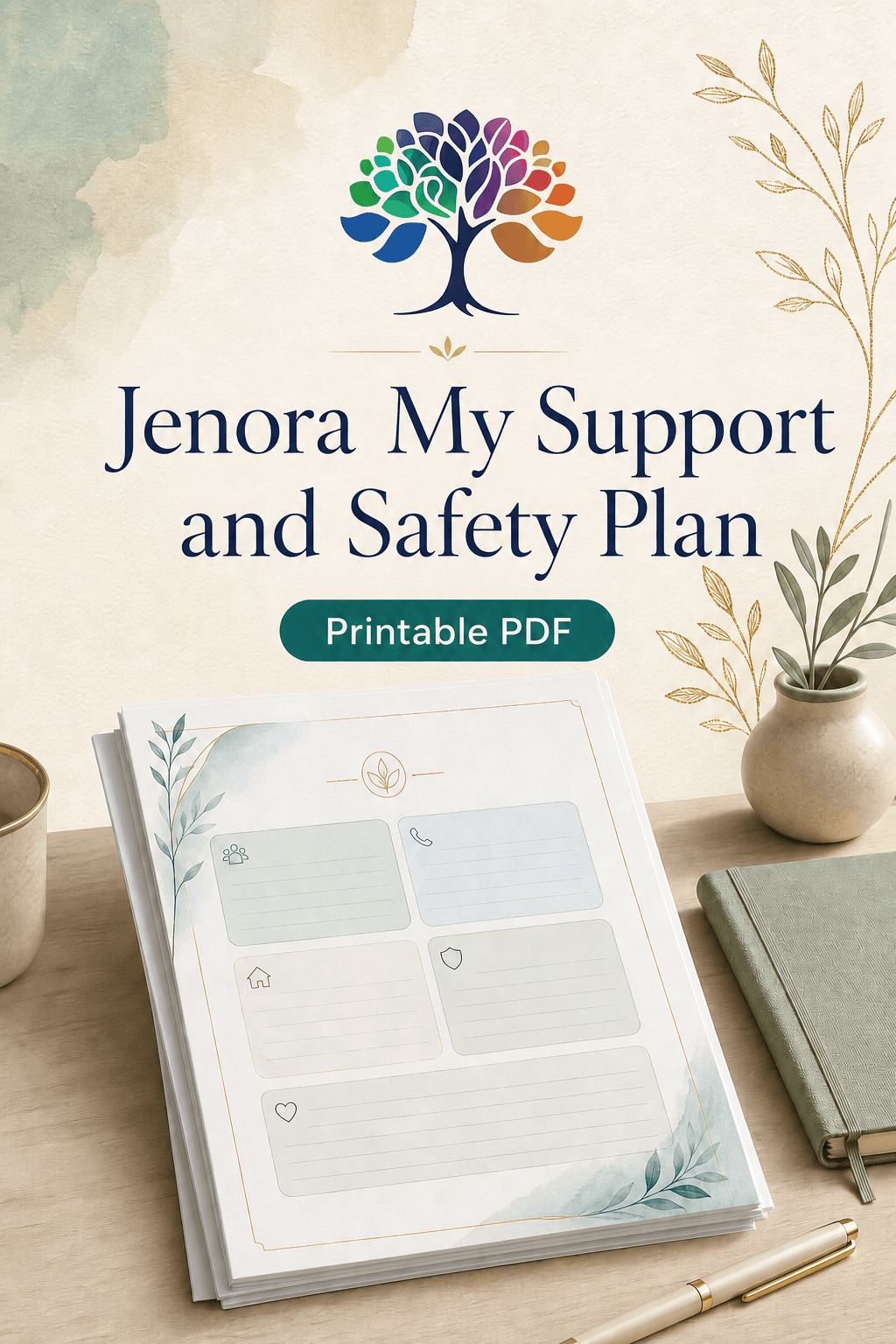
Mi plan de apoyo y seguridad de Jenora
Un plan imprimible de apoyo y seguridad que incluye señales de alerta temprana, respuestas planeadas y contactos de apoyo urgente.
Mejor para
Ideal para decidir con anticipación quién y qué te ayudará antes de que llegue un momento difícil.
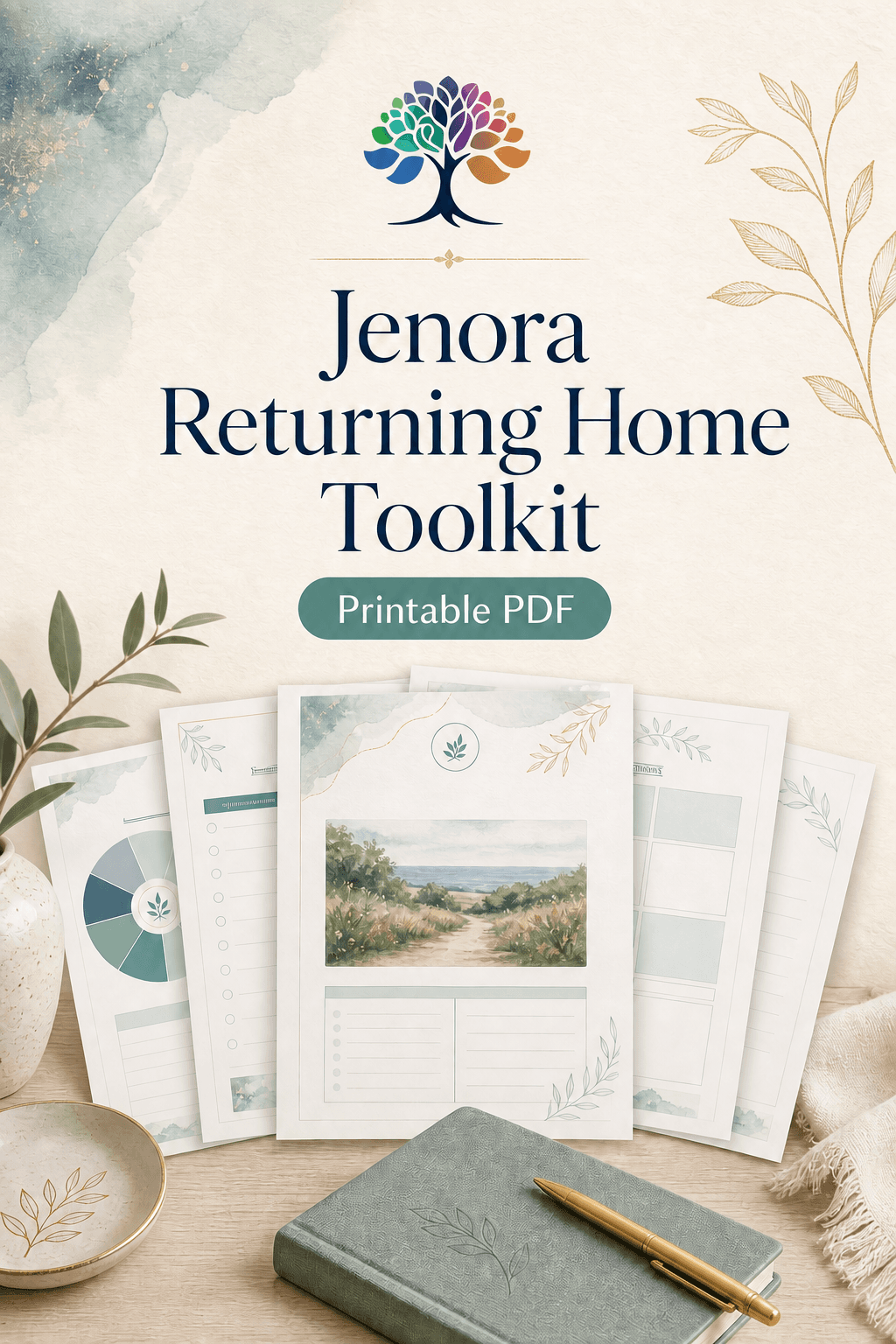
Kit de herramientas de Jenora para volver a casa
El kit completo para volver a casa: la lista para las primeras 72 horas, un planificador para la primera semana, un plan de apoyo y seguridad, y una revisión de la primera semana, reunidos en una guía imprimible.
Mejor para
Ideal para tener todo el recorrido de vuelta a casa en una sola descarga: lista, planificador, plan de seguridad y revisión.

Hoja de trabajo de Jenora: ¿qué viene después de sobrevivir?
Una hoja de trabajo guiada e imprimible para pasar de la protección a la participación, con un inventario de valores, un ejercicio de acercarte y alejarte, y un paso de planeación y revisión.
Mejor para
Ideal para trabajar lo que te ayudó a sobrevivir, lo que quizá ahora te limita y un paso pequeño y manejable hacia la participación.
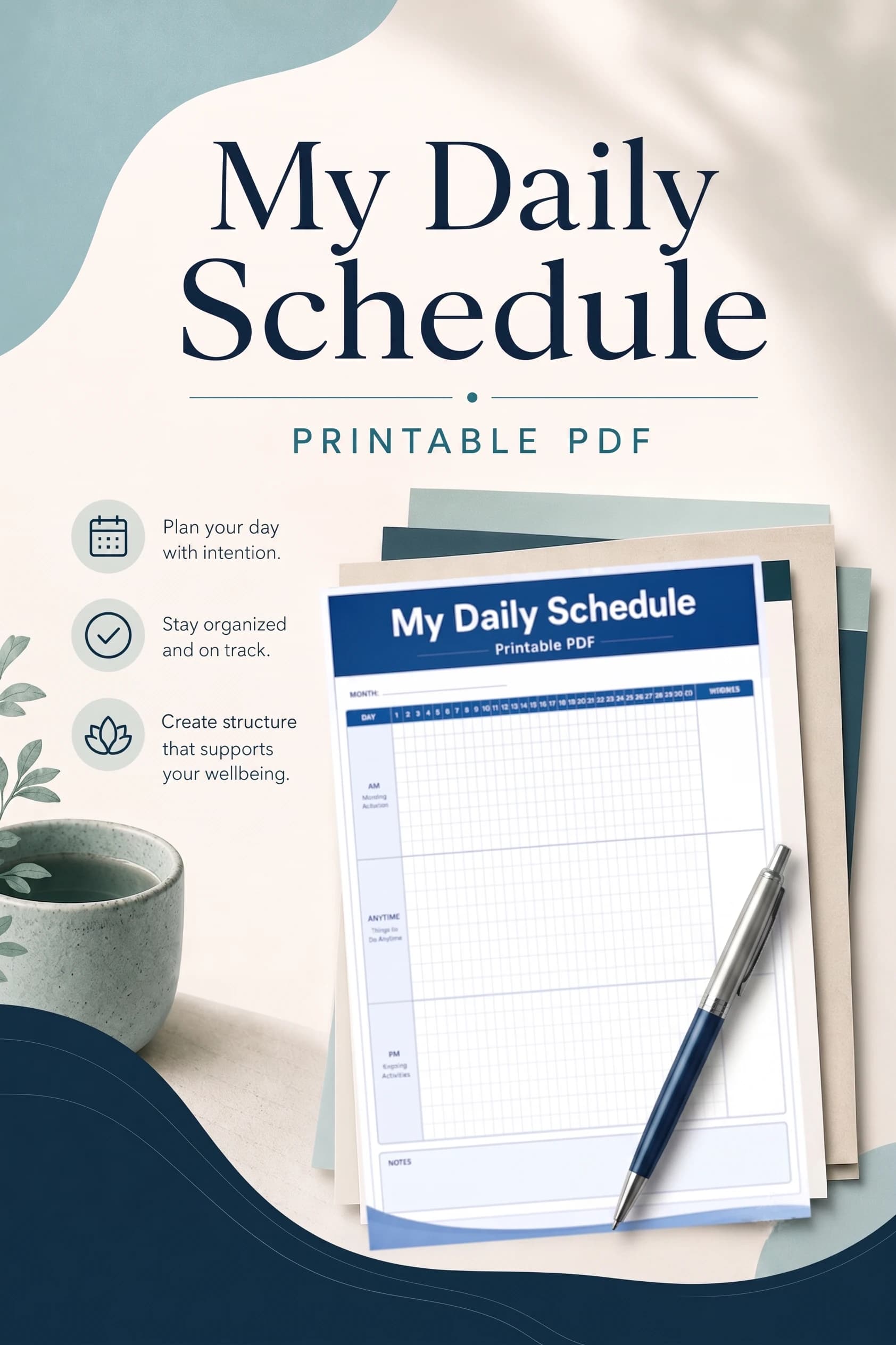
Mi horario diario
Una hoja imprimible para crear estructura, planificar rutinas de apoyo y mantener el día más organizado y conectado con la recuperación.
Mejor para
Ideal para construir estructura diaria, organizar actividades de apoyo y sostener rutinas de recuperación fuera de pantalla.
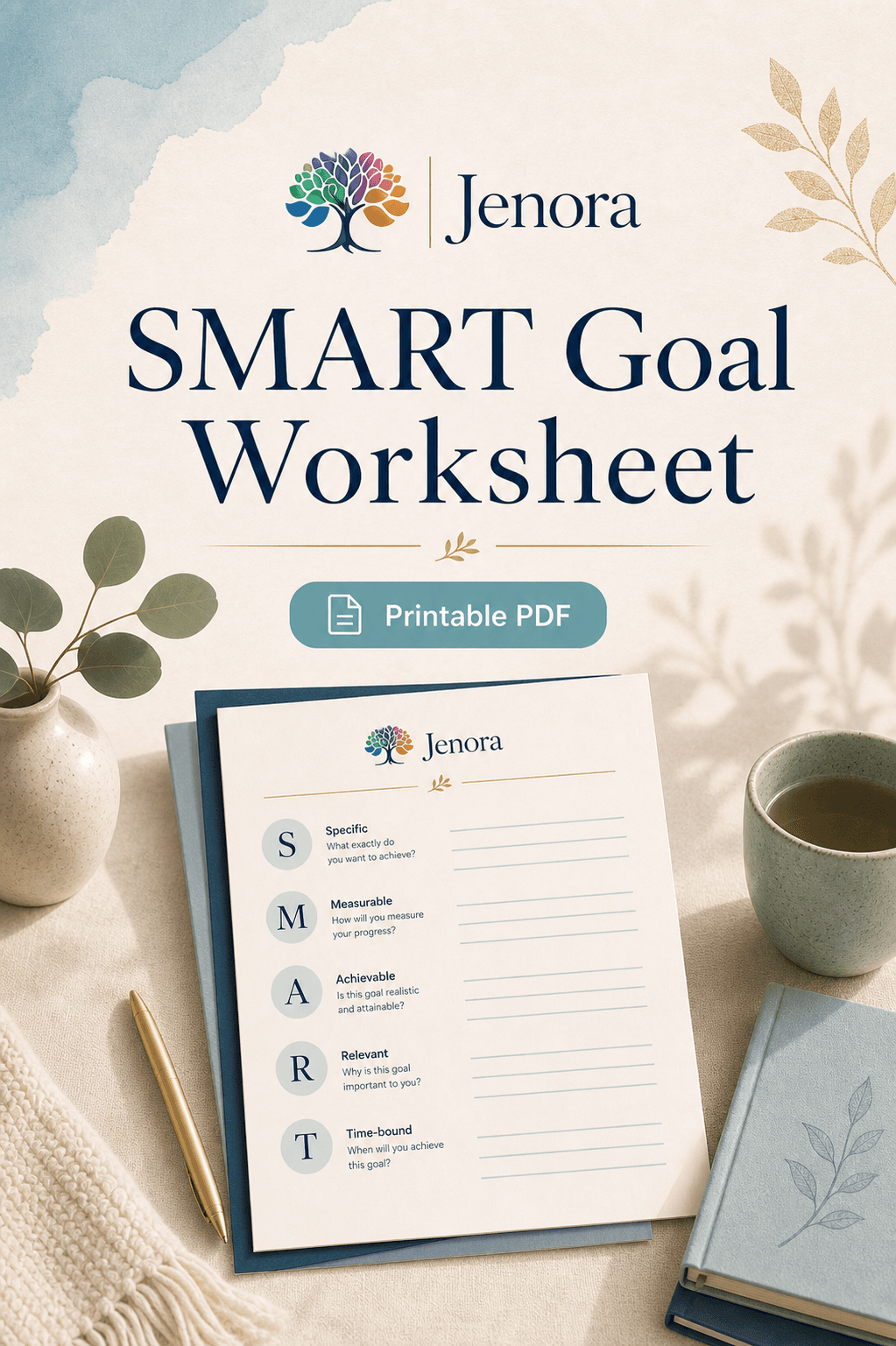
Hoja de trabajo de metas SMART
Una hoja imprimible de metas SMART para aclarar qué quieres lograr, por qué importa y cómo hacer que el siguiente paso sea más manejable.
Mejor para
Ideal para convertir una meta en algo más específico, realista y fácil de poner en práctica.

Cómo hablar con tu hijo o hija sobre la adicción
Una guía descargable para madres, padres y personas cuidadoras que buscan un punto de partida sólido para hablar con un niño o una niña sobre la adicción.
Mejor para
Útil para madres, padres y personas cuidadoras que quieren una guía práctica para hablar de la adicción con un niño o una niña.
Hoja de trabajo de Jenora: guía para escribir un diario
Una hoja de trabajo imprimible con preguntas estructuradas para la reflexión, la conciencia emocional y la identificación de patrones.
Mejor para
Ideal para escribir un diario guiado, reflexionar sobre tus emociones y notar patrones fuera de la app.