Empezamos esta serie con un signo de interrogación. Seis artículos después, es momento de completarlo — y luego hablar de lo que todo esto realmente significa para la persona que lo lleva.
Completar el panorama
Allá por la Parte 1, dividimos la enfermedad en tres partes — órgano, disfunción, síntomas — y vimos que, en la adicción, la mayoría de las personas podían nombrar el órgano (el cerebro) y los síntomas (ansias, pérdida de control, el daño que causa), pero la pieza del medio era un misterio.
Ahora puedes completarla.
La disfunción es todo lo que hemos recorrido:
- aprendizaje de recompensa exagerado
- neuroadaptación
- una línea base de recompensa reducida
- deseo activado por señales que puede convertirse en una alarma de ansias
Estos son cambios reales en un órgano real.
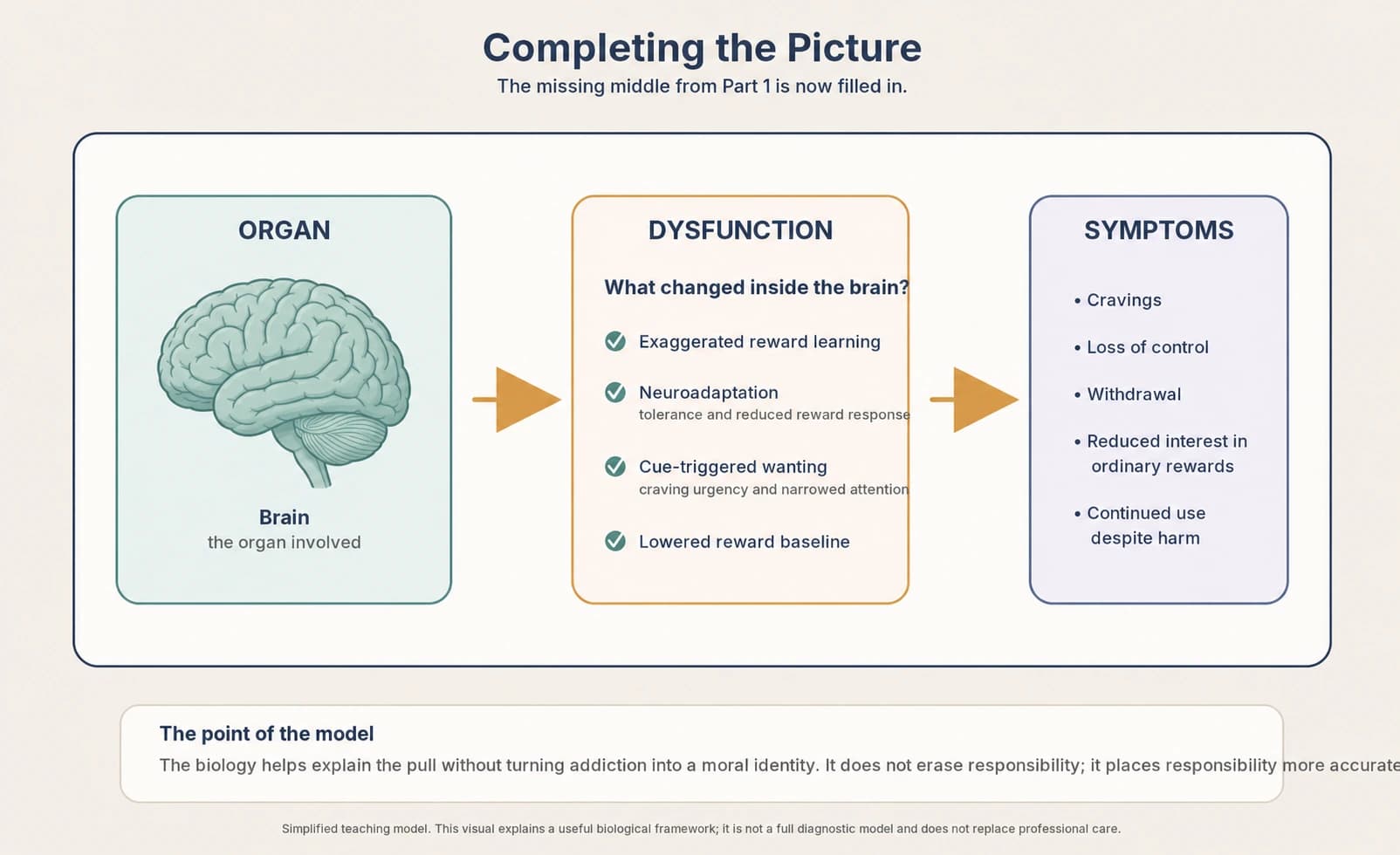
El modelo completo llena la parte intermedia que faltaba: la adicción implica aprendizaje de recompensa exagerado, neuroadaptación, una línea base reducida y deseo activado por señales.
Este es un modelo educativo simplificado, no una explicación clínica completa de todas las formas de adicción.
Ese es el panorama completo. La adicción no es simplemente una persona tomando malas decisiones sin motivo. Hay muchísimo ocurriendo por debajo de la superficie.
La línea entre dos cosas
Aquí es donde entender la biología cambia algo real.
Te permite separar dos cosas que la vergüenza suele unir.
La primera es lo que le pasó a tu cerebro — el secuestro, el reequilibrio, la alarma. Tú no elegiste eso. Es lo que hace cualquier cerebro humano cuando entra en contacto con estas sustancias. Nadie se sienta con su primera bebida o su primera pastilla pensando, ojalá esta sea la que desarme mi vida. La biología se desarrolló como suele hacerlo la biología. Esa parte no es una falla moral, y nunca fue tu culpa.
La segunda es lo que haces a partir de aquí — las decisiones que vienen, el camino estrecho, el trabajo de reparar lo que fue herido. Esa parte te corresponde a ti. No como castigo, sino como algo real que puedes tomar en tus manos.
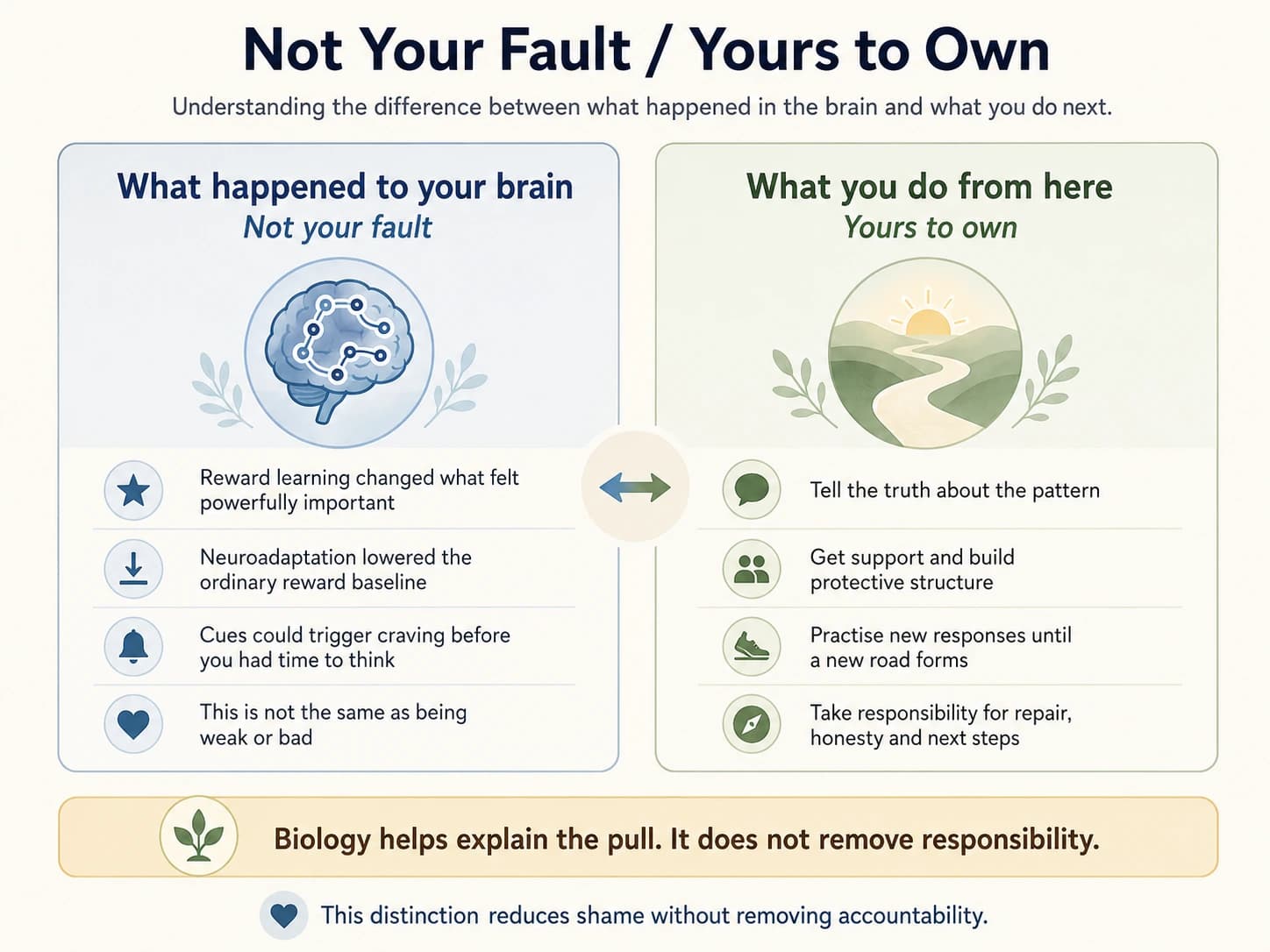
La biología ayuda a explicar la fuerza del impulso. No elimina la responsabilidad. Esta distinción reduce la vergüenza sin quitar la responsabilidad personal.
Entender la ciencia no borra la responsabilidad. La pone en el lugar correcto.
La culpa puede quedarse. La vergüenza puede irse.
Hay una diferencia entre dos sentimientos que suelen enredarse, y eso importa enormemente en la recuperación.
La culpa dice, hice algo de lo que me arrepiento. Mira una acción específica y, de hecho, puede ayudar — señala el camino hacia la reparación, hacia hacerlo mejor. La culpa puede acompañarte y aun así dejarte avanzar.
La vergüenza dice algo distinto. Dice, soy algo malo. No se trata de una acción; es un veredicto sobre toda la persona. Y la vergüenza no motiva la recuperación — la corroe. Pesa, aísla y, más veces de las que no, empuja a las personas de vuelta directamente hacia la autopista.
Aquí está el poder silencioso de todo lo que acabas de leer: te da permiso para soltar la vergüenza sin soltar la responsabilidad. Puedes sostener soy responsable de mi próximo paso en una mano y soltar soy una persona rota que hizo esto porque hay algo malo en mí con la otra. La biología dice que lo segundo nunca fue verdad.
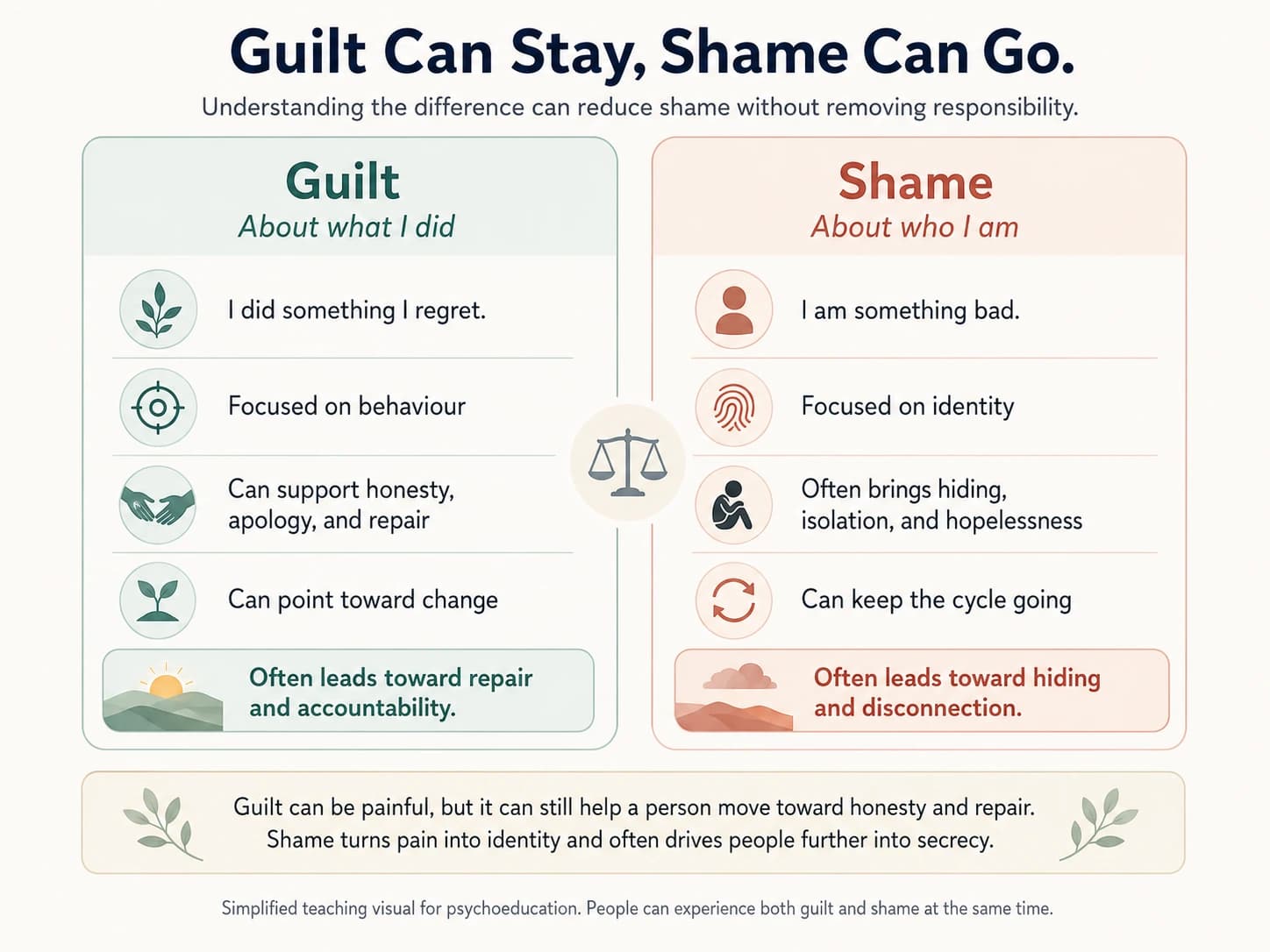
La culpa puede señalar el camino hacia la reparación. La vergüenza convierte el dolor en identidad. La recuperación necesita responsabilidad sin el peso de una identidad falsa.
Dónde te deja esto
Si has estado castigándote por los cambios que ocurrieron en tu cerebro — por no haber podido salir solo, con fuerza de voluntad, de una alarma de supervivencia del tamaño de un campo de béisbol — esta es la parte en la que se te permite parar.
No porque nada de esto importe. Sino porque nunca fue el fracaso que pensabas que era.
Tu cerebro construyó un camino bajo una presión extraordinaria. Puede construir otro. Ese camino empieza estrecho y áspero, y se ensancha con cada paso honesto que das por él. No tienes que recorrerlo perfectamente, y no tienes que recorrerlo a solas.

El camino viejo no desaparece. El camino nuevo se fortalece con el uso repetido.
Eso es lo que estaba haciendo tu cerebro. Y eso es lo que te toca hacer ahora.
Gracias por leer esta serie. Este contenido es educativo y no sustituye la atención profesional. Si algo de esto resonó con tu propia experiencia, vale la pena prestarle atención — y buscar apoyo de un profesional o de alguien de confianza puede ser un siguiente paso importante. No tiene que ser uno grande.