Ya hemos trazado el panorama: un antiguo cerebro de supervivencia que usa la dopamina para impulsarte hacia las cosas que te mantienen con vida.
Es un buen sistema.
Te ayuda a acercarte a la comida, el agua, la conexión, el sexo, la seguridad, la pertenencia, el logro y el alivio. Te ayuda a notar lo que importa y a recordar lo que funcionó.
Ahora veamos qué ocurre cuando aparece algo para lo que este sistema nunca fue diseñado.
Una forma sencilla de imaginar el rango habitual
Primero, una escala para que esto sea más fácil de ver.
No existen literalmente "unidades" de dopamina que puedas contar como monedas. El cerebro es mucho más complejo que eso. Pero, para explicarlo, imagina un rango habitual de homeostasis relacionado con la dopamina de 40 a 100.
Piensa en 40 como el límite inferior del funcionamiento habitual: ese tipo de día en el que la motivación está baja, cuesta empezar y las recompensas normales apenas se notan.
Piensa en 100 como el límite superior de lo que la vida normal puede producir de forma natural: una conexión profundamente significativa, un gran logro, una experiencia emocionante o uno de los mejores días que puedas recordar.
La mayor parte de la vida transcurre en algún punto dentro de esa franja. El cerebro sube y baja, pero sigue intentando volver al equilibrio.
Hay una distinción más que necesitamos antes de que el gráfico tenga sentido.
Liking es el efecto placentero o la sensación de subida que se experimenta en el momento.
Wanting es la fuerza motivacional que te atrae hacia eso: la anticipación, la atención y el impulso de buscarlo.
En la vida cotidiana, liking y wanting suelen ir juntos. Quieres la comida, disfrutas la comida y el cerebro recuerda que valió la pena repetirlo.
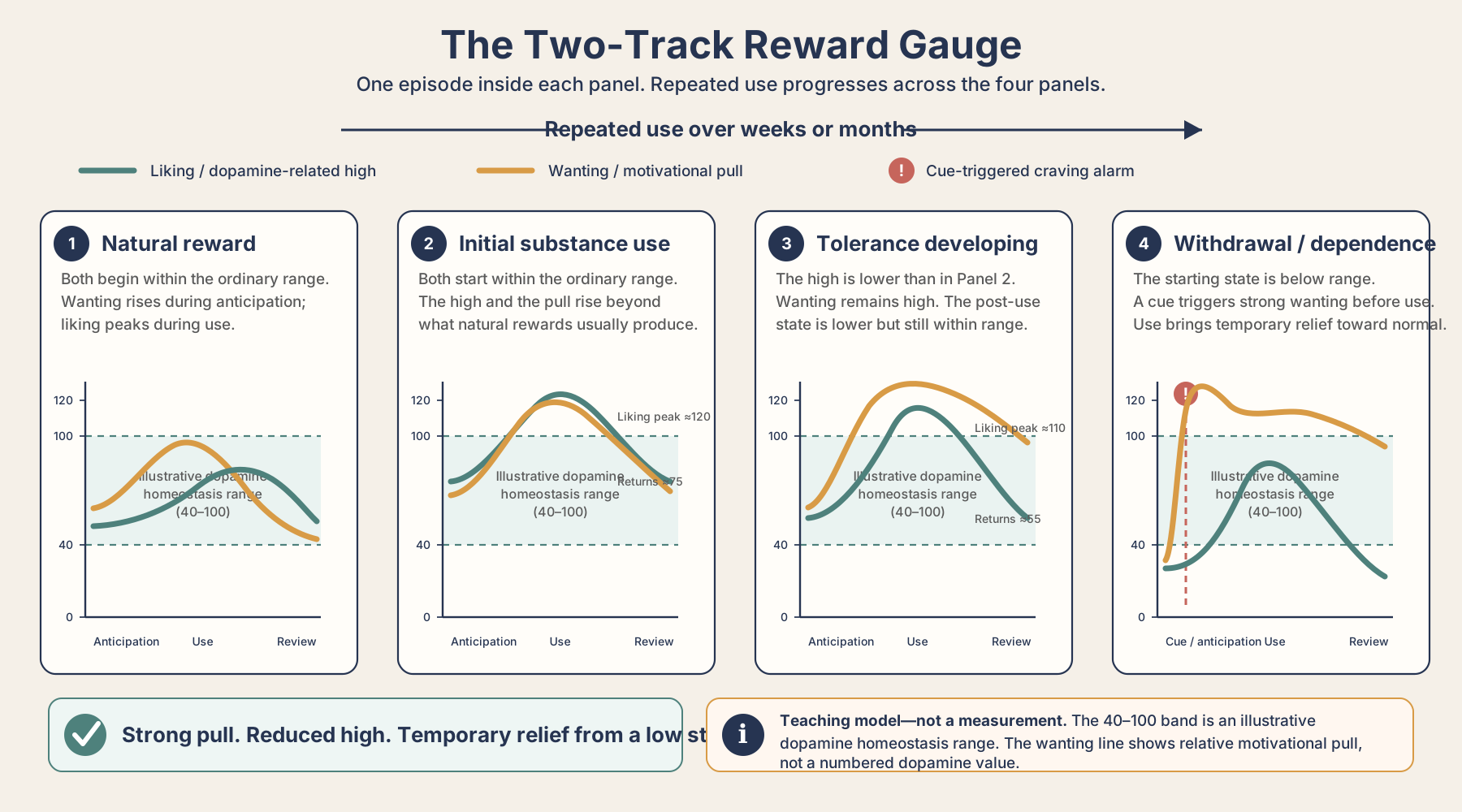
Las recompensas naturales suelen operar dentro del rango habitual de homeostasis del cerebro. El uso inicial de sustancias puede empujar la vía de liking/subida más allá de ese rango, al mismo tiempo que enseña al sistema de wanting que la experiencia es muy importante.
El rango de 40 a 100 es un modelo ilustrativo de homeostasis de la dopamina, no una medición clínica de dopamina. La línea de wanting muestra la fuerza motivacional relativa, no un valor numérico de dopamina.
Cuando algo empuja al sistema más allá de su rango
Las cosas buenas de la vida -la comida, la conexión, el sexo, el logro, el movimiento, la pertenencia- pueden elevar la motivación y el disfrute hacia la parte alta del rango habitual.
Ese es el sistema haciendo su trabajo:
Esto importó.
Recuérdalo.
Vuelve a acercarte a ello.
Pero las sustancias que alteran el estado de ánimo y la mente pueden crear un tipo distinto de señal.
Al menos al principio, pueden empujar la vía de liking/subida más allá de lo que la vida cotidiana puede producir de forma natural. En el gráfico educativo, esto se muestra como una subida que supera 100 y luego vuelve hacia la línea de base.
Los números exactos no son lo importante.
La forma es lo importante.
La persona empieza dentro del rango habitual, experimenta una subida relacionada con la sustancia inusualmente intensa y luego vuelve hacia su nivel previo.
El sistema de wanting también aprende de esa experiencia. Empieza a marcar la sustancia -y las señales que la rodean- como algo inusualmente importante.
Aquí es donde empieza el problema.
No porque la persona sea mala.
No porque el cerebro esté roto.
Sino porque el cerebro de supervivencia está aprendiendo de una señal más fuerte de lo que la vida cotidiana fue diseñada para producir.
Ahora imagina que eres el cerebro
Imagínate que eres el cerebro.
Estás encerrado dentro de un cráneo, en la oscuridad, sin una ventana directa al mundo exterior.
Todo lo que sabes sobre lo que está pasando ahí fuera llega como señales químicas y eléctricas.
Eso es todo lo que recibes.
Entonces, un día, llega una señal de recompensa inusualmente poderosa, más alta que cualquier cosa que la comida, el agua, la conexión o el logro hayan producido antes.
Desde dentro del cráneo, no tienes forma de conocer toda la historia externa.
No puedes ver el contexto social.
No puedes ver las consecuencias que pueden venir después.
No puedes decir:
Eso vino de una sustancia, así que debería ignorarlo.
Todo lo que conoces es la señal.
Y la señal es enorme.
Así que el cerebro saca la única conclusión que sabe sacar:
Lo que sea que acaba de pasar debe de ser increíblemente importante.
Esta es la primera parte del secuestro.
El cerebro no está respondiendo al significado moral del evento.
Está respondiendo al tamaño y a la fiabilidad de la señal.
Por qué el cerebro lo recuerda
La dopamina no solo dice: eso se sintió bien.
También dice:
Presta atención.
Recuerda esto.
Vuelve a acercarte a ello.
Eso es útil cuando la recompensa es comida, seguridad, conexión o logro. Quieres que el cerebro recuerde cómo encontrar lo que te mantiene con vida.
Pero si una sustancia produce una señal mucho más fuerte que las recompensas habituales, el sistema de aprendizaje puede darle una prioridad excesiva.
El cerebro no solo registra:
Eso fue agradable.
Registra algo más parecido a:
Eso importó.
Eso funcionó.
Eso puede volver a ser necesario.
Y, como los sistemas de memoria están implicados, el cerebro no solo recuerda la sustancia.
También puede recordar a las personas, los lugares, las horas del día, los estados emocionales, los olores, los sonidos, las canciones, los factores de estrés y los pensamientos que la rodearon.
Por eso la adicción no se trata solo del efecto químico de la sustancia.
También se trata de aprendizaje.
El cerebro empieza a construir asociaciones.
¿Dónde estaba?
¿Con quién estaba?
¿Qué estaba sintiendo?
¿Qué pasó justo antes?
¿Qué alivio llegó después?
El evento queda marcado.
Y, una vez que algo queda marcado por el cerebro de supervivencia como importante, se vuelve más fácil notarlo, más fácil recordarlo y más fácil volver a acercarse a ello.
La primera disfunción
Esta es la primera pieza del punto medio que faltaba en la Parte 1.
El órgano es el cerebro.
Los síntomas son el craving, la pérdida de control y el regreso repetido a pesar del daño.
Y la primera parte de la disfunción es esta:
El sistema de recompensa y aprendizaje empieza a tratar una sustancia como más importante de lo que realmente es.
No de forma consciente.
No en un sentido moral.
Biológicamente.
El cerebro ha recibido una señal poderosa y ha empezado a organizar la atención, la memoria y la motivación alrededor de ella.
Eso no significa que la persona no tenga opciones.
Significa que las opciones ahora ocurren dentro de un cerebro que ha empezado a asignarle a la sustancia una importancia inusual.
El sistema de wanting ha aprendido:
Ve hacia esto.
Y ese aprendizaje puede hacerse más fuerte con la repetición.
Por qué esto importa
Por eso la adicción temprana puede ser tan confusa.
Desde fuera, puede parecer que alguien simplemente está eligiendo lo mismo otra vez.
Desde dentro, está pasando algo más complicado.
Un sistema de supervivencia ha empezado a darle a la sustancia un nivel de importancia que no merece.
La persona puede seguir disfrutándola.
Puede seguir sintiendo la subida.
También puede empezar a desearla con más fuerza de la que tiene sentido.
Esa diferencia importa.
Porque, más adelante en la adicción, liking y wanting pueden separarse.
La subida puede desvanecerse.
La atracción puede quedarse.
Por ahora, el punto clave es este:
La adicción no empieza solo con placer. Empieza con aprendizaje.
El cerebro aprende que algo importa.
Luego aprende la ruta más rápida para volver a eso.
Luego empieza a construir ese camino.
A dónde lleva esto
Al principio, la sustancia puede sentirse poderosa porque empuja al sistema por encima del rango habitual.
Pero al cerebro no le gusta que lo empujen fuera de su rango durante mucho tiempo.
El cuerpo siempre está intentando volver al equilibrio.
Eso es lo que hacen los cuerpos.
Si tienes demasiado calor, sudas.
Si tienes demasiado frío, tiemblas.
Si una señal química sigue empujando al sistema de recompensa más allá de su rango habitual, el cerebro empezará a adaptarse.
Y esa adaptación lo cambia todo.
El primer problema es el aprendizaje de recompensa.
El siguiente problema es lo que pasa cuando el cerebro intenta reequilibrarse.
A continuación: por qué la subida se desvanece y cómo el intento del cerebro de restaurar el equilibrio puede llevar a tolerancia y abstinencia.
Este artículo es educativo y no sustituye la atención profesional. Si lo estás pasando mal, hay apoyo disponible, y el siguiente paso no tiene por qué ser grande.