Empecemos con una pregunta sobre la que la gente ha discutido durante mucho tiempo.
¿La adicción es una enfermedad o una elección?
Guarda tu respuesta por un momento, porque es muy posible que la pregunta en sí esté mal planteada. La mayoría de las personas sienten que tienen que elegir un bando. Si es una elección, entonces alguien que está luchando solo necesita tomar una mejor decisión. Si es una enfermedad, entonces quizá la elección no tenga nada que ver. Las dos opciones suenan un poco extrañas, ¿no? Y vale la pena prestar atención a esa sensación de que algo “no termina de encajar”.
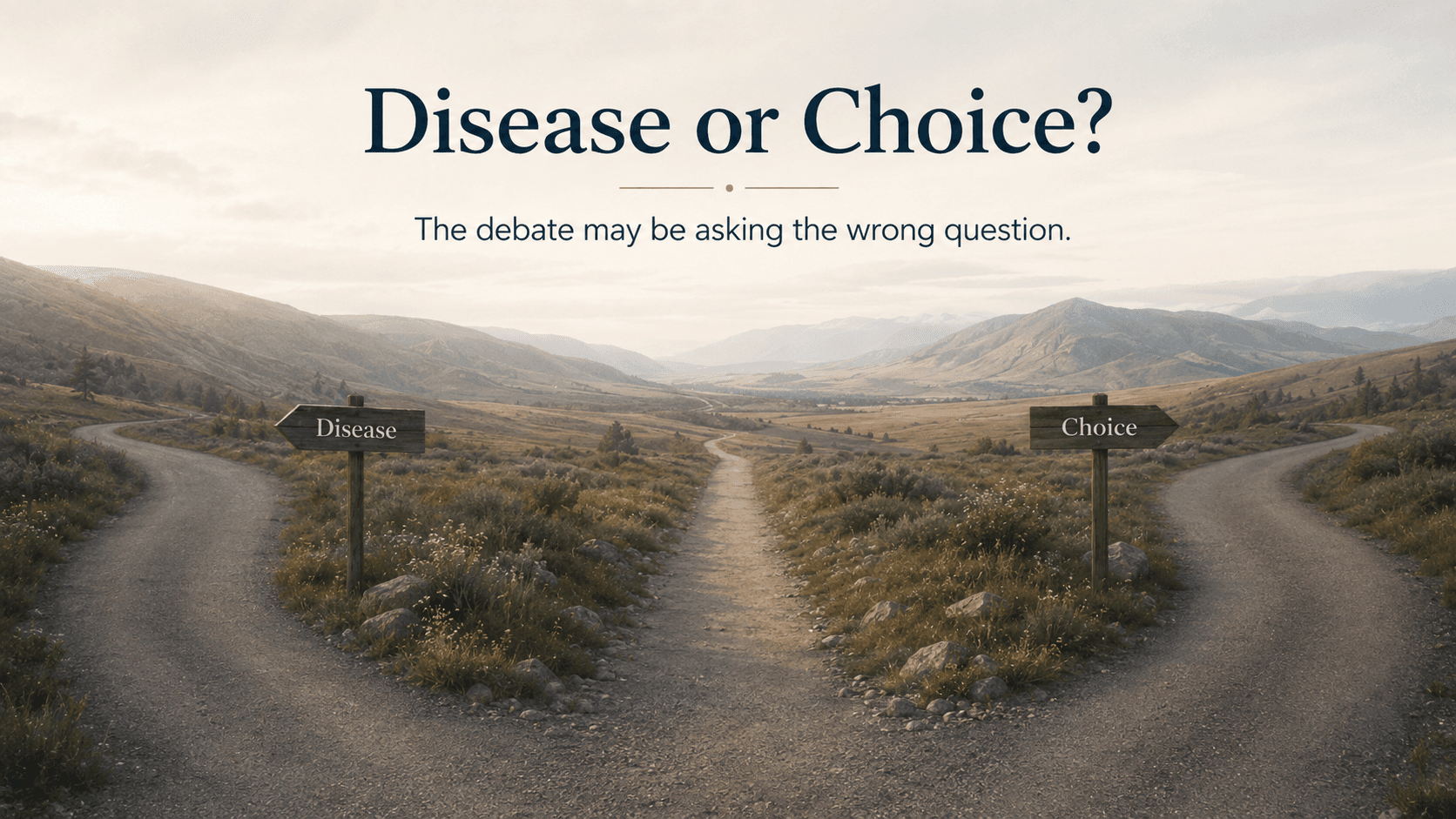
La adicción suele plantearse como enfermedad o elección. Esta serie analiza lo que falta en medio: qué cambia en el cerebro y qué significa eso para la responsabilidad y la recuperación.
Aquí va otra manera de abordar el tema. En lugar de debatir la etiqueta, veamos qué es realmente una enfermedad y si la adicción encaja en esa definición.
Toda enfermedad tiene tres partes
Resulta que casi cualquier enfermedad puede dividirse en tres partes:
- El órgano — la parte del cuerpo implicada
- La disfunción — qué está fallando dentro de ese órgano
- Los síntomas — lo que realmente ves y sientes
Tomemos la diabetes tipo 1. El órgano es el páncreas. La disfunción es que no produce suficiente insulina. Los síntomas son cosas como sed, fatiga y niveles altos de azúcar en sangre. Tres partes, todas presentes.
O algo más simple: una pierna rota. El órgano es el hueso. La disfunción es la fractura. Los síntomas son dolor, hinchazón y no poder caminar apoyándote en ella.
Una vez que ves el patrón, es difícil dejar de verlo. Casi todo lo que llamamos enfermedad tiene esas tres partes.
Ahora probemos con la adicción
Cuando he explicado esto en persona, pasa algo interesante casi siempre.
Si preguntas cuál es el órgano, la mayoría de las personas llega a la respuesta: el cerebro. Si preguntas por los síntomas, la gente puede enumerarlos sin mucho problema: los cravings, la pérdida de control, la forma en que daña las relaciones y la salud, volver a consumir incluso cuando alguien quiere desesperadamente dejarlo.
Pero luego está la parte del medio. La disfunción. ¿Qué es lo que realmente está fallando en el cerebro?
Aquí es donde la sala normalmente se queda en silencio. La gente ha oído toda su vida que la adicción es una enfermedad, pero casi nadie ha recibido una explicación de esa parte intermedia. Y esa pieza que falta es exactamente de donde vienen la confusión y gran parte de la vergüenza. Si no puedes ver la disfunción, la adicción realmente parece no ser más que una cadena de malas decisiones.
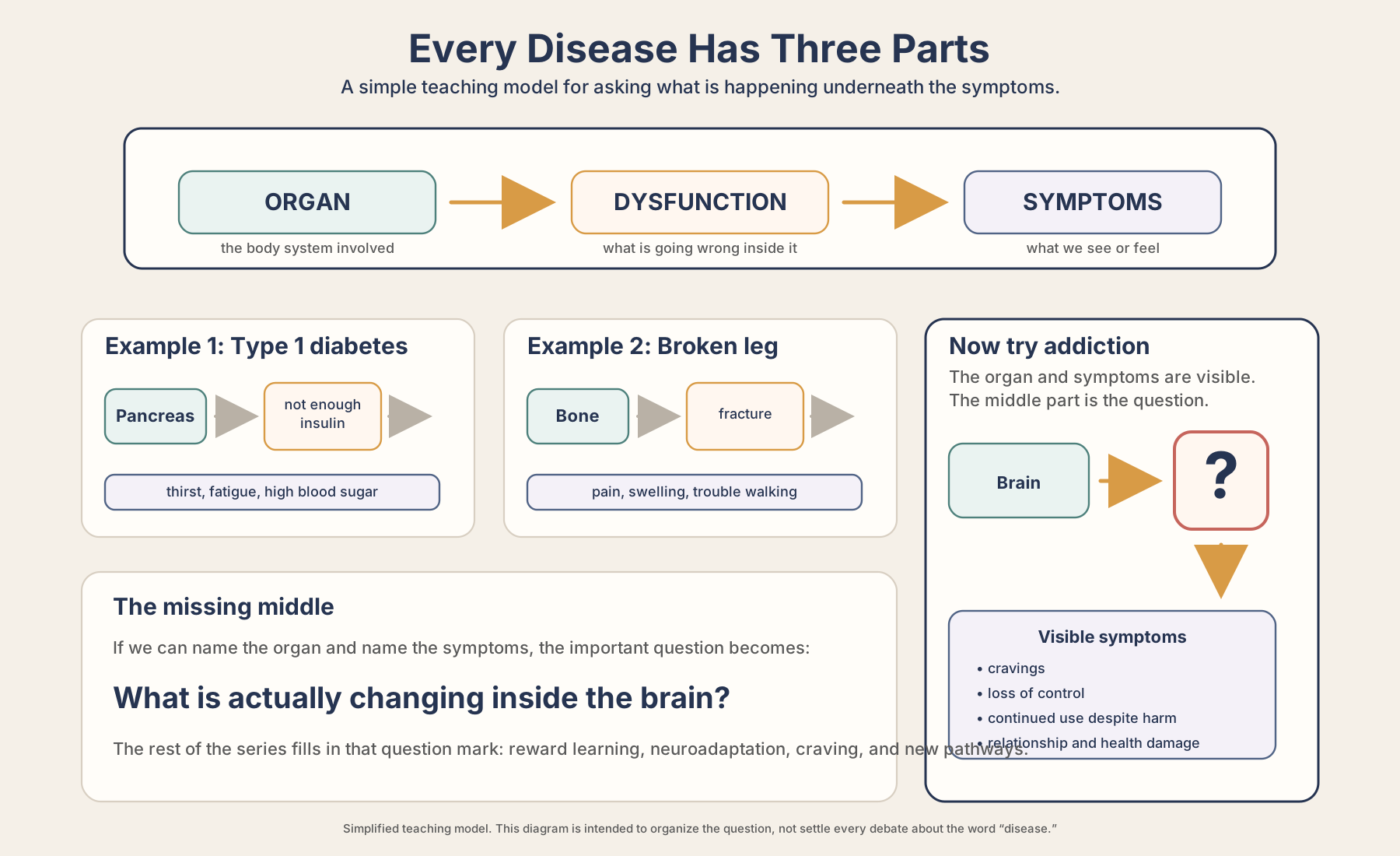
Lo que falta en medio es la disfunción: qué está pasando en el cerebro que ayuda a explicar los síntomas que la gente puede ver desde fuera.
Hacia dónde va esto
En los próximos artículos, vamos a responder a ese signo de interrogación. No con ideas vagas, sino con lo que realmente está pasando en el cerebro: cómo funciona tu sistema de recompensa, cómo puede verse secuestrado y por qué impulsa la conducta como lo hace.
Una nota rápida antes de seguir: llamar “enfermedad” a la adicción no se trata de quitarte tu capacidad de elegir ni tu responsabilidad. La comprensión actual de la mayoría de los profesionales clínicos es que la adicción tiene una base biológica real y sigue implicando a una persona que puede actuar. No es una cosa o la otra. Entender la biología no excusa nada, pero para muchas personas es la primera vez que todo esto deja de sentirse como un fracaso personal y empieza a tener sentido.
Nadie toma su primera copa ni su primera pastilla esperando acabar en problemas. Una vez que entiendes lo que está pasando por debajo, puedes empezar a ver por qué.
Lo que sigue: el cerebro de supervivencia, la parte más antigua de ti que ha estado llevando el control desde hace mucho más tiempo del que quizá imaginas.
Este artículo es educativo y no sustituye la atención profesional. Si lo estás pasando mal, hay apoyo disponible, y el siguiente paso no tiene por qué ser grande.