Anxiety Wants Your World to Become Smaller
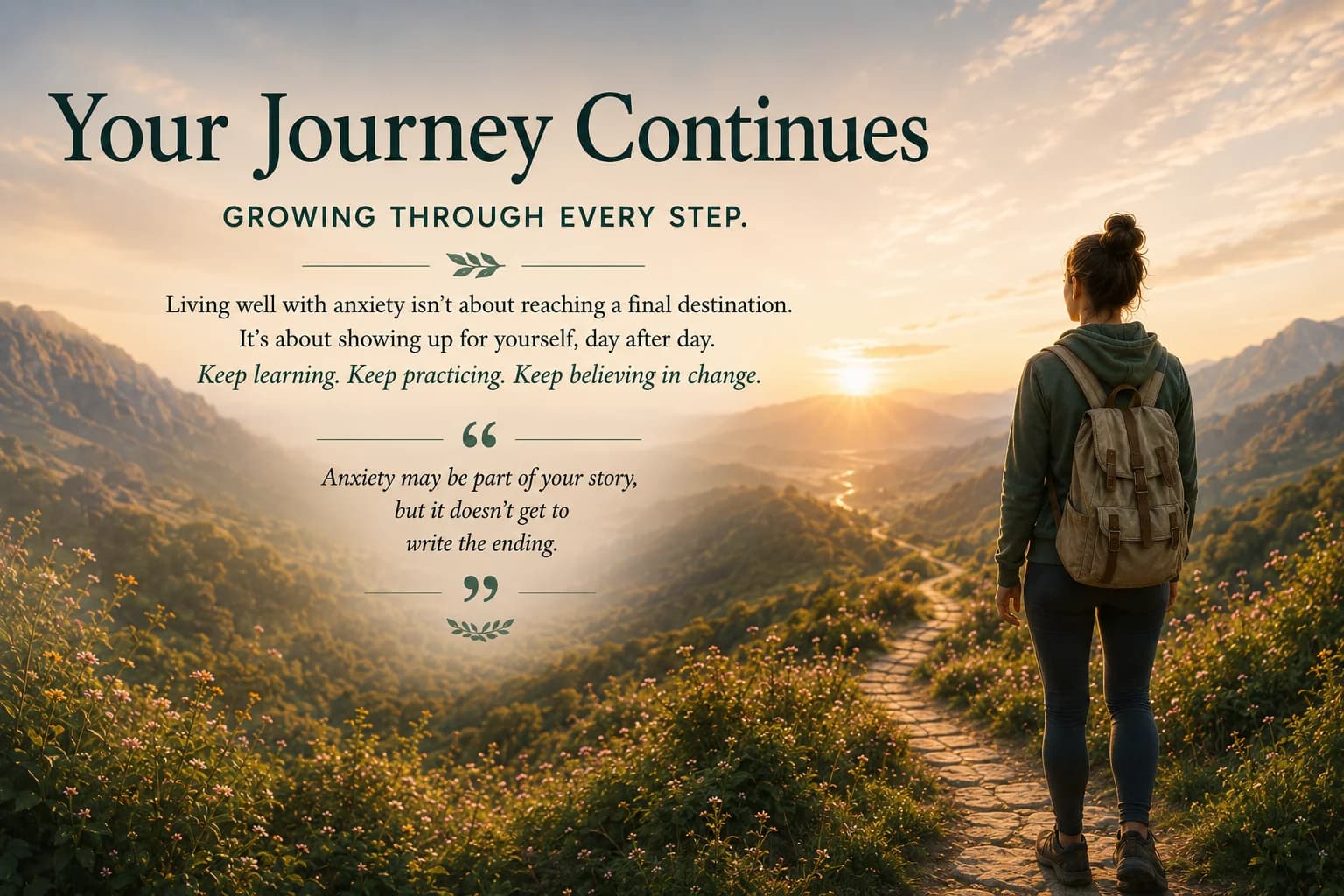
Imagine dropping a pebble into a still pond. At first, the ripple is small --- perhaps you avoid one situation because it makes you anxious. Then another. Then another. Over time, your world quietly begins to shrink. You stop accepting invitations. You stop travelling. You avoid difficult conversations. You postpone opportunities. You stay where things feel familiar.
Not because you don't want to live, but because anxiety has convinced you that staying safe is more important than moving forward. This is one of anxiety's greatest illusions: it promises safety, but often delivers limitation.
Recovery Is More Than Reducing Symptoms
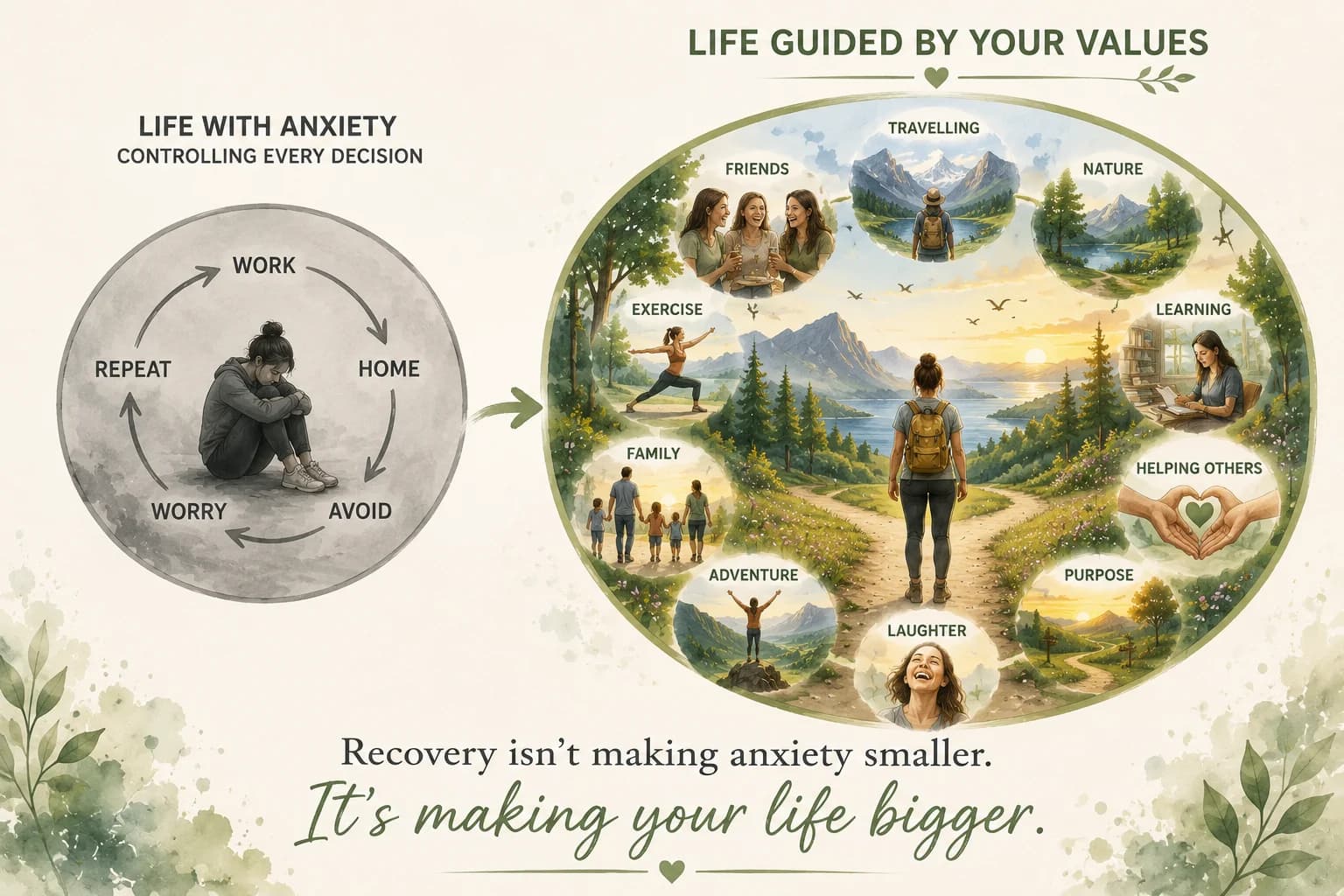
When people first begin therapy, they often say, "I just want the anxiety to stop." That is completely understandable. But something interesting often happens as recovery progresses: people realise they no longer need anxiety to disappear before they start living.
Instead, they begin asking a different question. Rather than "How do I avoid anxiety?", they ask, "What kind of life do I want to build?" This is a profound shift, because the focus moves away from fear and towards purpose.
Courage Is Not the Absence of Fear
One of the most common misconceptions is that courageous people are fearless. In reality, courage almost always includes fear. Think about someone giving a speech, starting a new job, leaving an unhealthy relationship, beginning recovery, moving to a new country, or falling in love. None of these experiences are free from anxiety. Yet people do them anyway.
Courage is not waiting until fear disappears. Courage is taking the next meaningful step while fear quietly walks beside you.
Let Your Values Become Your Compass
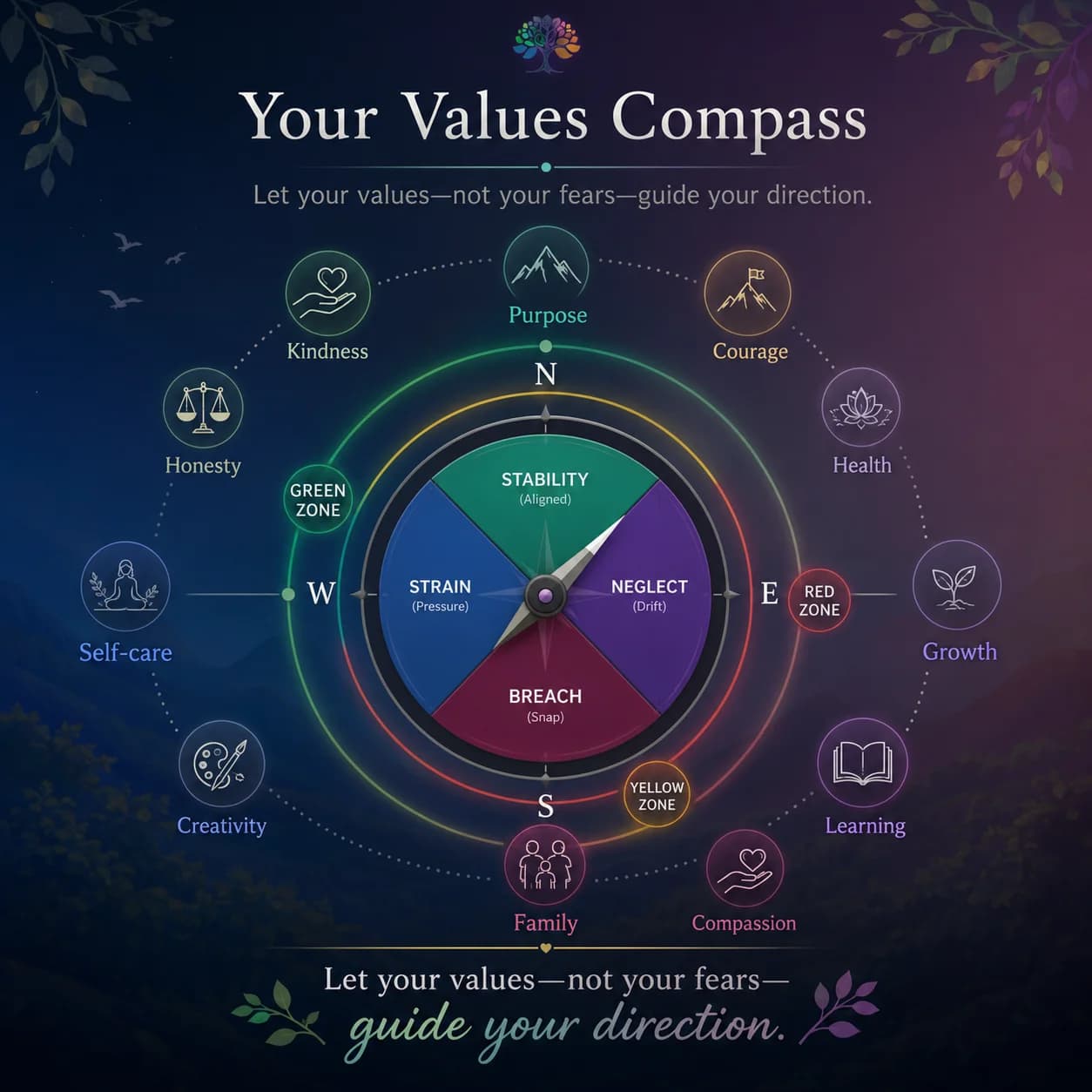
Throughout this guide, we've talked about the brain's alarm system. Now let's talk about something equally important: your values. Values are the qualities you want your life to reflect --- things like kindness, honesty, curiosity, compassion, growth, family, creativity, health, connection, learning and contribution.
Values are different from goals. A goal is something you can achieve. A value is a direction you continue travelling throughout life. You may reach the top of a mountain, but you never finish being kind, never complete learning, never graduate from living courageously. When anxiety becomes loud, values help us remember where we truly want to go.
A Different Question
Anxiety often asks, "What if something goes wrong?" Recovery gently teaches us to ask another question: "What if something goes right?" Not because optimism guarantees success, but because anxiety has usually spent years convincing us to imagine only one possible future. Learning to imagine possibility again is part of healing.
Your Brain Is Designed to Learn
One of the most hopeful discoveries in modern neuroscience is that the brain continues changing throughout life. Every experience strengthens certain neural pathways, and the more often we repeat a behaviour, the easier it becomes. That is true for anxiety. But it is also true for recovery.
Every time you choose curiosity over panic, stay in a situation a little longer, challenge an anxious thought, practise self-compassion, ask for support, or take one meaningful step, your brain records a new experience. One experience may not seem significant, but hundreds of experiences gradually reshape the way your nervous system responds. This is neuroplasticity in action.
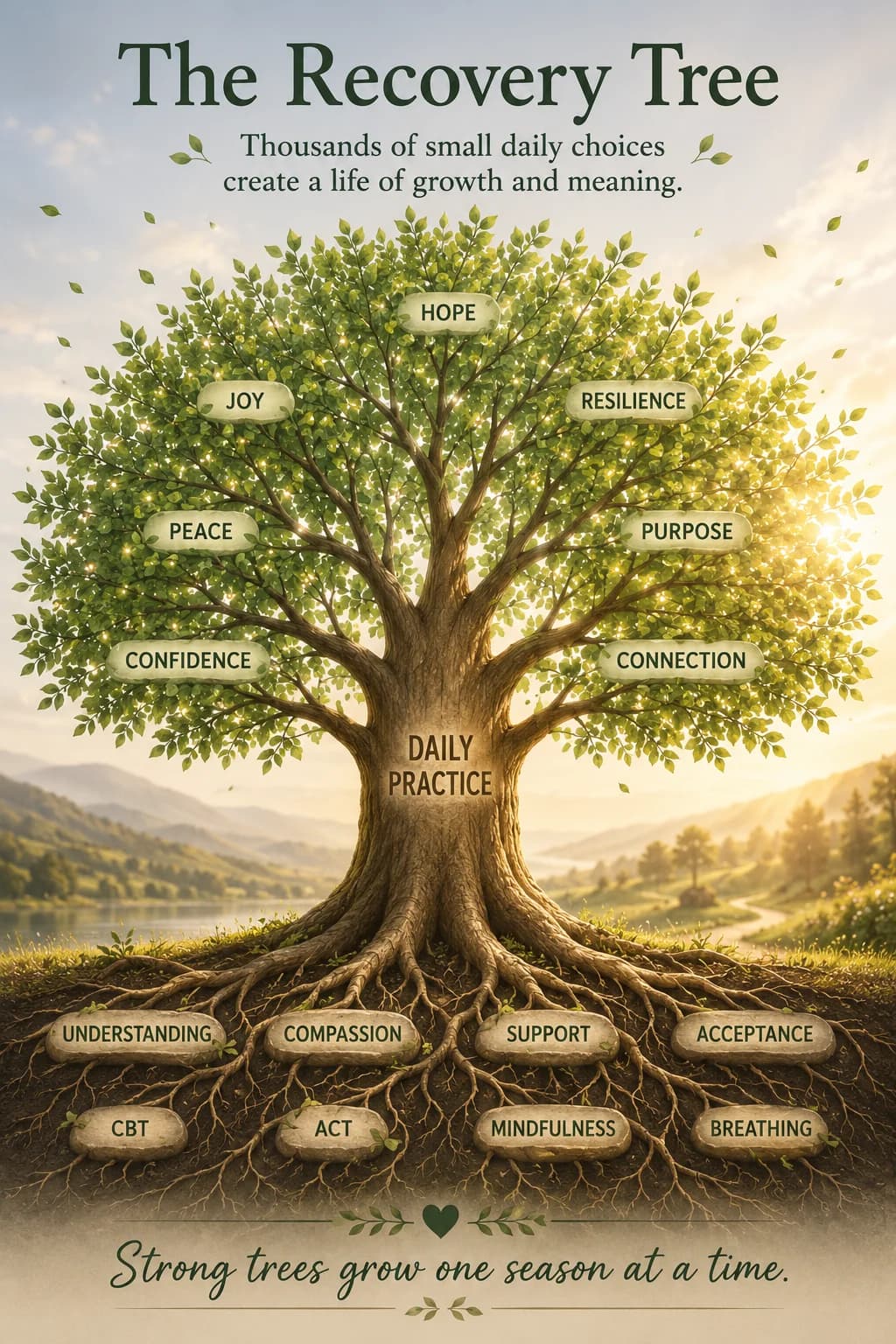
Recovery Isn't Linear
Almost everyone experiences setbacks. You might have a wonderful month, then suddenly find yourself feeling anxious again. Many people interpret this as failure. It isn't.
Imagine climbing a mountain. Sometimes the path climbs steeply. Sometimes it levels out. Sometimes you even walk slightly downhill before continuing upwards. You are still climbing. Recovery works the same way --- a difficult day does not erase months of progress, a panic attack does not undo everything you've learned, and one setback does not define your future. Progress is measured across months and years, not moments.
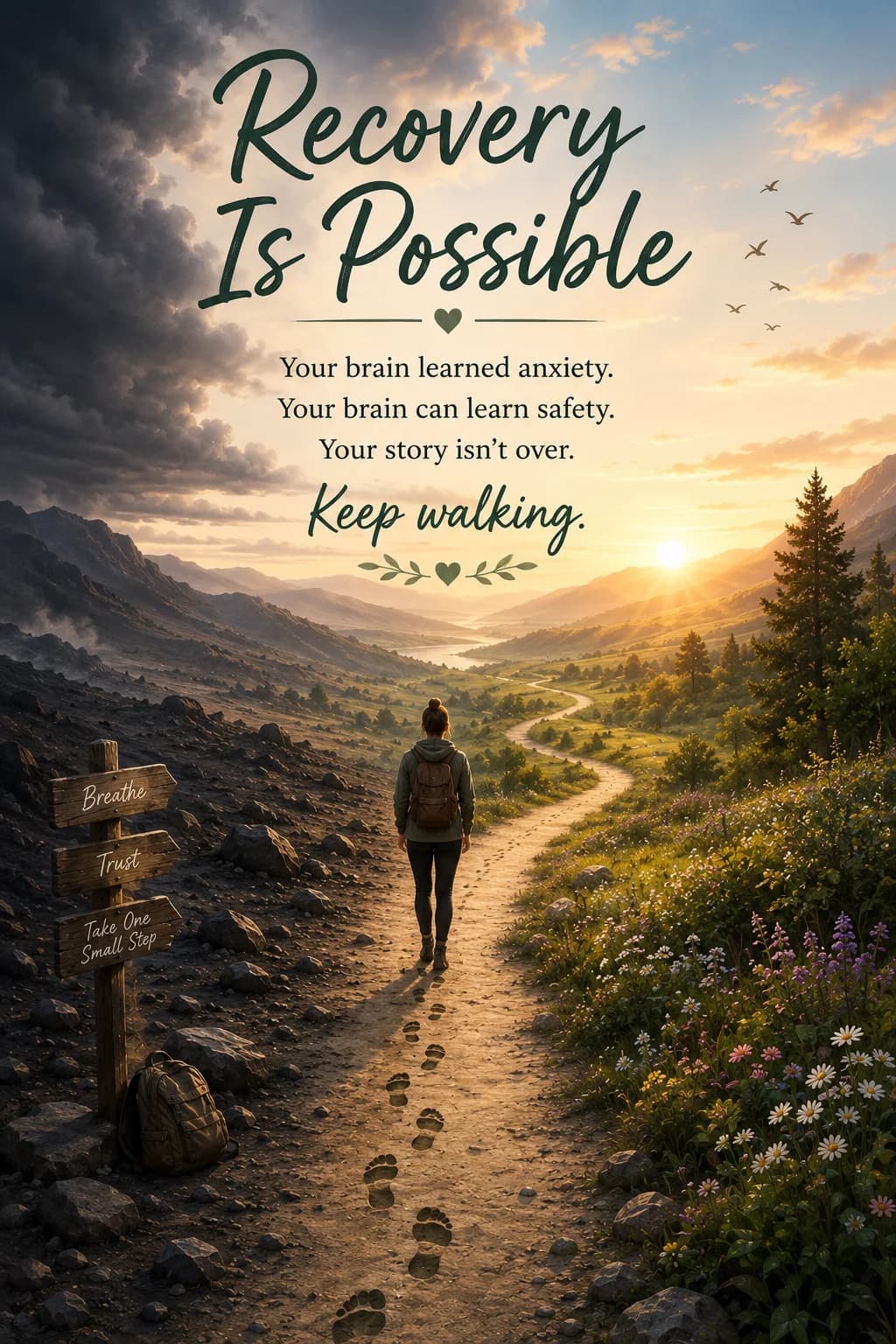
There Is Strength in Asking for Help
One of the biggest myths about recovery is that you should be able to do it alone. Humans were never designed to heal entirely in isolation. Sometimes the bravest sentence a person can say is, "I'm struggling."
Support can come from many places: a trusted friend, a family member, a therapist, a doctor, a support group, a mentor, or someone who has walked a similar path. Asking for help is not giving up. It is choosing not to carry everything by yourself.
What Recovery Can Look Like
Recovery doesn't always announce itself dramatically. Often, it appears quietly. One day you notice that you answered the phone without overthinking, or drove somewhere you had been avoiding, or laughed without worrying. You stayed at the gathering a little longer. You noticed your anxious thoughts, but didn't automatically believe them. You planned something for the future. You slept better. You smiled more often.
Life slowly becomes larger than anxiety. These moments may seem ordinary. In reality, they are extraordinary --- they are signs that your nervous system is learning safety.
What If Anxiety Never Completely Disappears?
This question deserves an honest answer. Many people continue to experience anxiety from time to time. That is part of being human.
The goal is not to become someone who never feels anxious. The goal is to become someone who knows, "I have handled this before. I know what helps. I don't need to fear the feeling itself." That confidence changes everything.
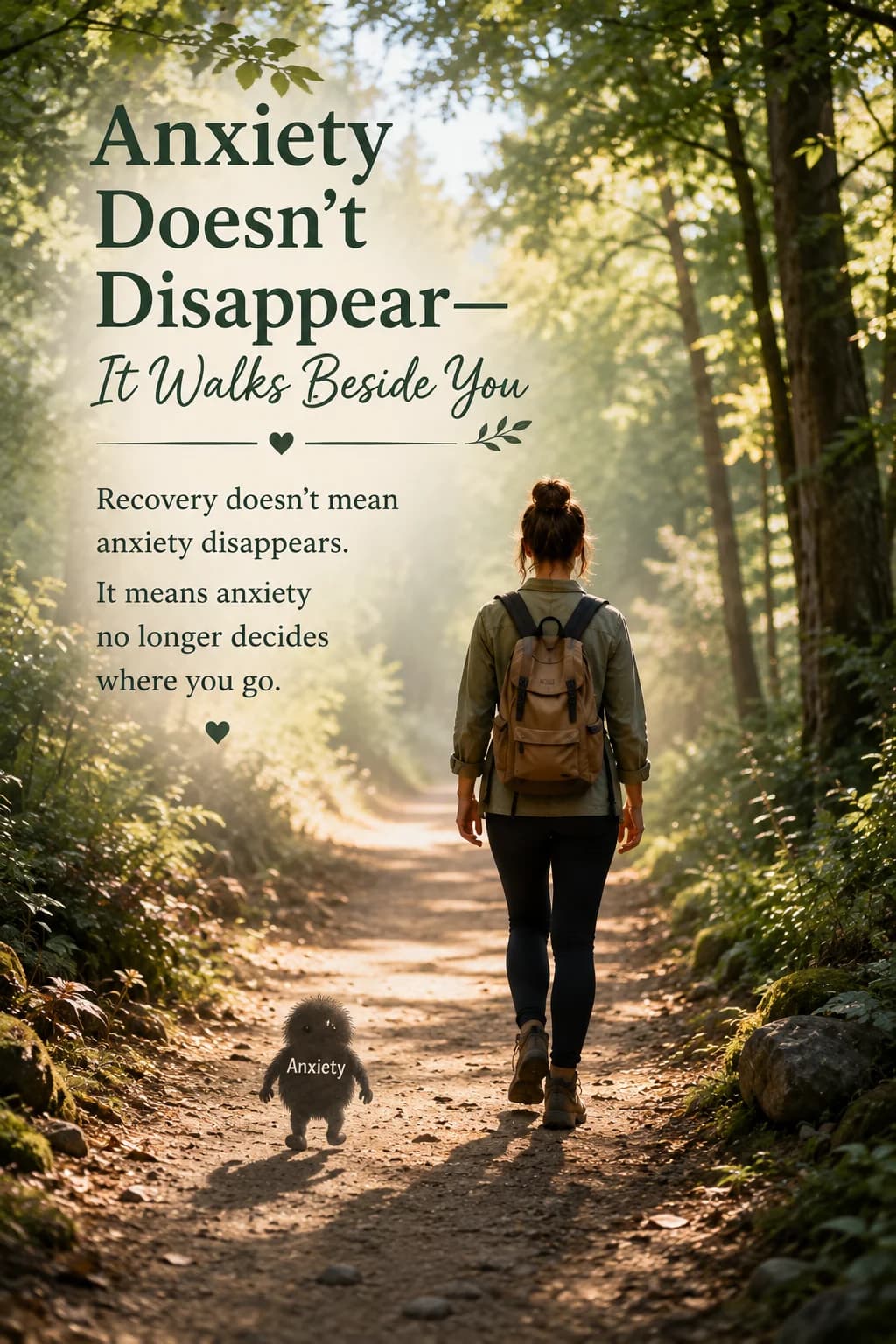
Your Story Is Still Being Written
Perhaps you've spent years believing anxiety has defined your life. Perhaps you've missed opportunities, avoided dreams, or judged yourself harshly. Please remember this: your past explains your story. It does not have to determine your future.
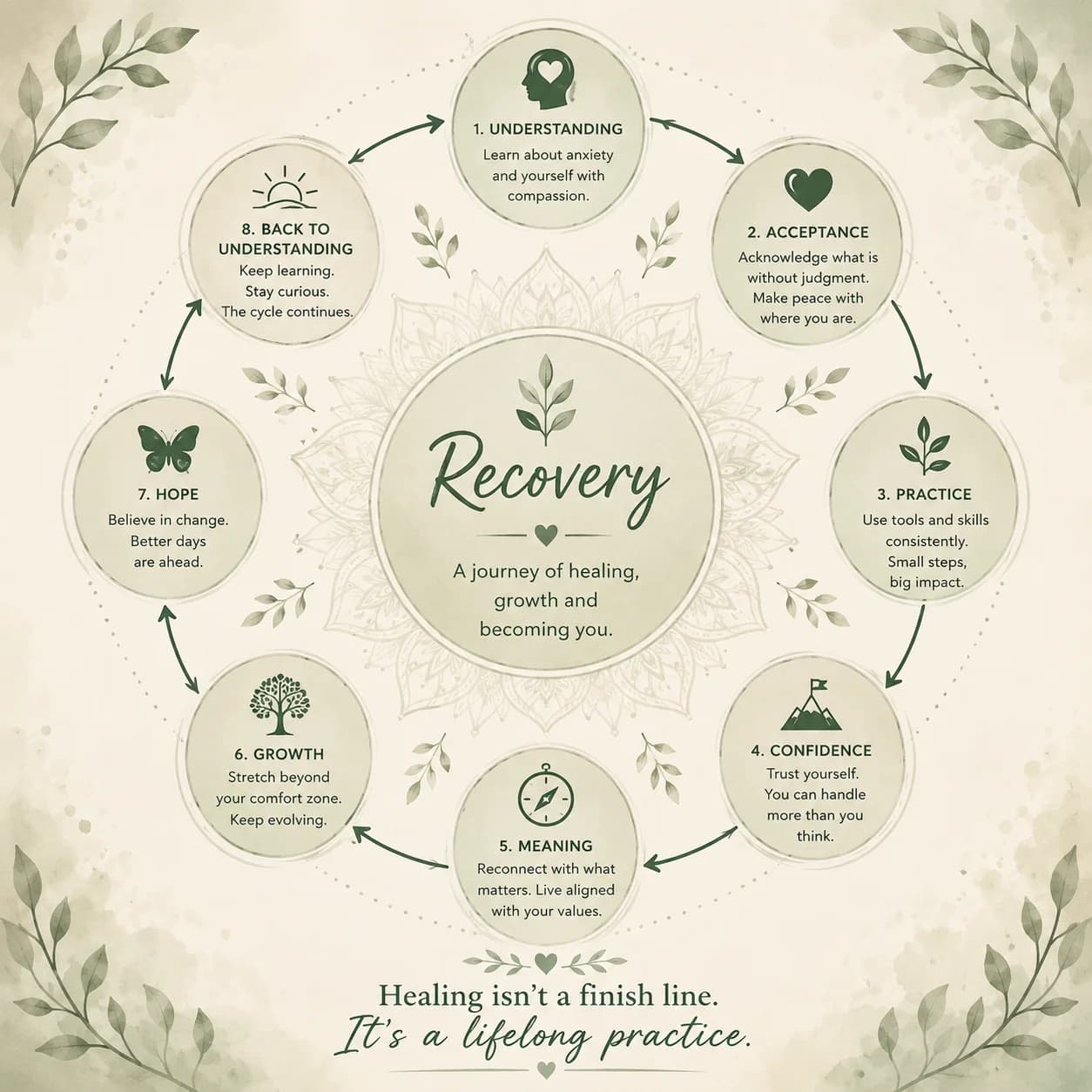
Every chapter you've read in this guide points towards one simple truth. Your brain learned anxiety, and your brain can also learn safety. Your body tried to protect you. Now you can begin teaching it what safety truly feels like. Recovery is not about becoming a different person. It is about becoming more fully yourself.
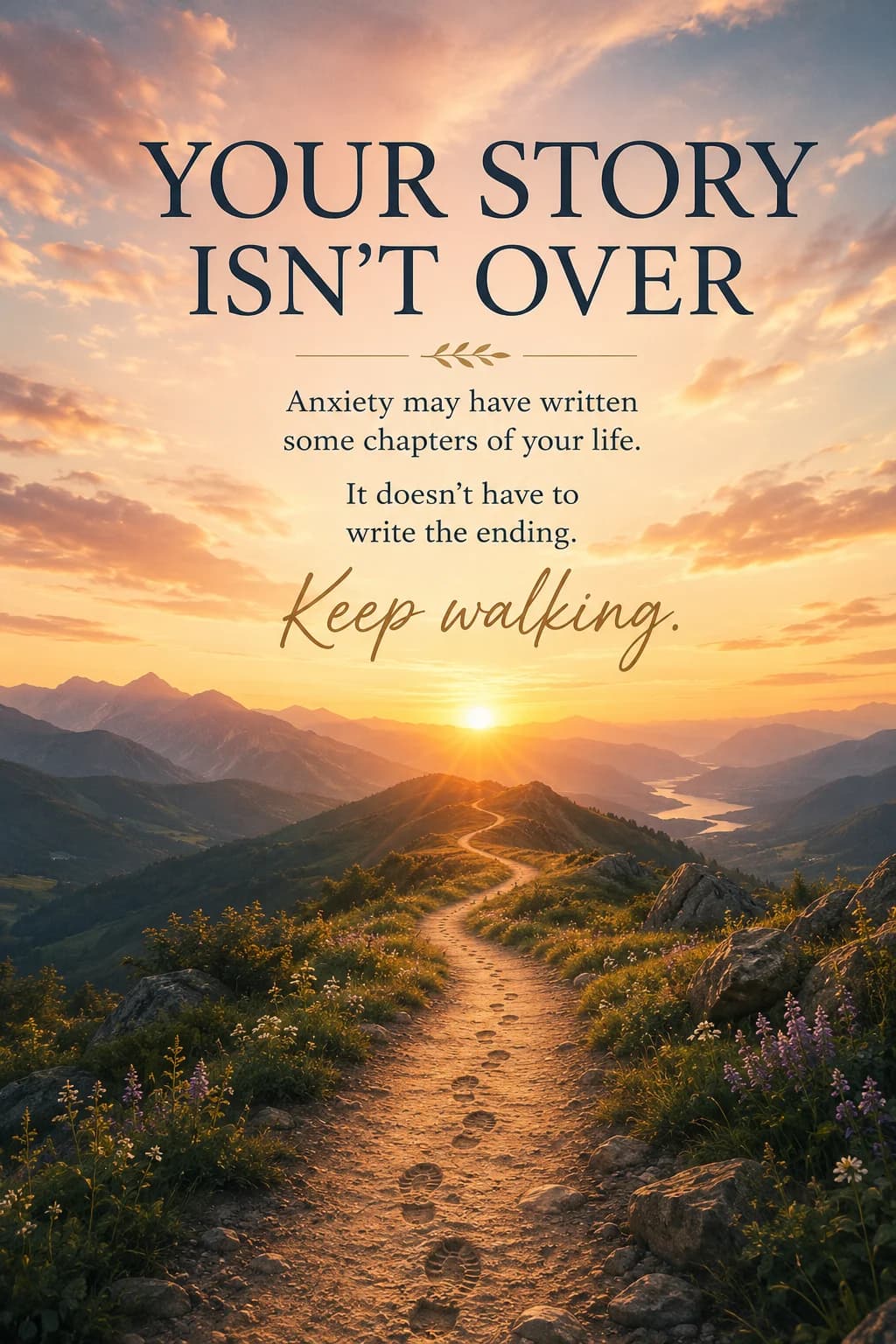
A Final Reflection
If you remember only one thing from this entire guide, let it be this: anxiety is not your identity. It is an experience. Experiences change. Brains change. People change.
Hope is not wishful thinking. It is supported by decades of scientific research, by millions of recovery stories, and by the remarkable ability of the human brain to learn throughout life.
Wherever you are today, whether your anxiety is mild or whether simply getting through the day feels exhausting, recovery remains possible. One breath. One decision. One conversation. One small step at a time.
A Letter to You
If you've read this guide from beginning to end, I'd like to leave you with something personal.
Perhaps no one has ever explained anxiety to you in this way before. Perhaps you've spent years believing you were weak, broken, or somehow different from everyone else. I hope you leave with a different understanding.
You are not weak. Your mind has been trying to protect you. Sometimes it has simply become too sensitive --- and that sensitivity can change.
There will be difficult days. There will be moments when anxiety feels loud again. When that happens, remember what you've learned. Pause. Breathe. Notice. Choose your next small step. Then keep walking. Not because you aren't afraid, but because your life is worth moving towards.
And one day, almost without noticing, you'll look back and realise that anxiety is no longer writing your story. You are.
Where to Go From Here
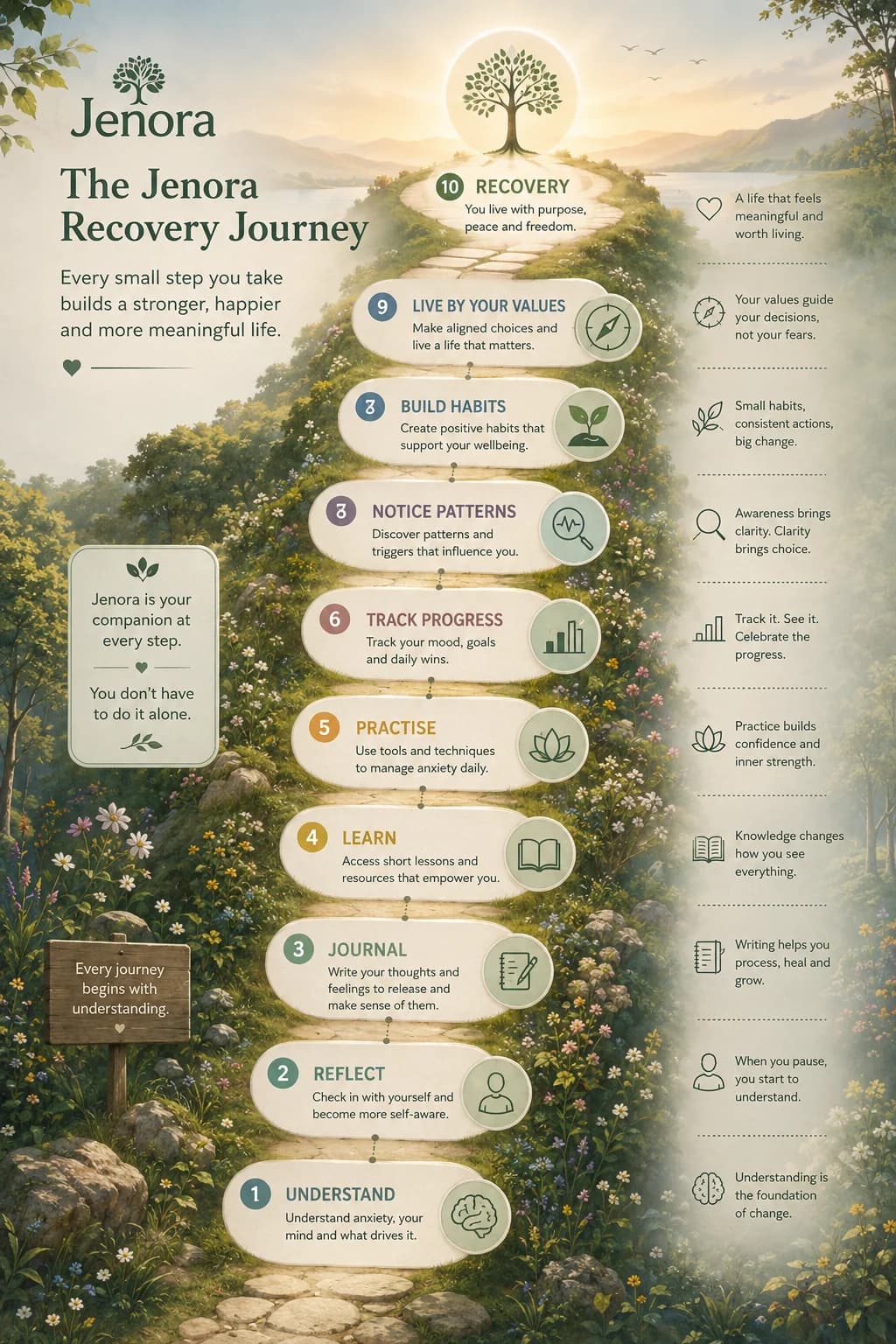
Learning is only the first step. Recovery grows through practice. Here are some ways to continue building on what you've learned:
-
Keep a journal of your thoughts, feelings and progress.
-
Practise one new coping skill each week.
-
Talk to someone you trust about your experiences.
-
Consider working with a qualified mental health professional if anxiety is interfering with your life.
-
Create a personal recovery plan that reflects your values and goals.
-
Be patient with yourself. Growth takes time.
If you're using the Jenora app, this is where the journey continues. The exercises, mood tracking, journaling prompts, breathing techniques and CBT tools are designed to help you turn understanding into daily practice, one small step at a time.
References
American Psychological Association. (2023). Clinical practice guideline for the treatment of anxiety disorders.
Hayes, S. C., Strosahl, K. D., & Wilson, K. G. (2016). Acceptance and commitment therapy: The process and practice of mindful change (2nd ed.). Guilford Press.
Kashdan, T. B., & Ciarrochi, J. (2013). Mindfulness, acceptance, and positive psychology: The seven foundations of well-being. New Harbinger.
National Institute for Health and Care Excellence. (2020). Generalised anxiety disorder and panic disorder in adults: Management (CG113). https://www.nice.org.uk/guidance/cg113
World Health Organization. (2023). Mental disorders. https://www.who.int/news-room/fact-sheets/detail/mental-disorders