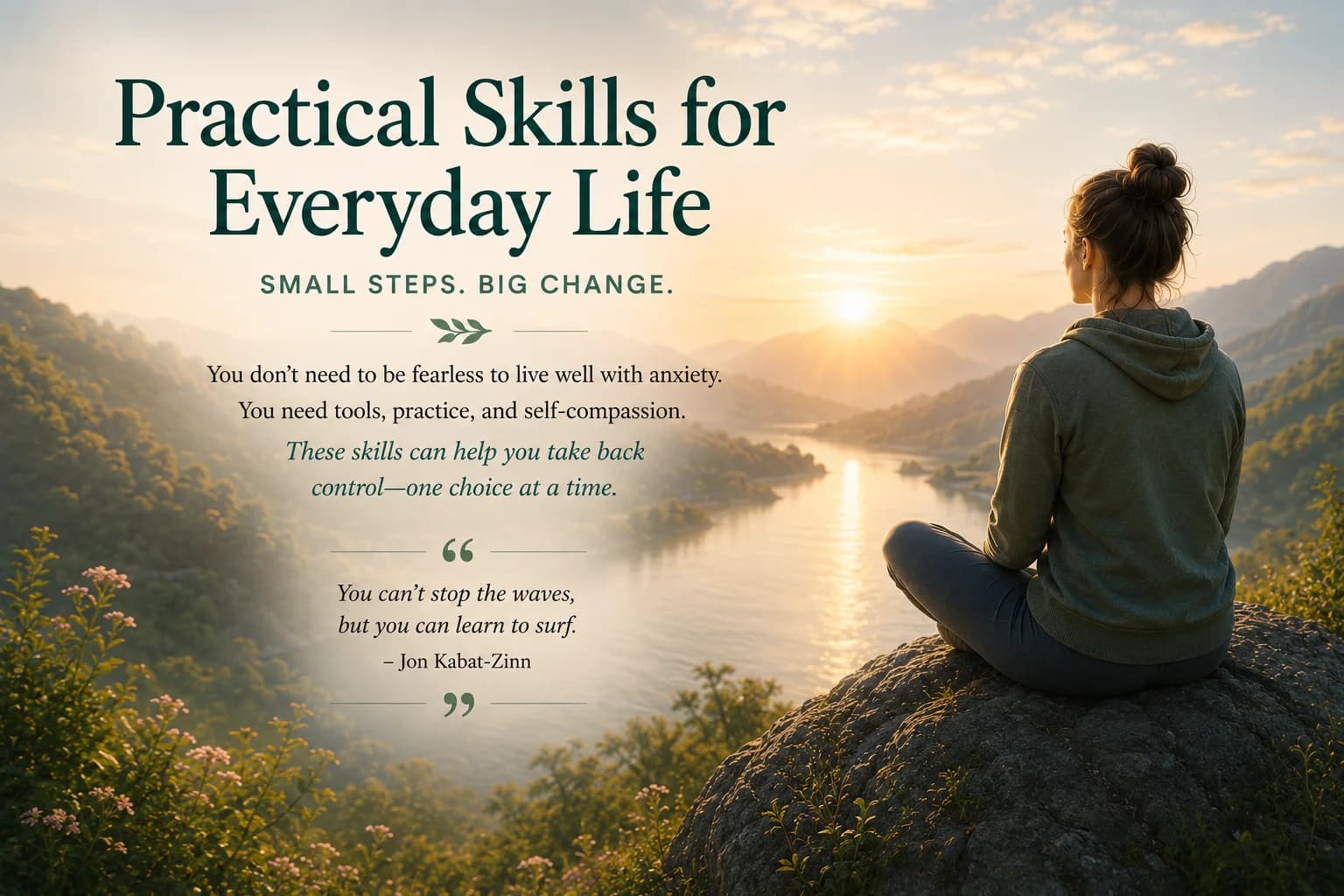
Knowledge Alone Doesn't Change Anxiety
By now, you've learned what anxiety is. You've discovered why your body reacts the way it does. You've seen how anxiety grows through avoidance, and how evidence-based treatments help people recover. But knowledge is only the beginning.
Imagine reading twenty books about swimming. You would understand how swimming works. You still wouldn't know how to swim. Recovery works in the same way --- your brain changes through experience, not simply through understanding. The good news is that every small experience teaches your nervous system something new.
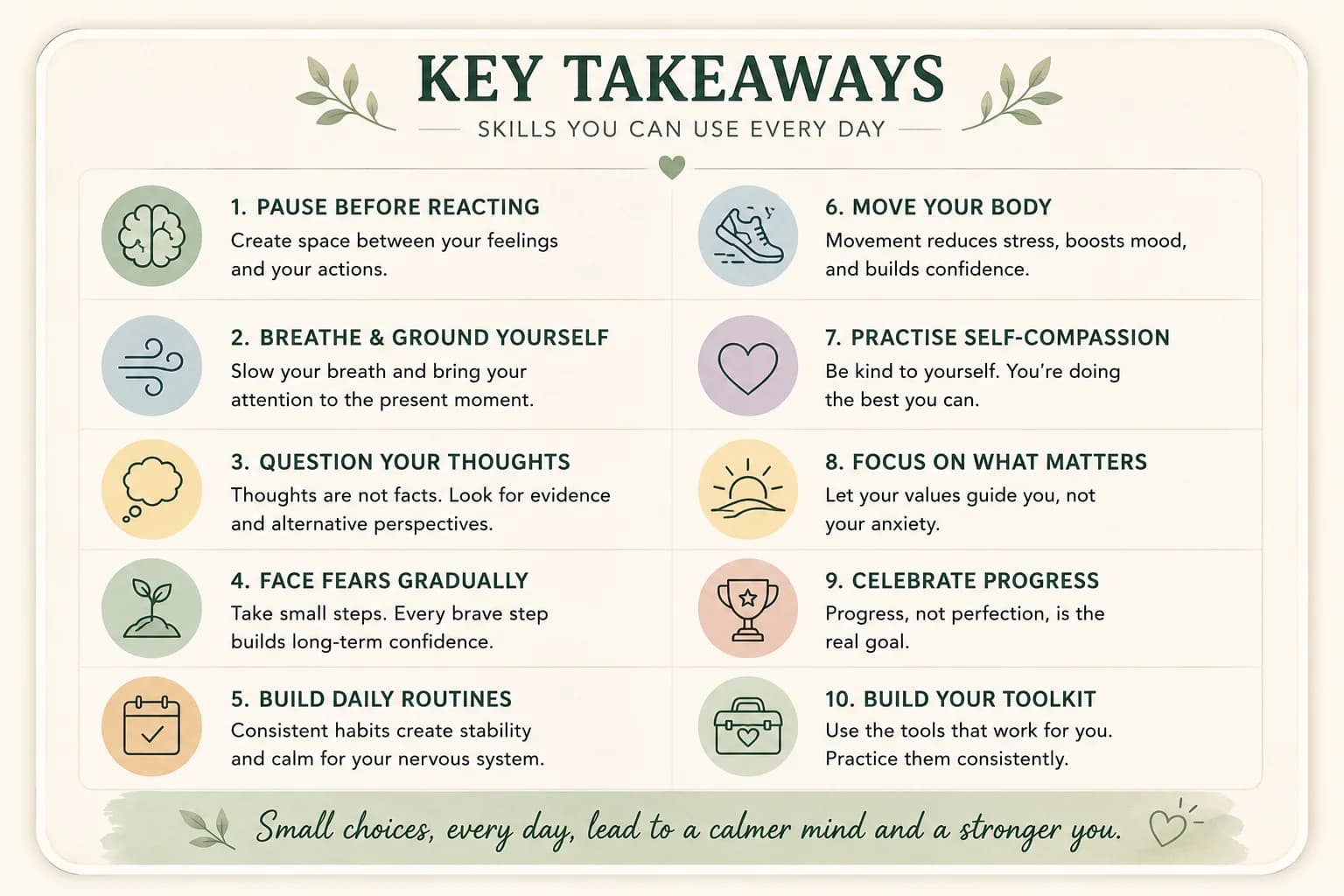
This chapter introduces practical strategies that have been shown to reduce anxiety and build long-term resilience. You don't need to use every technique. Think of them as tools, and over time you'll discover which ones work best for you.
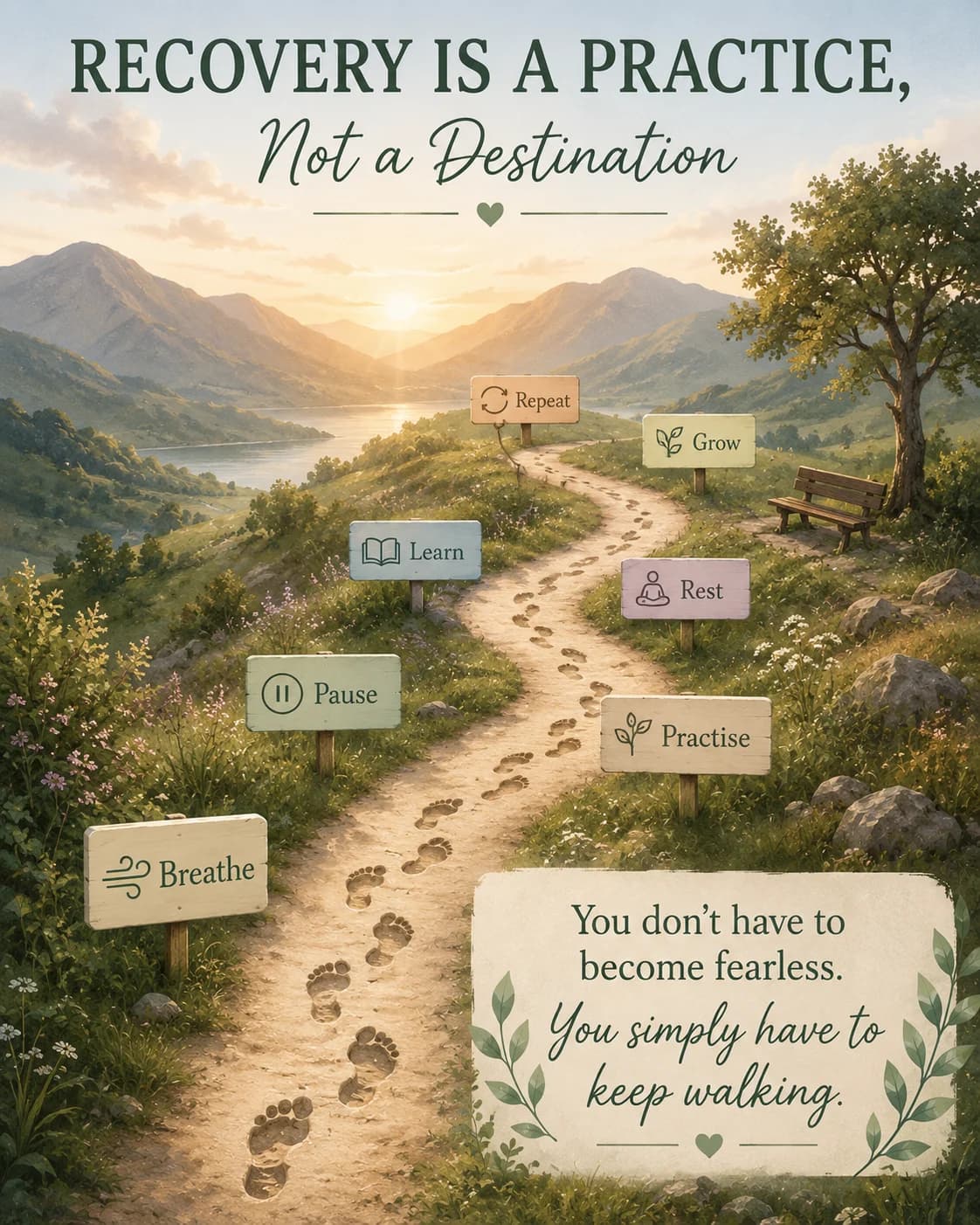
1. Pause Before Reacting
One of anxiety's favourite habits is urgency. It tells you to do something now: check your pulse, leave the room, cancel the meeting, search the internet, seek reassurance, avoid.
The first skill is surprisingly simple: pause. Not because your anxiety isn't important, but because pausing creates space between your feelings and your actions. Instead of reacting automatically, ask yourself, "What is happening inside me right now?" This tiny pause gives your thinking brain an opportunity to re-engage. Sometimes just slowing down for thirty seconds changes everything.
2. Breathe With Your Body, Not Against It
People often hear, "Just take a deep breath." Unfortunately, during anxiety, this advice can sometimes make people breathe even faster. Instead of trying to force huge breaths, focus on slow, gentle breathing.
A simple exercise is the 4-6 breathing technique:
-
Breathe in gently through your nose for 4 seconds
-
Breathe out slowly through your mouth for 6 seconds
-
Repeat for one to three minutes
A longer exhalation encourages your parasympathetic nervous system --- the body's natural calming system --- to become more active. The goal is not to eliminate anxiety instantly. The goal is to communicate to your body, "I am safe enough to slow down."
3. Ground Yourself in the Present
Anxiety lives in the future. It asks, "What if...?" Grounding gently brings you back to, "What is happening right now?"
One of the most effective grounding exercises is the 5-4-3-2-1 technique. Try noticing:
-
5 things you can see
-
4 things you can feel
-
3 things you can hear
-
2 things you can smell
-
1 thing you can taste
This exercise redirects attention from imagined danger to your immediate environment. Your brain begins gathering evidence that you are safe in the present moment.
4. Learn to Question Your Thoughts
An anxious thought is not the same as a fact. Instead of asking, "Is this thought true?", try asking:
-
What evidence supports this?
-
What evidence suggests another explanation?
-
If my friend had this thought, what would I tell them?
-
Am I confusing possibility with probability?
Remember: just because your mind produces a thought does not mean you must believe it.
5. Reduce Avoidance One Small Step at a Time
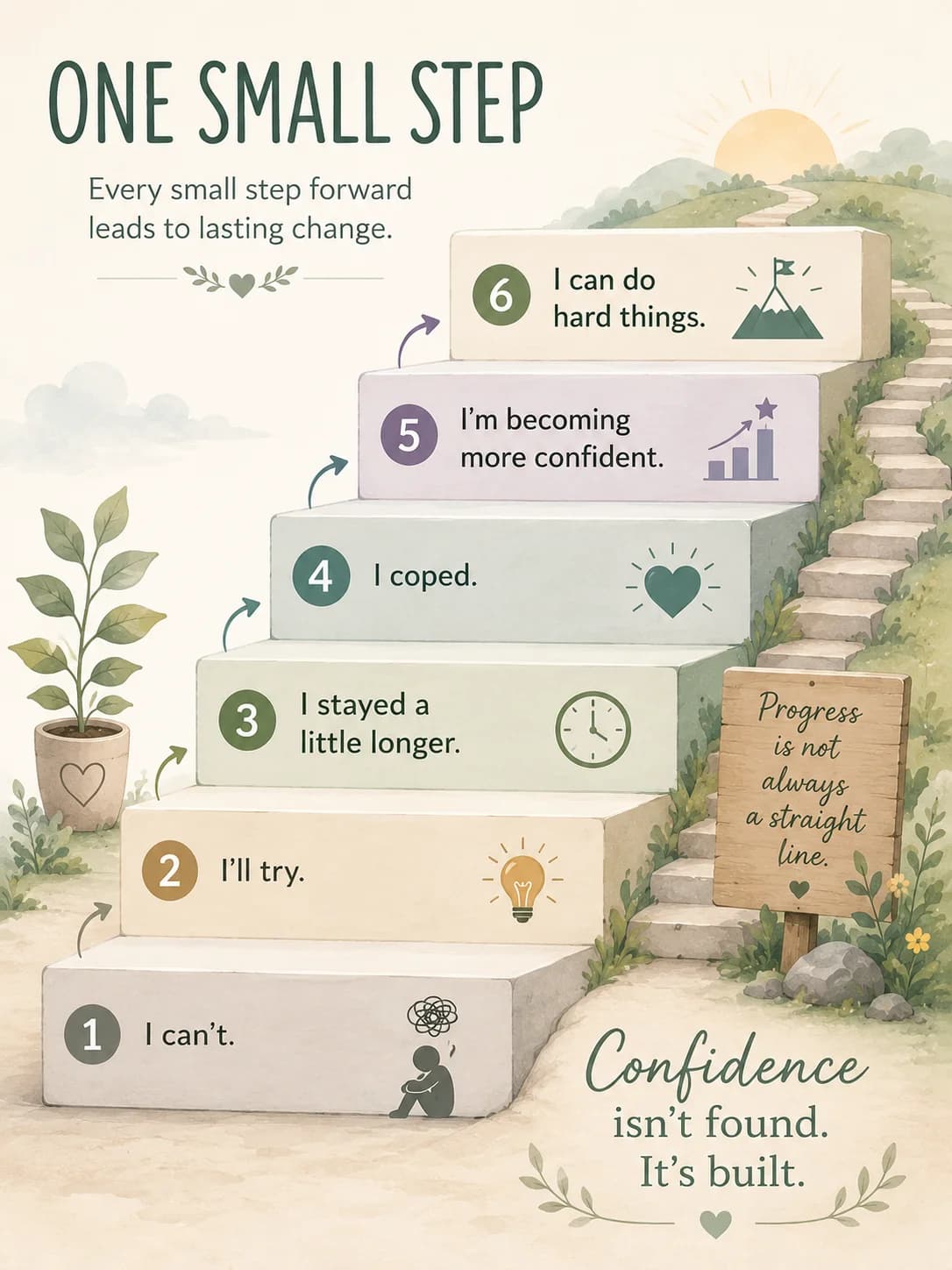
Avoidance feels comforting, but comfort is not always the same as recovery. Rather than trying to conquer your biggest fear immediately, ask yourself, "What is one small step I could take today?"
If social situations feel overwhelming, you don't have to attend a crowded party --- perhaps you simply say hello to one neighbour. Recovery grows through manageable challenges. Confidence develops through repeated success, not through overwhelming yourself.
6. Create a Daily Routine
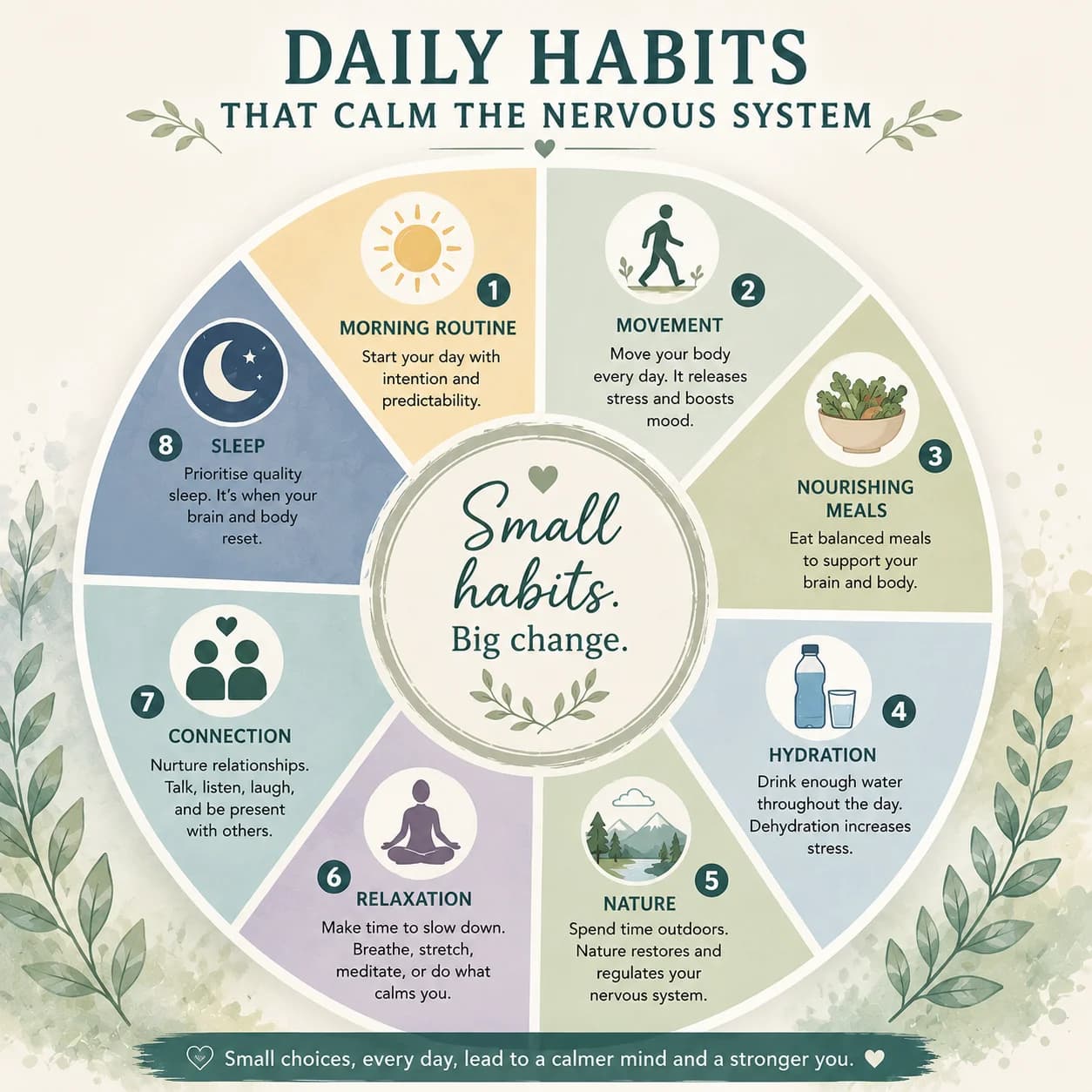
One of the first things anxiety often disrupts is routine. Sleep becomes irregular, meals become inconsistent, exercise disappears, and days begin to feel unpredictable.
The brain loves predictability. Creating a simple daily rhythm provides your nervous system with a sense of stability, and this doesn't require a rigid schedule --- even a few consistent habits can make a significant difference. Examples include waking up at a similar time each day, eating regular meals, spending time outdoors, moving your body, practising relaxation, and maintaining healthy sleep habits. Small routines create psychological safety.
7. Move Your Body
Exercise is not simply about physical health. It is one of the most effective natural regulators of stress. Regular movement helps reduce muscle tension, improve sleep, regulate stress hormones, improve mood and increase confidence.
You don't need intense workouts. A twenty-minute walk, stretching, swimming, cycling, gardening or dancing all count. Every form of movement teaches your body that it is capable rather than helpless.
8. Practise Self-Compassion
People with anxiety are often extraordinarily kind towards others, and remarkably critical of themselves. Imagine saying to a frightened child, "You're ridiculous, stop worrying." Most of us never would. Yet many people speak to themselves this way every day.
Recovery becomes much easier when we replace criticism with compassion. Instead of "What's wrong with me?", try "This is difficult, and I'm doing my best." Self-compassion is not self-pity. It is recognising that suffering is part of being human, and responding with the same kindness you would offer someone you love.
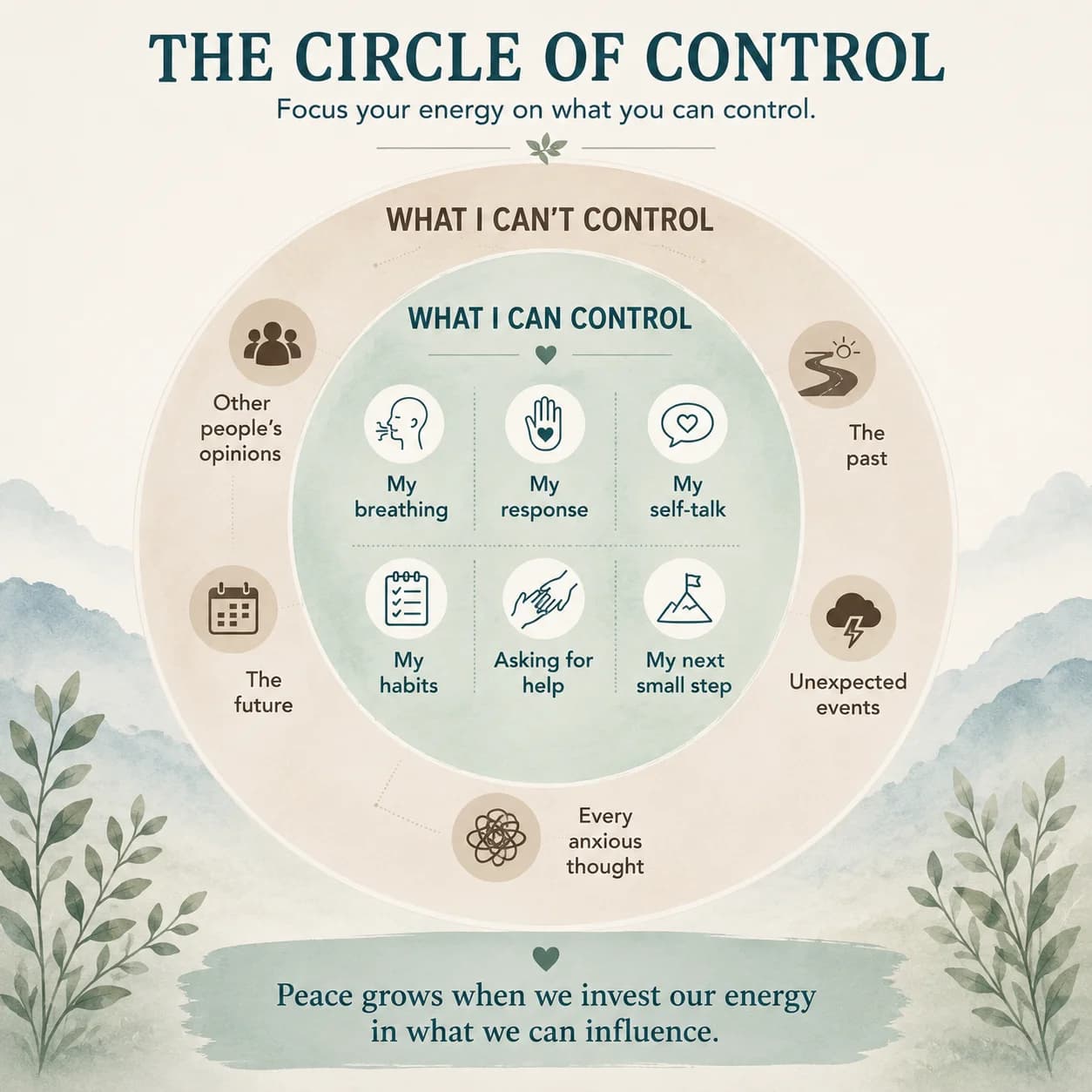
9. Focus on What Matters Most
Anxiety often shrinks life. People stop travelling, stop socialising, stop pursuing goals, stop taking opportunities.
One of the most powerful questions you can ask is, "If anxiety wasn't making this decision, what would I choose?" That question shifts attention from fear towards values. Recovery is not about building a smaller, safer life. It is about building a meaningful one.
10. Celebrate Progress, Not Perfection
One of the biggest obstacles to recovery is expecting perfection. Imagine someone learning to play the piano --- would they expect every note to be perfect on day one? Of course not. Recovery deserves the same patience.
Some days will feel easier. Others won't. Progress is rarely a straight line. It is more like climbing a mountain: sometimes the path levels out, sometimes you take a wrong turn, sometimes the weather changes. But every step still moves you forward.
Celebrate making the difficult phone call, staying in the situation for five extra minutes, practising your breathing, writing in your journal, or asking for help. These moments matter far more than they may appear.
Building Your Own Anxiety Toolkit
By now, you've encountered many different strategies throughout this guide. You don't need to remember everything. Instead, create your own personal toolkit. When your anxiety increases, ask yourself:
-
What helps me breathe?
-
What helps me slow down?
-
What helps me think more clearly?
-
Who can I contact?
-
What reminds me that I'm safe?
-
What activities help me reconnect with my values?
Recovery becomes much easier when these answers are prepared before anxiety becomes overwhelming.
Recovery Happens Through Practice
Perhaps the most important lesson in this chapter is this: recovery is not something you wait for. It is something you practise. Every healthy choice strengthens a new neural pathway. Every compassionate response teaches your brain that fear is not the only option. Every small act of courage quietly rewires your nervous system.
Your brain has spent time learning anxiety. It can also spend time learning safety.
Try This Today
Choose one strategy from this chapter. Not five, not ten --- just one. Practise it every day for the next week, and notice what changes.
Recovery is rarely about doing everything perfectly. It is about doing small things consistently. One small habit repeated many times can reshape the way your brain responds to stress.
References
American Psychological Association. (2023). Clinical practice guideline for the treatment of anxiety disorders.
Gilbert, P. (2010). The compassionate mind. Constable & Robinson.
Hayes, S. C., Strosahl, K. D., & Wilson, K. G. (2016). Acceptance and commitment therapy: The process and practice of mindful change (2nd ed.). Guilford Press.
Kabat-Zinn, J. (2013). Full catastrophe living (Revised ed.). Bantam Books.
National Institute for Health and Care Excellence. (2020). Generalised anxiety disorder and panic disorder in adults: Management (CG113). https://www.nice.org.uk/guidance/cg113
Neff, K. D. (2011). Self-compassion. William Morrow.
World Health Organization. (2023). Mental disorders. https://www.who.int/news-room/fact-sheets/detail/mental-disorders