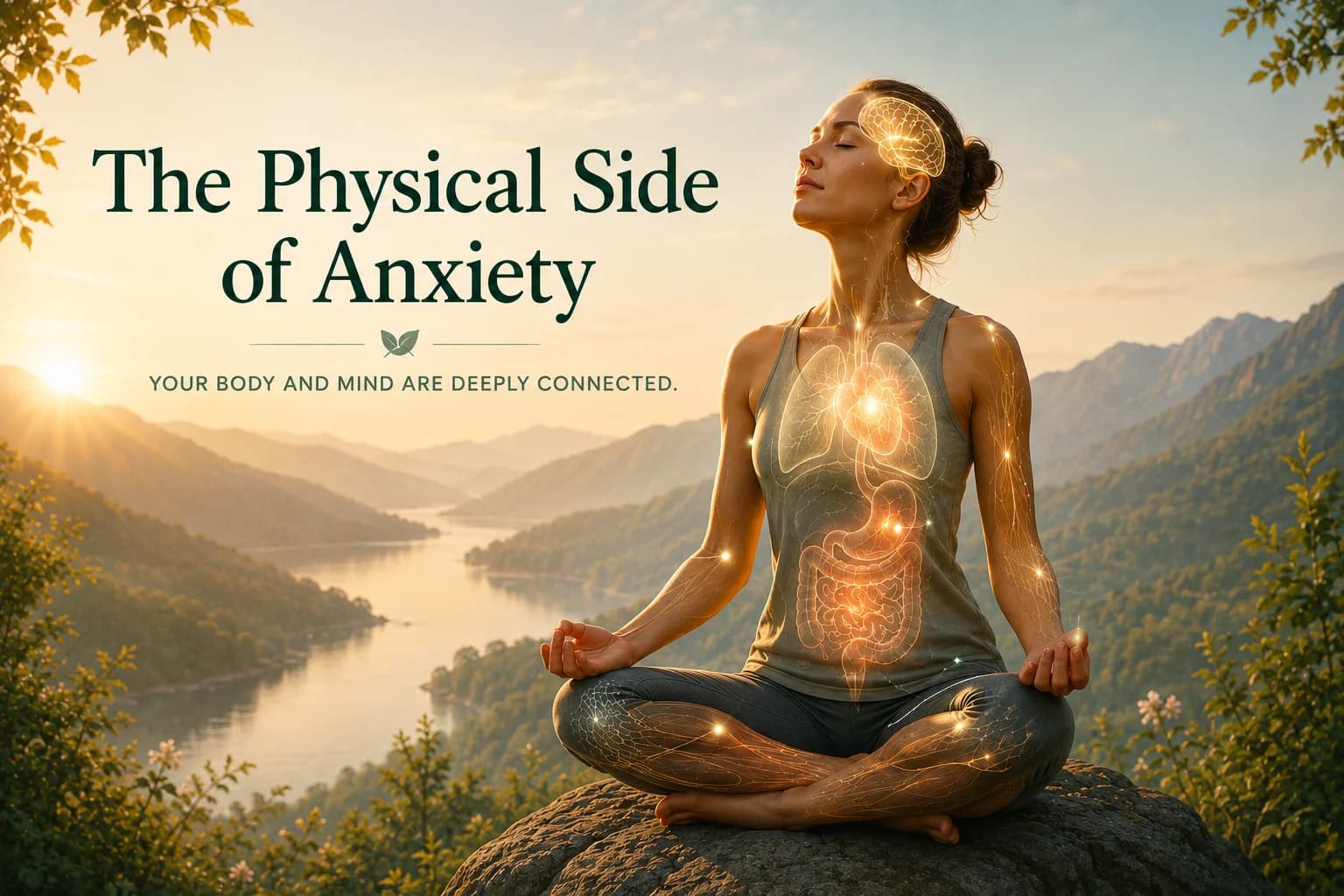
"But It Feels Physical..."
One of the most frightening things about anxiety is that it often doesn't feel psychological. It feels physical. Your heart races. Your chest feels tight. Your stomach churns. Your hands shake. Your vision blurs. You become dizzy.
Naturally, your first thought is often, "There must be something physically wrong with me." This reaction makes complete sense --- if your body suddenly behaved this way without warning, most people would be concerned.
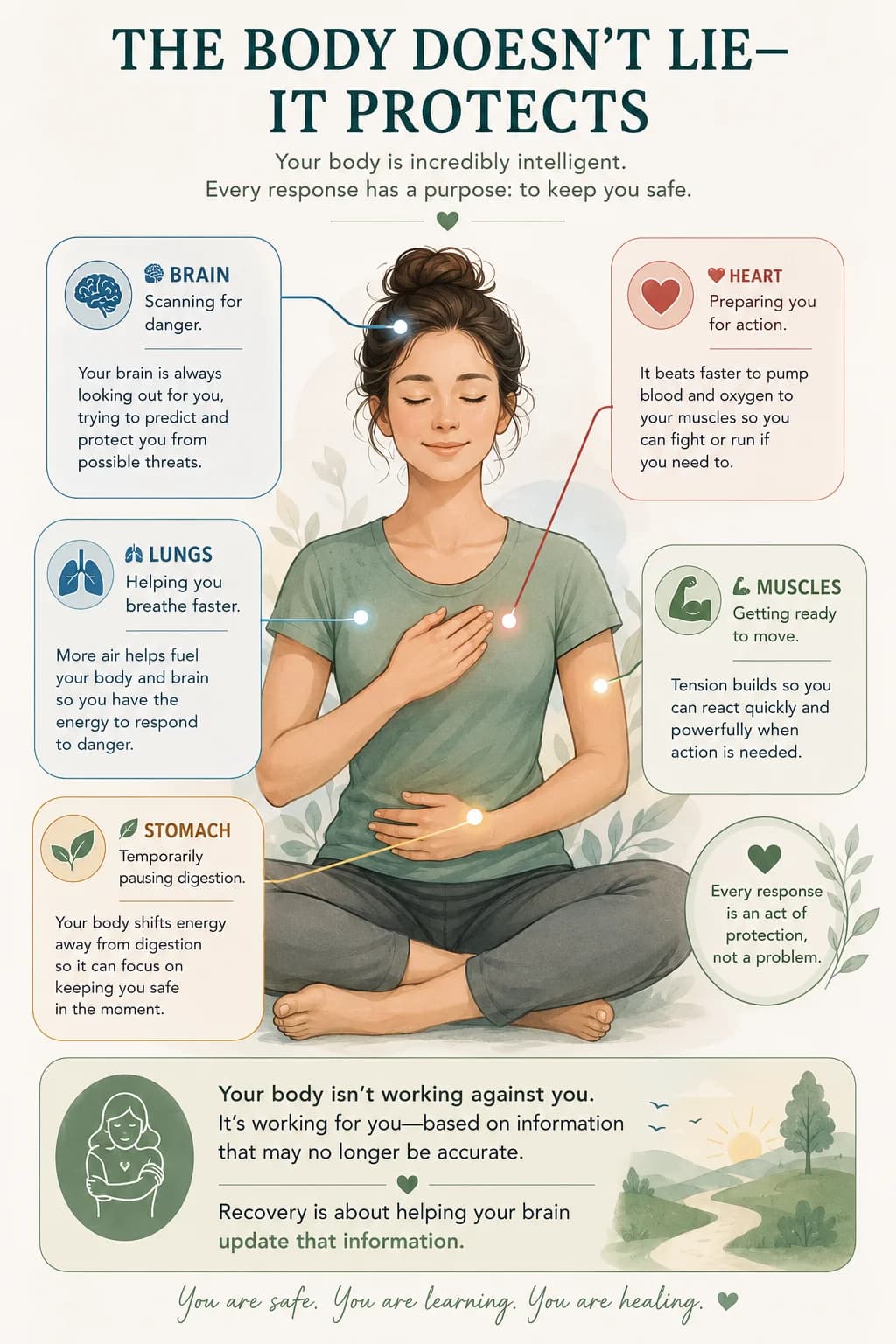
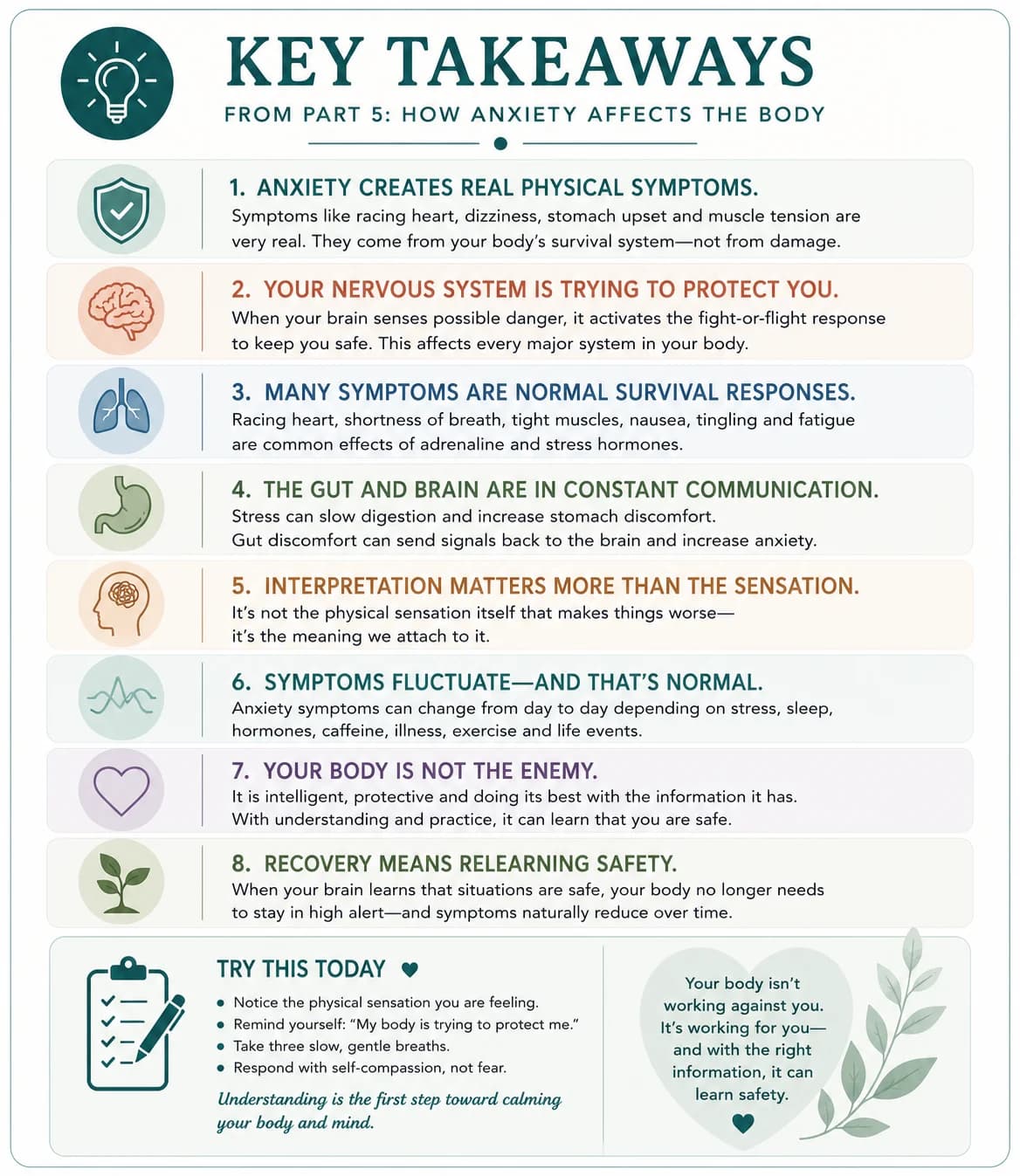
The important thing to understand is that anxiety does not "fake" physical symptoms. The symptoms are completely real. What causes them is not damage to your body, but activation of your body's survival system. When your brain believes you may be in danger, it prepares your entire body to help you survive, and almost every organ system becomes involved.
Your Nervous System Takes Control
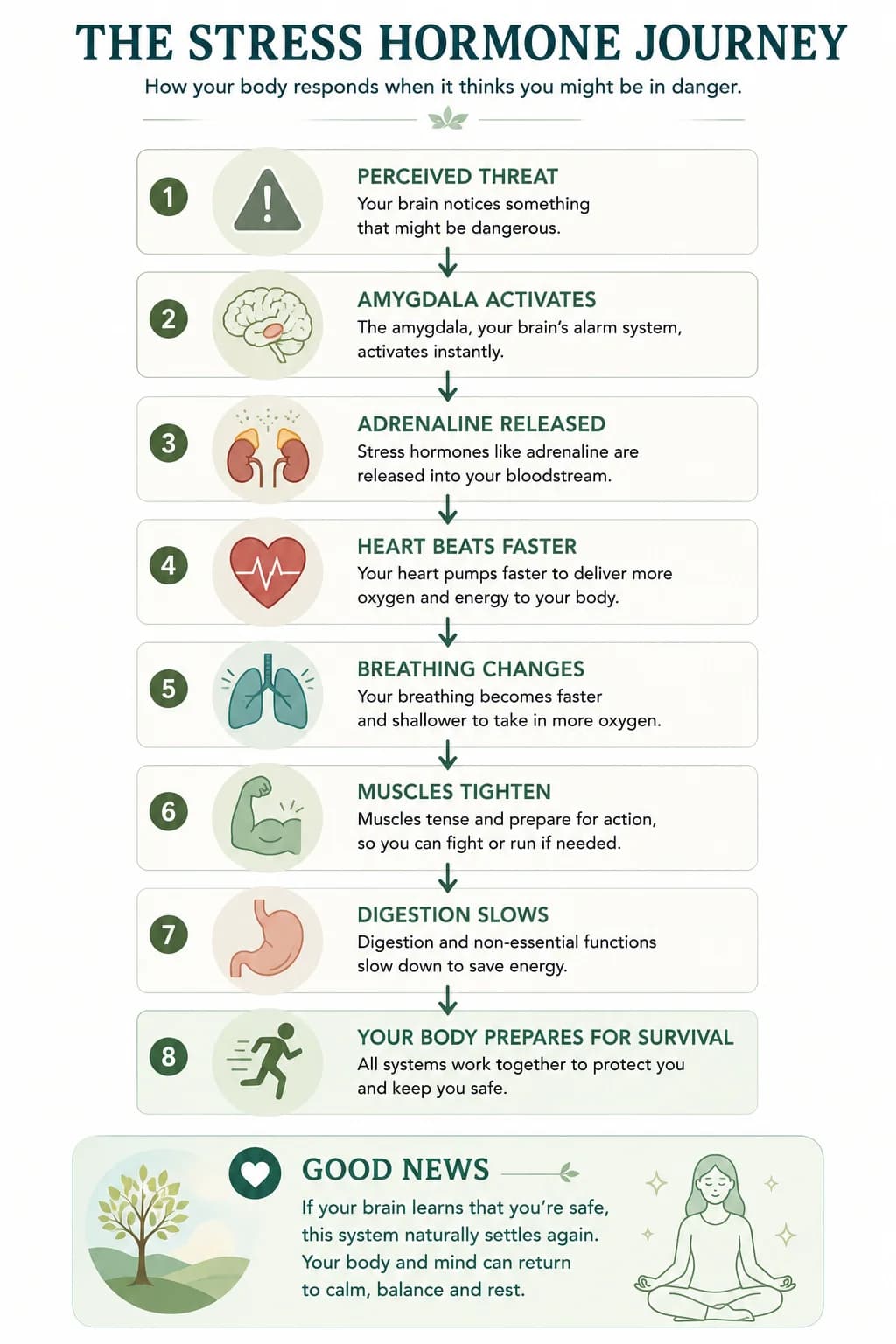
Think back to Part 1. When your amygdala detects possible danger, it activates the sympathetic nervous system, which evolved to prepare you for immediate action. Within seconds, adrenaline is released, your heart pumps faster, your breathing changes, your muscles tighten, digestion slows, and your senses become sharper.
None of these reactions are harmful. They are highly efficient survival adaptations. The difficulty arises when this system activates during situations that are emotionally stressful rather than physically dangerous.
Why Does My Heart Race?
Perhaps the most common question people ask is, "Can anxiety really make my heart race?" Yes --- in fact, it is one of the hallmark symptoms of anxiety. When adrenaline is released, the heart beats faster, blood pressure increases slightly, blood is redirected towards large muscles, and oxygen delivery increases. Your body is preparing to fight or run.
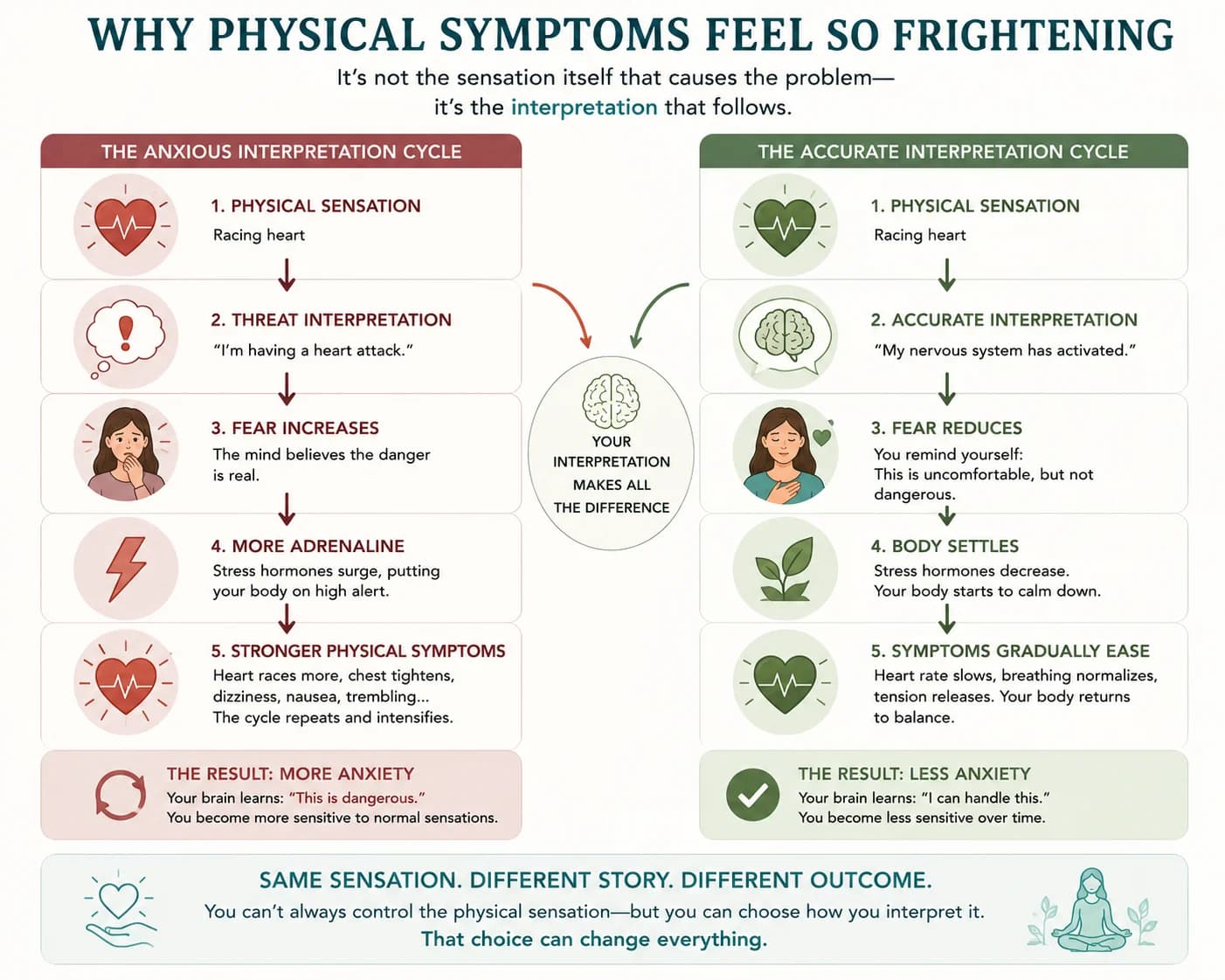
If you're sitting quietly in a meeting or lying in bed, that response feels confusing, and many people become frightened by the sensation itself. Ironically, worrying about a racing heart releases even more adrenaline, the heart beats faster still, and the cycle continues.
Chest Tightness and Chest Pain
Chest discomfort is another symptom that understandably causes alarm. During anxiety, the muscles around the chest tighten, breathing becomes shallower, posture often changes, and the rib muscles work harder. This combination can produce pressure, aching, sharp pains, tightness or heaviness.
Although anxiety commonly causes chest discomfort, new, severe or persistent chest pain should always be medically assessed, particularly if it's accompanied by pain radiating into the arm or jaw, collapse, or difficulty breathing. Good psychoeducation reassures people while also encouraging appropriate medical care.
Shortness of Breath
Many people describe feeling as though they "can't get a proper breath." Interestingly, oxygen levels are usually normal --- the problem is not a lack of oxygen, but that breathing has become faster and shallower. This changes the balance of carbon dioxide in the bloodstream, and lower carbon dioxide levels can produce dizziness, tingling, light-headedness or feelings of unreality. The body interprets these sensations as threatening, and anxiety increases further.
Dizziness
Dizziness is one of the symptoms people fear most. People often assume it means a stroke, fainting, or a neurological illness. Fortunately, dizziness is a well-recognised feature of anxiety. It may result from hyperventilation, muscle tension in the neck, increased visual scanning, changes in blood vessel activity, or heightened awareness of normal balance sensations. The sensation itself is uncomfortable. It is not usually dangerous.
Why Do My Hands Shake?
Adrenaline prepares muscles for action, and one side effect is tremor: tiny muscle fibres begin firing more rapidly, creating shaking hands, trembling legs, jaw trembling, or a sense of internal shaking. Many people worry, "Everyone can see." In reality, these tremors are often much less noticeable than they feel.
Tingling and Numbness
Pins and needles are another surprisingly common symptom. These sensations often occur in the hands, feet, face or lips, and are commonly linked to changes in breathing and muscle tension rather than nerve damage. Understanding this often reduces the fear surrounding the symptom.
Why Does Anxiety Affect My Stomach?
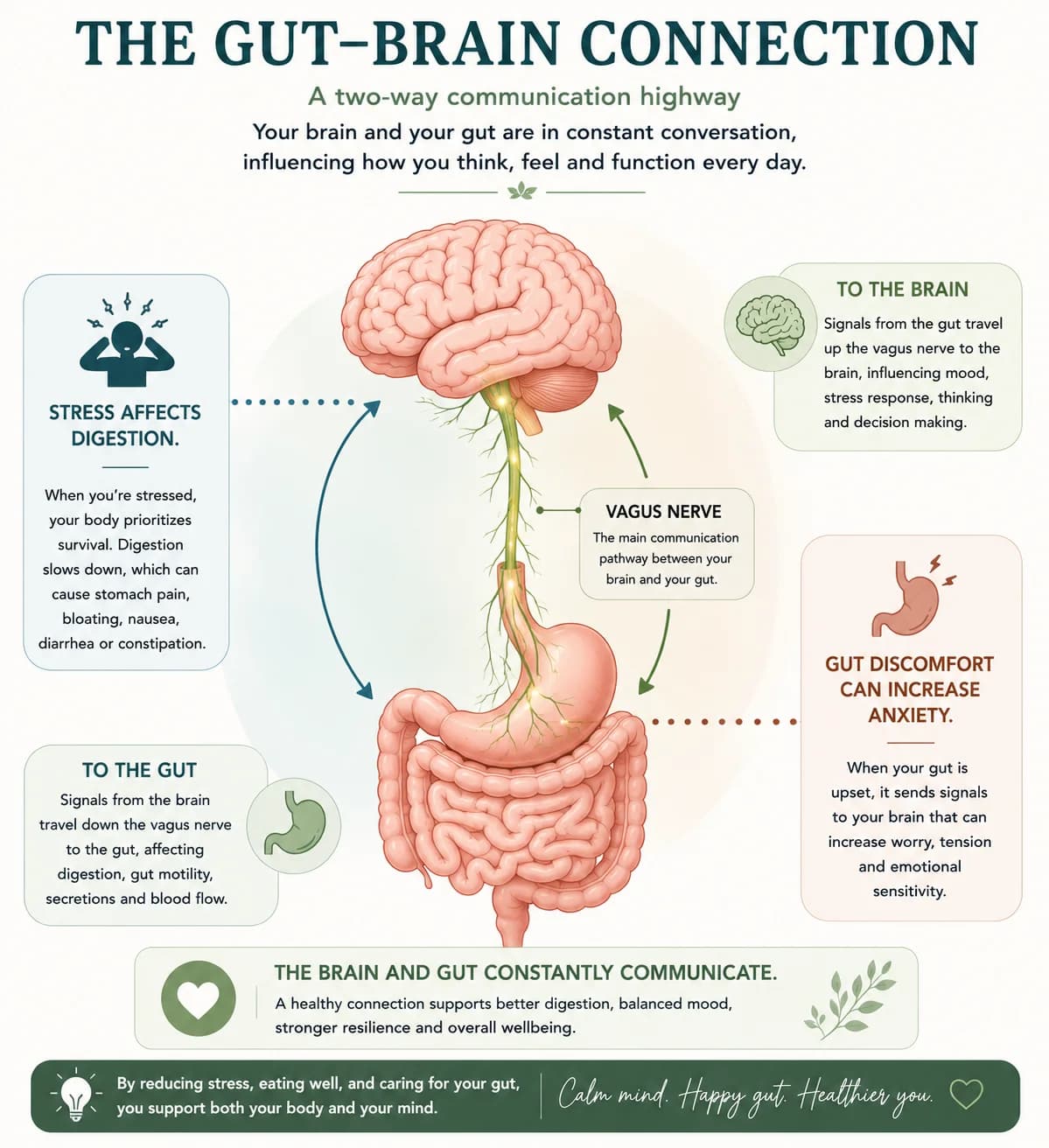
The digestive system and the brain communicate constantly through what scientists call the gut-brain axis. When your brain believes survival is the priority, digestion becomes temporarily less important. This explains why anxiety may cause nausea, "butterflies," stomach cramps, diarrhoea, constipation, acid reflux, or appetite changes. Many people notice digestive symptoms long before they consciously recognise they are anxious.
Muscle Pain and Tension
Anxiety asks muscles to stay ready. Imagine clenching your fists for several hours --- eventually they begin to ache. The same thing happens throughout the body, commonly in the neck, shoulders, jaw, lower back and scalp. Many tension headaches are strongly influenced by prolonged muscle contraction of this kind.
Fatigue
This surprises many people. They ask, "How can anxiety make me so exhausted?" Imagine driving a car with the accelerator pressed down all day --- eventually the engine overheats. The same principle applies to the nervous system. Being constantly alert requires enormous amounts of energy, and poor sleep, muscle tension, stress hormones and overthinking together create profound fatigue.
Many people with anxiety feel tired not because they are doing too little, but because their brain has been working overtime trying to protect them.
Why Anxiety Can Feel Different Every Day
One day you may notice dizziness. The next, stomach problems. Another day, headaches. Another, racing thoughts. This variability often worries people, who assume, "If it changes, it can't be anxiety."
In reality, anxiety symptoms naturally fluctuate. Stress, sleep, hormones, caffeine, alcohol, illness, exercise and life events all influence how the nervous system responds from one day to the next.
Listening to Your Body Without Becoming Afraid of It
One goal of recovery is learning to notice physical sensations without immediately assuming danger. If your heart is racing, instead of thinking "I'm having a heart attack," try "my nervous system has activated." If you feel butterflies, instead of "something is wrong," try "my body is preparing for uncertainty."
This isn't about pretending symptoms don't exist. It's about interpreting them more accurately. Over time, this reduces fear and allows the nervous system to settle.
Anxiety Symptoms Are Real
Perhaps the most important message in this chapter is this: your symptoms are not imagined. They are not "all in your head." They are genuine physical experiences produced by one of the most sophisticated survival systems ever created.
Understanding that system doesn't immediately remove anxiety. But it often removes something equally important: the fear of the symptoms themselves. And when people become less frightened by their own bodies, recovery often becomes much easier.
Try This Today
The next time you notice a physical symptom of anxiety, pause before judging it. Ask yourself:
-
What sensation am I noticing?
-
What might my nervous system be trying to prepare me for?
-
Am I responding to a real danger, or to uncertainty?
Then take three slow, gentle breaths and remind yourself, "This sensation is uncomfortable, but my body is trying to protect me." Sometimes the greatest shift comes not from making the symptom disappear, but from changing the story we tell ourselves about it.
References
American Psychiatric Association. (2022). Diagnostic and statistical manual of mental disorders (5th ed., text rev.). American Psychiatric Association Publishing.
McEwen, B. S., & Akil, H. (2020). Revisiting the stress concept: Implications for affective disorders. The Journal of Neuroscience, 40(1), 12--21.
National Institute for Health and Care Excellence. (2020). Generalised anxiety disorder and panic disorder in adults: Management (CG113). https://www.nice.org.uk/guidance/cg113
Thayer, J. F., & Lane, R. D. (2009). Claude Bernard and the heart--brain connection: Further elaboration of a model of neurovisceral integration. Neuroscience & Biobehavioral Reviews, 33(2), 81--88.
Van Oudenhove, L., Crowell, M. D., Drossman, D. A., et al. (2016). Biopsychosocial aspects of functional gastrointestinal disorders. Gastroenterology, 150(6), 1355--1367.
World Health Organization. (2023). Mental disorders. https://www.who.int/news-room/fact-sheets/detail/mental-disorders