Introduction
People often describe depression as their brain "shutting down." Concentration slips. Small decisions feel enormous. Motivation goes quiet. Things that used to bring joy feel strangely flat.
None of this is imagined. Depression is a mood disorder characterised, in part, by a persistently low mood and loss of interest or pleasure lasting at least two weeks [7], and neuroscience has spent decades mapping what that actually looks like inside the brain. Brain imaging research shows that depression involves altered connectivity and network function across regions responsible for mood, motivation, attention, memory and even physical energy [8]. This isn't a single faulty part. It's a shift in how several systems talk to one another.
The hopeful part is what comes next: these networks are not fixed. With time, treatment and repeated healthy experience, they can recalibrate.
Beyond the "Chemical Imbalance" Story
For years, depression was popularly explained as a shortage of serotonin. Serotonin does matter for mood regulation, but the science has moved well past that single-molecule explanation. Current research describes depression as involving a mix of interacting systems: neurotransmitters (including serotonin, but also GABA and glutamate), stress hormones, inflammation, sleep regulation, brain connectivity, and the circuits governing learning, memory and reward [8][9].
Depression is increasingly understood as a disorder of brain networks rather than brain chemicals alone [9][10]. That reframing matters practically: it's part of why recovery so often benefits from combining approaches, therapy, lifestyle change, sometimes medication, rather than expecting any single fix to do all the work.
The Brain's Alarm System: The Amygdala
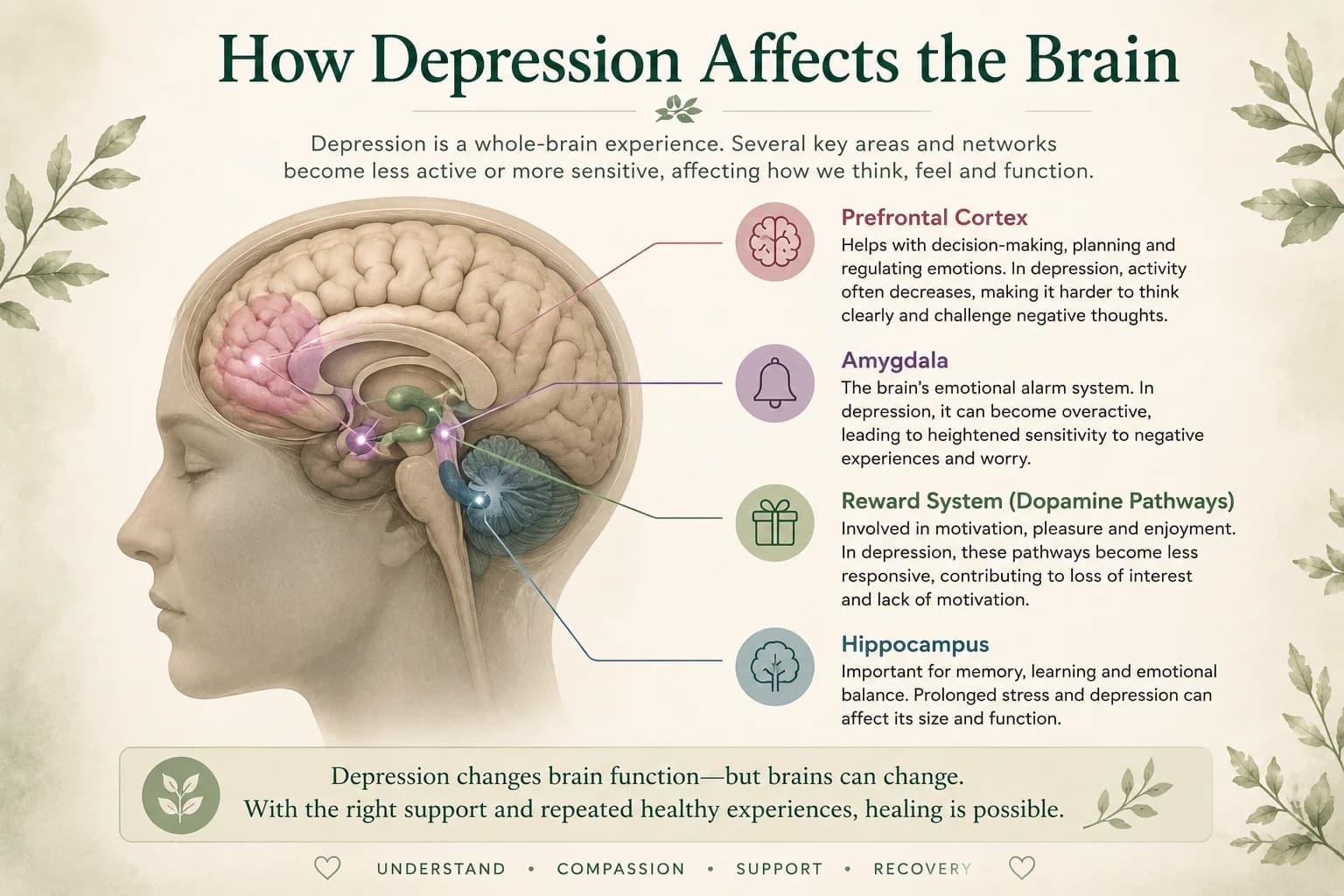
The amygdala is constantly scanning for emotionally significant information. In depression, it tends to become more reactive to negative input and less responsive to positive input [10].
That shift has a lived texture to it: small setbacks feel outsized, criticism lingers, and good moments slide by almost unnoticed. This is a large part of why depression carries such a persistent negative tone, not because good things stop happening, but because the brain's alarm system is tuned away from registering them.
The Thinking Brain Goes Quiet: The Prefrontal Cortex
The prefrontal cortex, just behind the forehead, is what allows us to weigh decisions, solve problems, regulate emotion, think flexibly and plan ahead. Research points to reduced activity in parts of this region during depression [10], which helps explain why it becomes so much harder, in the middle of a depressive episode, to talk yourself out of a negative thought or trust that things could improve.
This isn't a willpower problem. It's a temporarily under-resourced part of the brain, not a permanently absent one.
The Reward System Slows Down
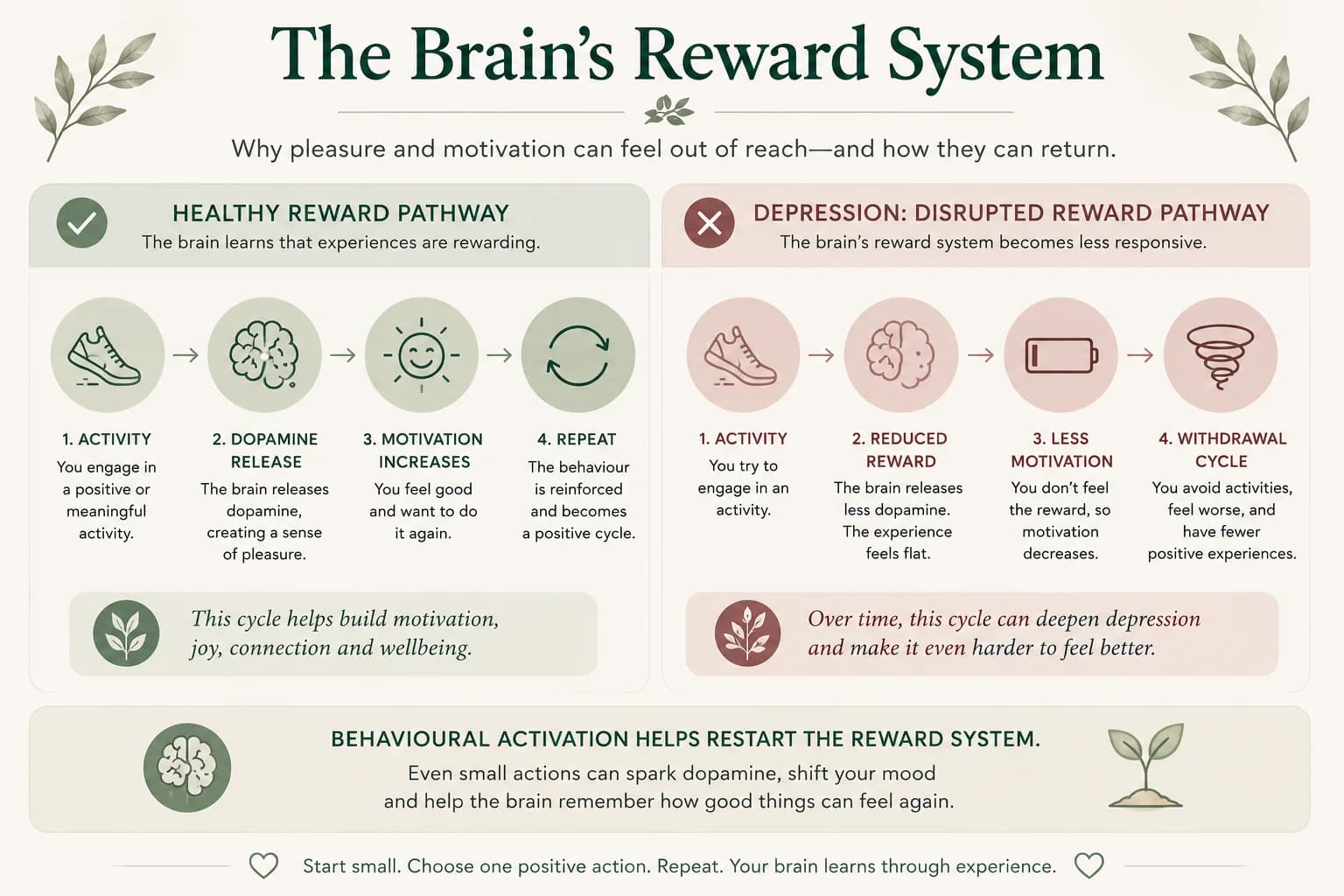
Anhedonia, a reduced capacity to feel pleasure, is one of depression's defining features, and it traces back to changes in the brain's dopamine-driven reward circuitry [11]. Friends, hobbies, music, food, movement: activities that once reliably felt good may stop producing much of a response at all.
It's easy to interpret this as having "lost yourself." What's more accurate is that the reward system has gone quiet, not permanently. Research on reward circuit plasticity shows this system can become responsive again through repeated positive experience and structured behavioural activation, doing the activity before motivation returns, rather than waiting for motivation to lead [11].
Stress and Cortisol
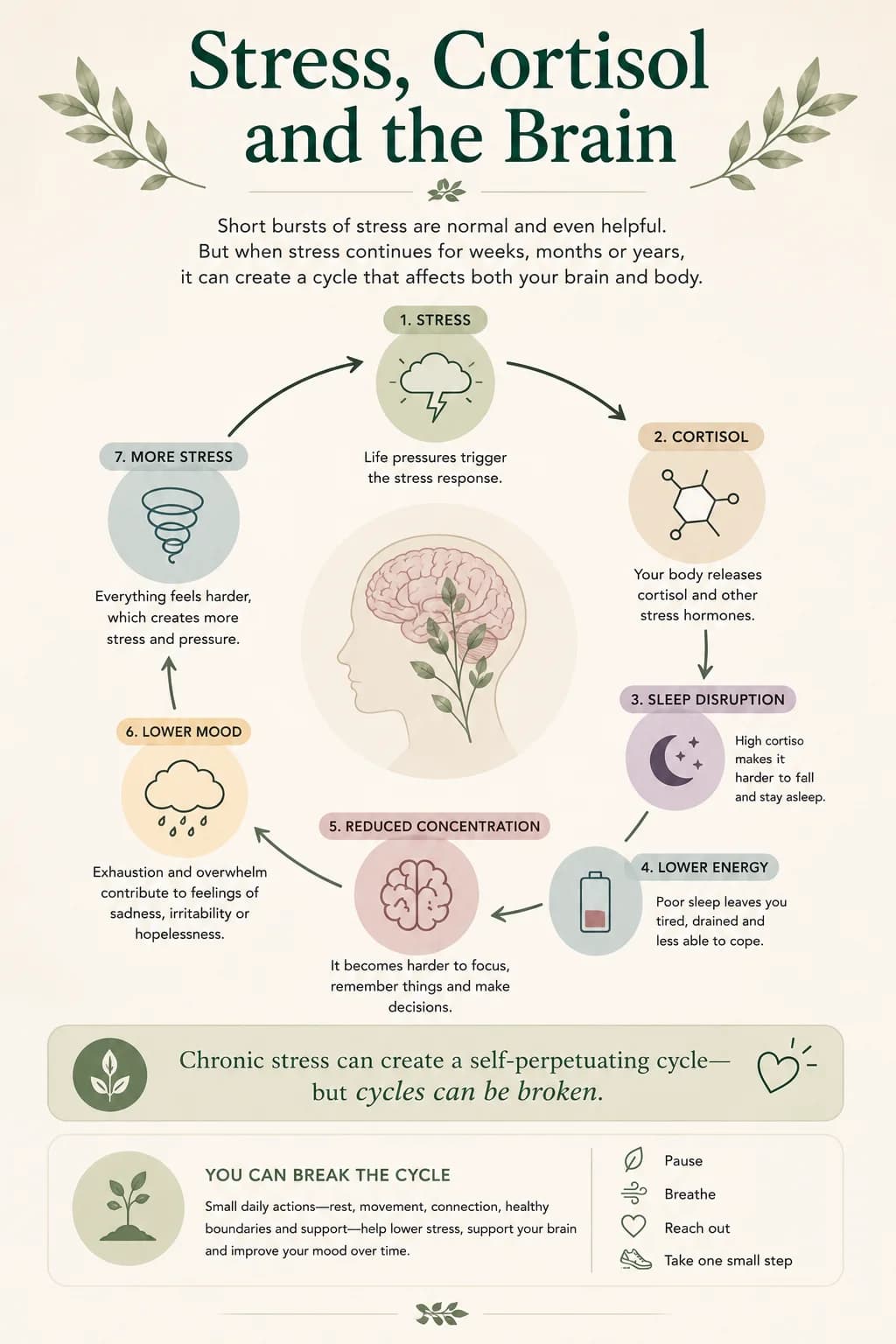
Stress triggers the release of cortisol, the body's primary stress hormone. In short bursts, this is a normal, even useful, response. Sustained over months or years, it's a different story. Chronic activation of the stress response system has been linked to hippocampal changes, sleep disruption, reduced concentration, emotional exhaustion and lower motivation [12], which helps explain why prolonged stress is among the strongest known risk factors for depression.
Neuroplasticity: The Brain Can Change
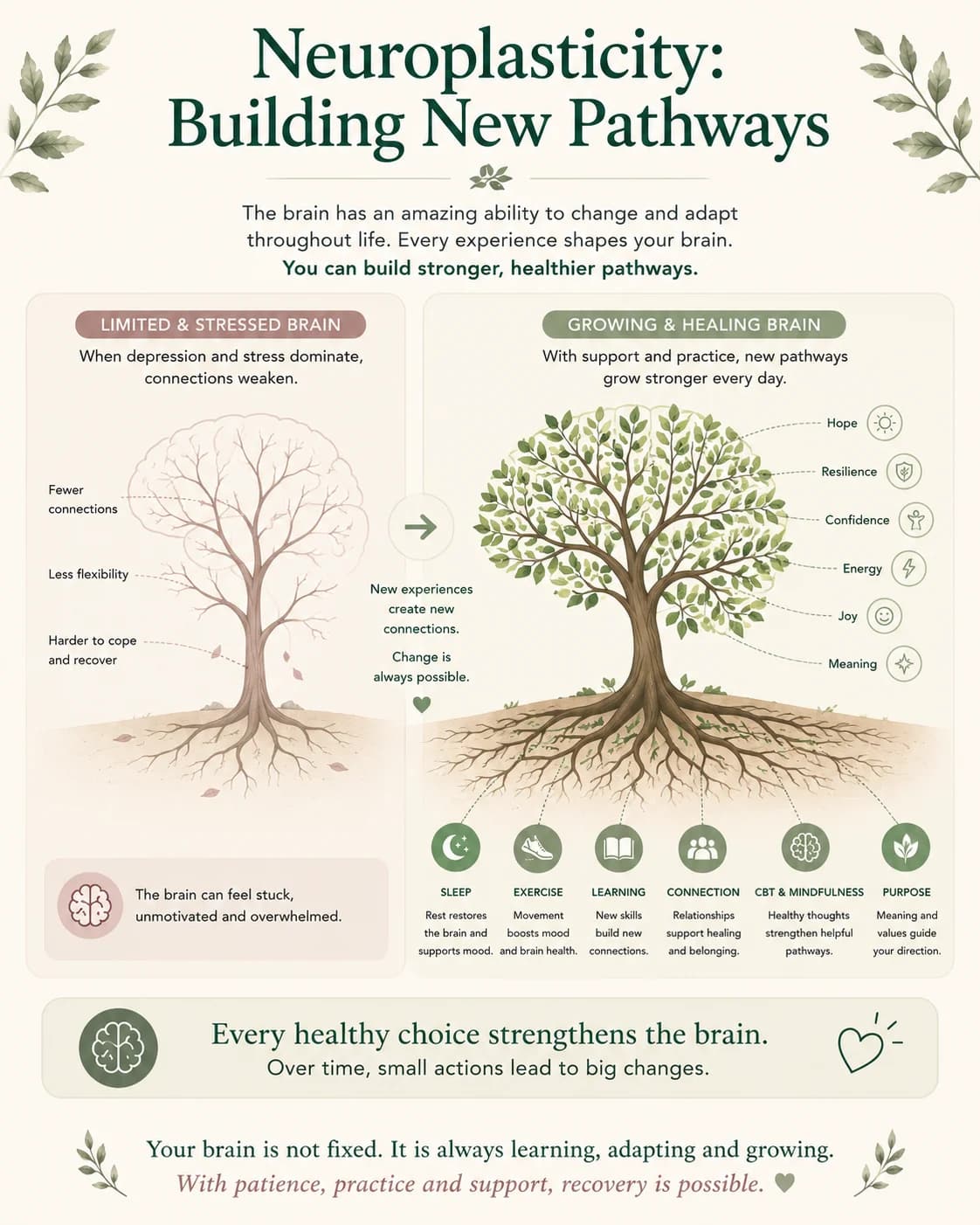
If there's one discovery worth holding onto, it's neuroplasticity: the brain's lifelong capacity to reorganise itself and build new connections. Learning something new, practising a coping skill, challenging an unhelpful thought, exercising, connecting with others, sleeping well, spending time outdoors, each of these strengthens neural pathways that support wellbeing.
Recovery, seen this way, isn't only about feeling better. It's about giving the brain repeated opportunities to build healthier patterns, one experience at a time.
Why Recovery Takes Time
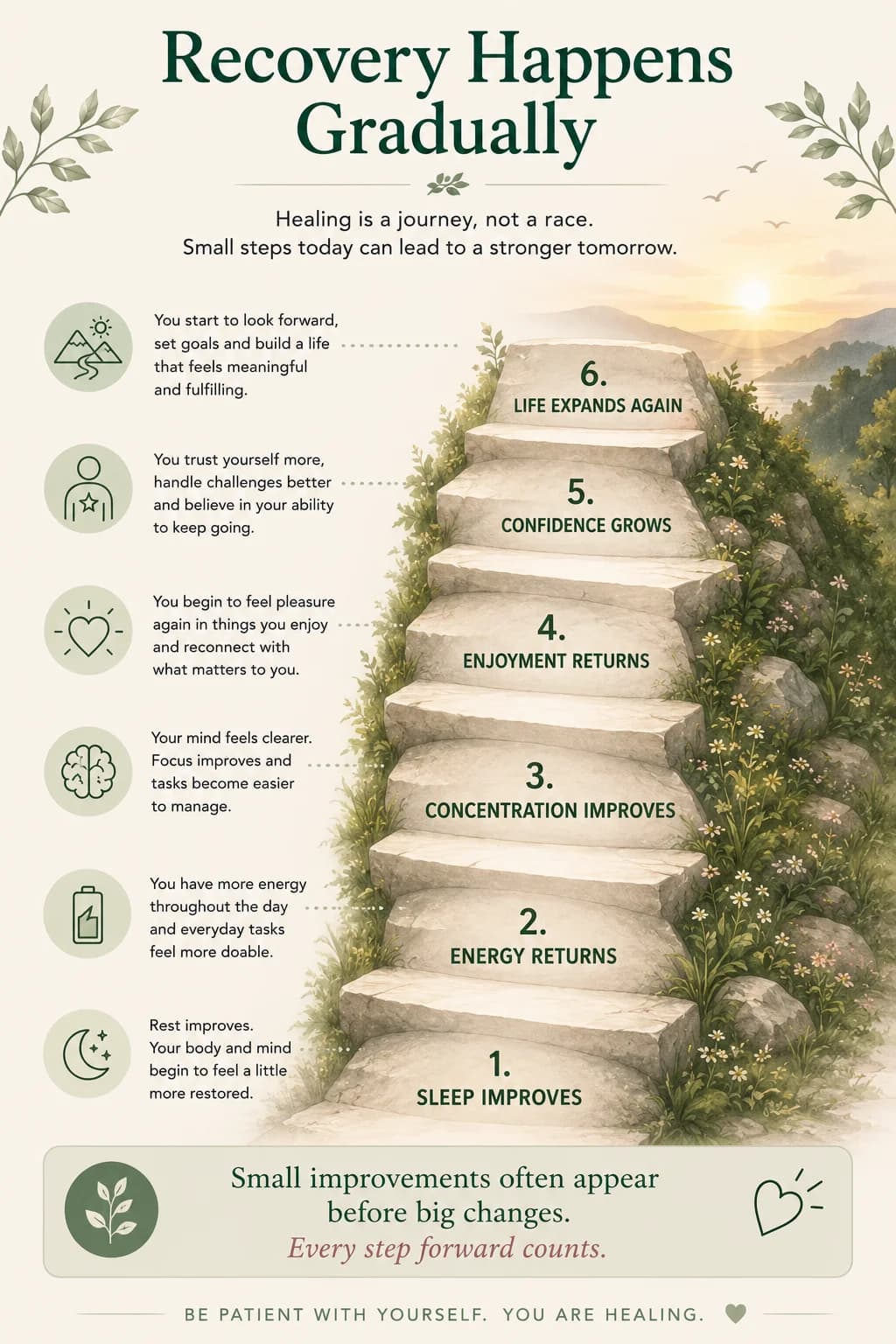
It's common to start therapy or medication and feel frustrated when nothing shifts right away. That's a reasonable reaction, but it misjudges the timeline. Brain change, like bone healing, requires repetition and time. Small improvements tend to arrive quietly, before they're consciously noticed: slightly better sleep, a brief laugh, enjoying a song again, finishing one task, feeling a little less overwhelmed.
These aren't minor. They're early evidence that recovery is already underway.
Recovery Is Built One Experience at a Time
The brain learns through repetition. Every healthy choice sends it a small piece of new information: I am safe. I can cope. That was worthwhile. My future isn't fixed. Those signals accumulate slowly, quietly, and eventually, powerfully.
The goal was never perfection. It's simply giving the brain more chances to learn that life can feel meaningful again.
References
-
World Health Organization. Depressive disorder (depression). Fact sheet, updated 29 August 2025.
-
American Psychiatric Association. (2022). Diagnostic and Statistical Manual of Mental Disorders (5th ed., text rev.).
-
Duman, R. S., Sanacora, G., & Krystal, J. H. (2019). Altered connectivity in depression: GABA and glutamate neurotransmitter deficits and reversal by novel treatments. Neuron, 102(1), 75–90.
-
Malhi, G. S., & Mann, J. J. (2018). Depression. The Lancet, 392(10161), 2299–2312.
-
Price, J. L., & Drevets, W. C. (2012). Neural circuits underlying the pathophysiology of mood disorders. Trends in Cognitive Sciences, 16(1), 61–71.
-
Plasticity of synapses and reward circuit function in the genesis and treatment of depression. (2022). Neuropsychopharmacology.
-
Chronic stress-associated depressive disorders: the impact of HPA axis dysregulation and neuroinflammation on the hippocampus — a mini review. (2025). International Journal of Molecular Sciences.