
Introduction
Picture depression, and most people picture someone crying, visibly unhappy. Sometimes that's accurate. Often it isn't. A person may keep working, parenting, studying and smiling while privately carrying exhaustion, numbness, guilt or hopelessness. Someone else becomes irritable rather than tearful. Another visits several doctors about headaches, stomach trouble or unexplained pain before anyone considers that depression might be part of the picture.
Depression can involve emotional, cognitive, physical and behavioural symptoms, alongside a loss of pleasure or interest in ordinary life [7]. Recognising that wider range matters: people who see their experience reflected in a fuller picture of depression are more likely to seek support, and less likely to blame themselves for what they're going through.
Depression Is Not One Single Experience
There's no universal template. Two people can both meet clinical criteria for depression while sharing only a handful of symptoms. One sleeps most of the day; another wakes repeatedly through the night. One loses their appetite; another eats for comfort. One feels deeply sad; another feels almost nothing at all.
This variation doesn't make any version less real. Depression is a broad condition, expressed through different combinations of mood, thought, physical functioning and behaviour.
Emotional Symptoms
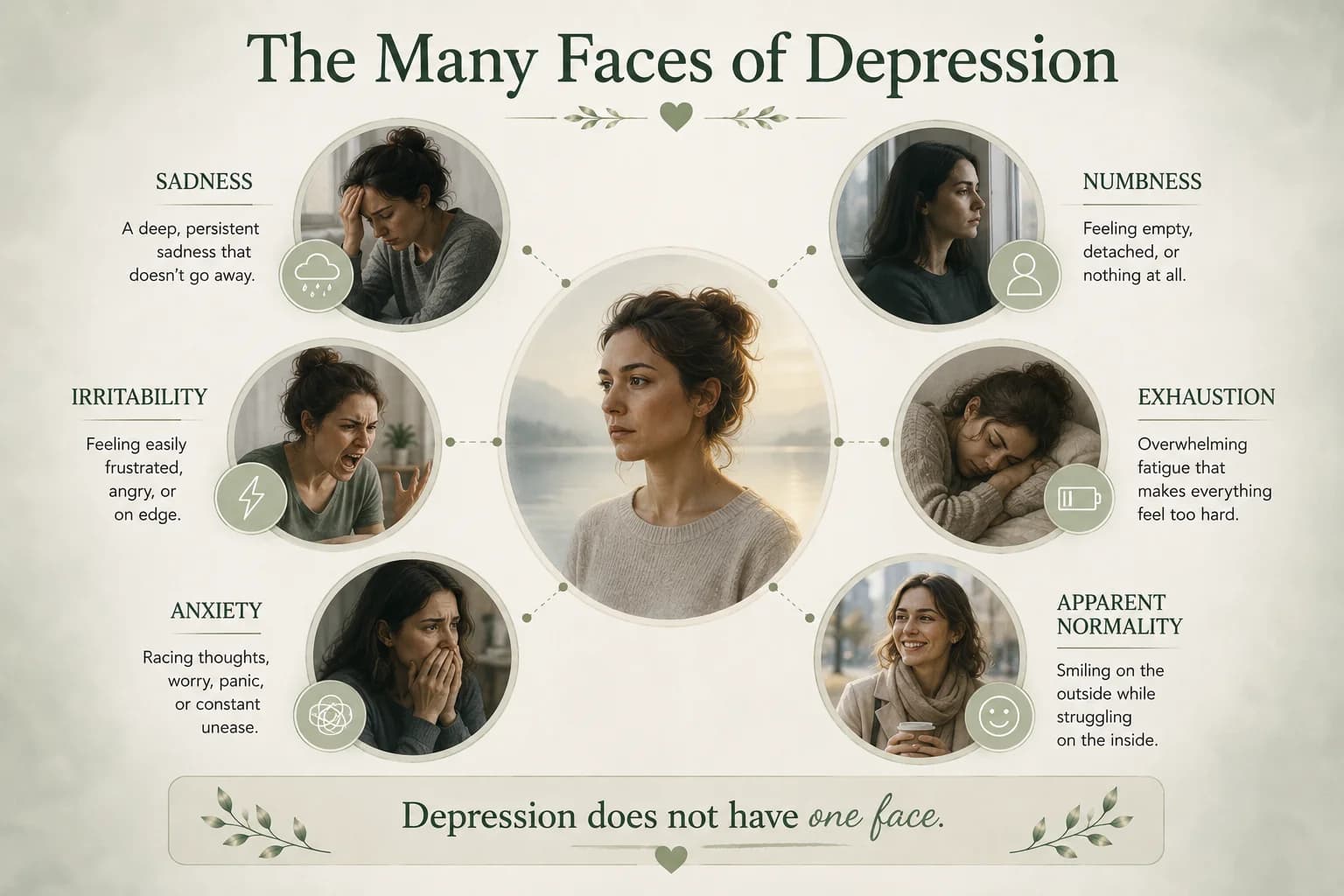
Persistent low mood can feel like sadness, heaviness, despair, or a constant ache, present all day for some, arriving in waves for others, often sharper in the morning or at night. Because depression makes the current state feel permanent, imagining feeling otherwise can seem impossible. A feeling can be powerful without being permanent.
Emotional numbness is just as common as sadness, if less talked about. "I know I should care, but I can't feel anything" is a frequent description. Excitement, affection and interest can go quiet, even around events that should matter. This numbness is often frightening, particularly when it's misread as evidence of no longer loving one's family or valuing one's life. More often, it reflects a nervous system that has become overwhelmed and has, in effect, shut some things down to cope.
Irritability and anger are an underrecognised presentation: impatience, frustration, sensitivity to noise or demands, snapping at loved ones, a constant sense of being overwhelmed. This version of depression is easy to misjudge from the outside, someone may look difficult or uncaring when they are, in fact, depleted and struggling to regulate emotion. It's a particularly important pattern to recognise in children and teenagers, though adults experience it too.
Guilt, shame and worthlessness often build a painful inner narrative: guilt over not being productive enough, needing support, cancelling plans, falling behind at work, or being unable to "appreciate what they have." Ordinary mistakes can start to feel like proof of being fundamentally flawed. The feeling is real. The conclusion usually isn't.
Loss of Pleasure: When Life Feels Flat
Anhedonia, a marked reduction in interest or pleasure, is one of depression's core features. Music stops moving. Food loses its appeal. Socialising feels like work. Hobbies seem pointless. This isn't boredom; the brain's reward and motivation systems are responding differently, making activities feel less rewarding than they once did [11].
The trouble is that doing less also means fewer chances for pleasure, connection or achievement to occur, which quietly reinforces the depressive cycle. This is exactly why recovery often starts by gently reintroducing activity before enjoyment has fully returned, rather than waiting for motivation to lead.
Cognitive Symptoms: When Thinking Becomes Harder
Depression can genuinely interfere with clear thinking: poor concentration, indecision, forgetfulness, slowed thinking, mental fog, difficulty planning, trouble following conversations, reduced problem-solving. Reduced concentration and indecisiveness are recognised as core depressive symptoms by the WHO, and current clinical guidance emphasises that the cognitive impact of depression can be just as substantial as the emotional impact [2][15].
Someone might reread the same page without absorbing it, walk into a room and forget why, or put off a simple decision because every option feels overwhelming. This isn't carelessness or a lack of intelligence. It's a symptom.
Rumination: Thinking Without Reaching a Solution
Rumination is the repeated turning-over of painful thoughts: Why did I do that? What's wrong with me? Why can't I cope? What if nothing changes? It can resemble problem-solving, but rarely produces a useful next step, keeping attention fixed on perceived failure instead.
Research distinguishes two forms: reflection, which involves purposeful, insight-seeking thought, and brooding, a passive, self-critical dwelling on distress. Brooding is the form that predicts worsening and prolonged depression over time, while reflection does not carry the same risk [23]. A useful distinction to hold onto: reflection asks "what can I learn or do next?"; rumination asks "why am I like this?" Learning to notice which one is happening can reduce how much of the day depression is able to occupy.
Physical Symptoms of Depression
Depression is a physical illness as much as a psychological one. NICE guidance describes physical and behavioural symptoms as core features of depression, alongside low mood and loss of positive feeling, and the WHO similarly emphasises the strong, bidirectional links between depression and physical health [2][15].
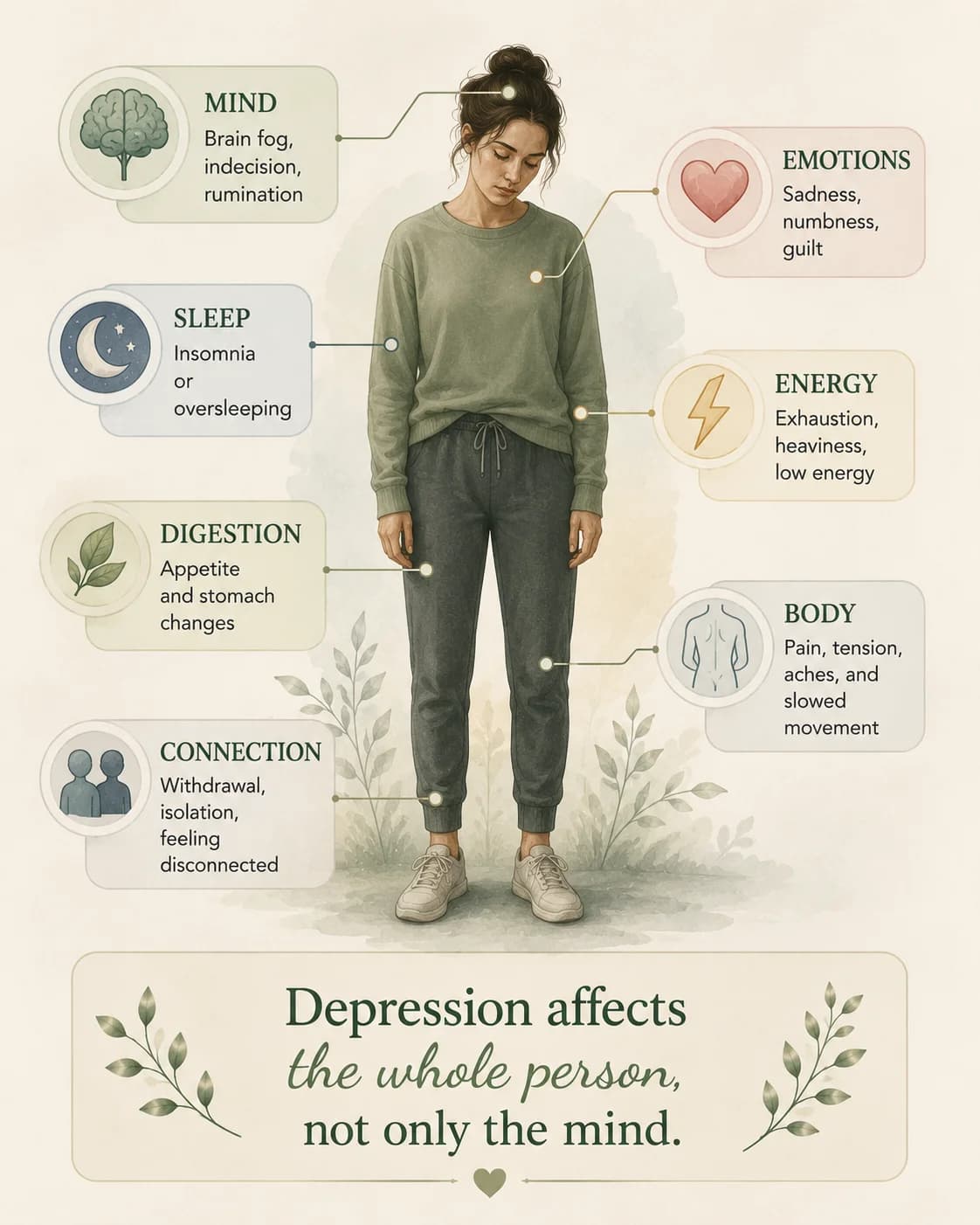
Fatigue and physical heaviness: depression-related fatigue isn't ordinary tiredness. Sleep may not restore energy, and the body can feel heavy, slow or weak. Getting out of bed, showering, preparing food, or answering a message can require disproportionate effort, often invisibly, since a person can look inactive while using enormous energy just to function.
Changes in movement: some people slow down noticeably, moving and speaking more slowly, with a flatter facial expression and quieter voice. Others experience the opposite: pacing, restlessness, fidgeting, an uncomfortable internal agitation. Both patterns occur within depressive illness.
Pain and bodily discomfort: headaches, back or neck pain, aching muscles, chest discomfort, digestive symptoms and generalised heaviness are all genuine, physiologically grounded experiences, not signs of "just" being in one's head, given how closely the brain, nervous system, immune system and hormones are linked [2]. That said, new, severe or unexplained physical symptoms still warrant proper medical assessment rather than automatic attribution to depression.
Sleep Changes
Sleep disturbance is one of the most consistent features of depression: difficulty falling asleep, repeated waking, very early waking, vivid or distressing dreams, oversleeping, daytime sleepiness, or simply feeling unrefreshed no matter how many hours were logged.
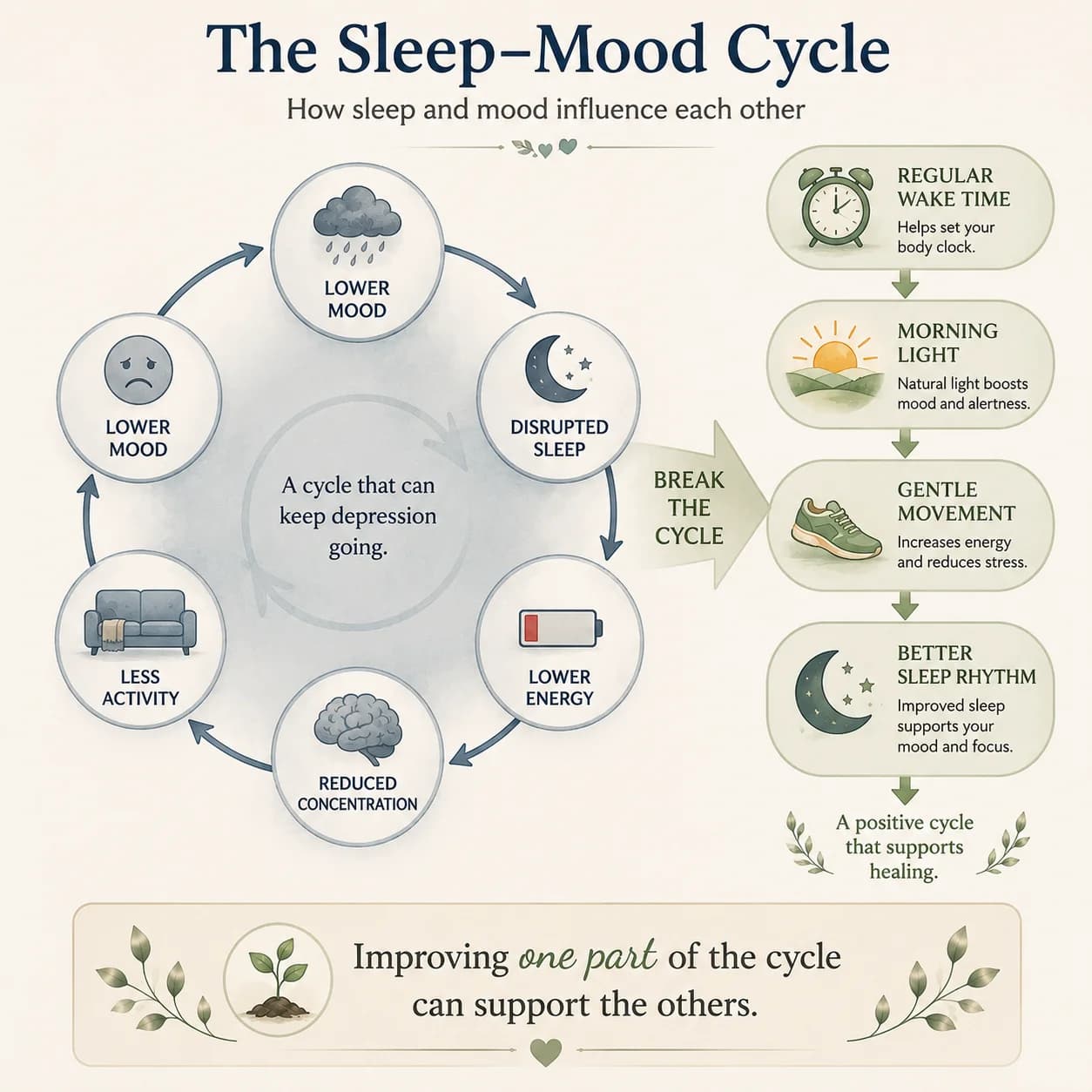
Sleep and mood shape each other in both directions. Poor sleep worsens concentration, irritability, pain sensitivity and emotional regulation, and depression, in turn, makes healthy sleep routines harder to maintain, creating a self-sustaining loop: lower mood → disrupted sleep → lower energy → reduced coping → lower mood. The cycle is treatable, and improved sleep is frequently one of the earliest signs that recovery has begun.
Appetite and Weight Changes
Some people lose interest in food altogether; meals become effortful, flavours flatten. Others eat more, often reaching for foods that offer short-term comfort or energy. Depression can therefore involve reduced or increased appetite, unplanned weight loss or gain, irregular meals, or emotional eating. These are symptoms, not moral failures. Recovery rarely requires perfect nutrition, just the gradual restoration of regular nourishment, with less additional stress placed on the body.
Depression and Sexual Wellbeing
Depression can reduce sexual desire, arousal, emotional closeness, confidence and interest in touch. It's easy to read this personally, "I no longer love my partner," "something's wrong with our relationship", and sometimes relationship strain does play a role. But reduced libido is also a well-documented direct effect of depression, exhaustion, or certain medications. Open, non-blaming conversation between partners can help reframe reduced desire as a symptom rather than a rejection.
Behavioural Symptoms
Depression changes what people do, and what they stop doing: withdrawing socially, cancelling plans, neglecting household tasks, spending more time in bed, avoiding responsibilities, dropping hobbies, reduced self-care, increased alcohol or substance use, or long stretches of scrolling or television used to escape.
Avoidance often brings short-term relief from pressure, but tends to deepen isolation, guilt and loss of confidence over time. This is precisely why treatment tends to focus on one manageable action rather than demanding a full lifestyle overhaul.
When Depression Is Hidden Behind Productivity
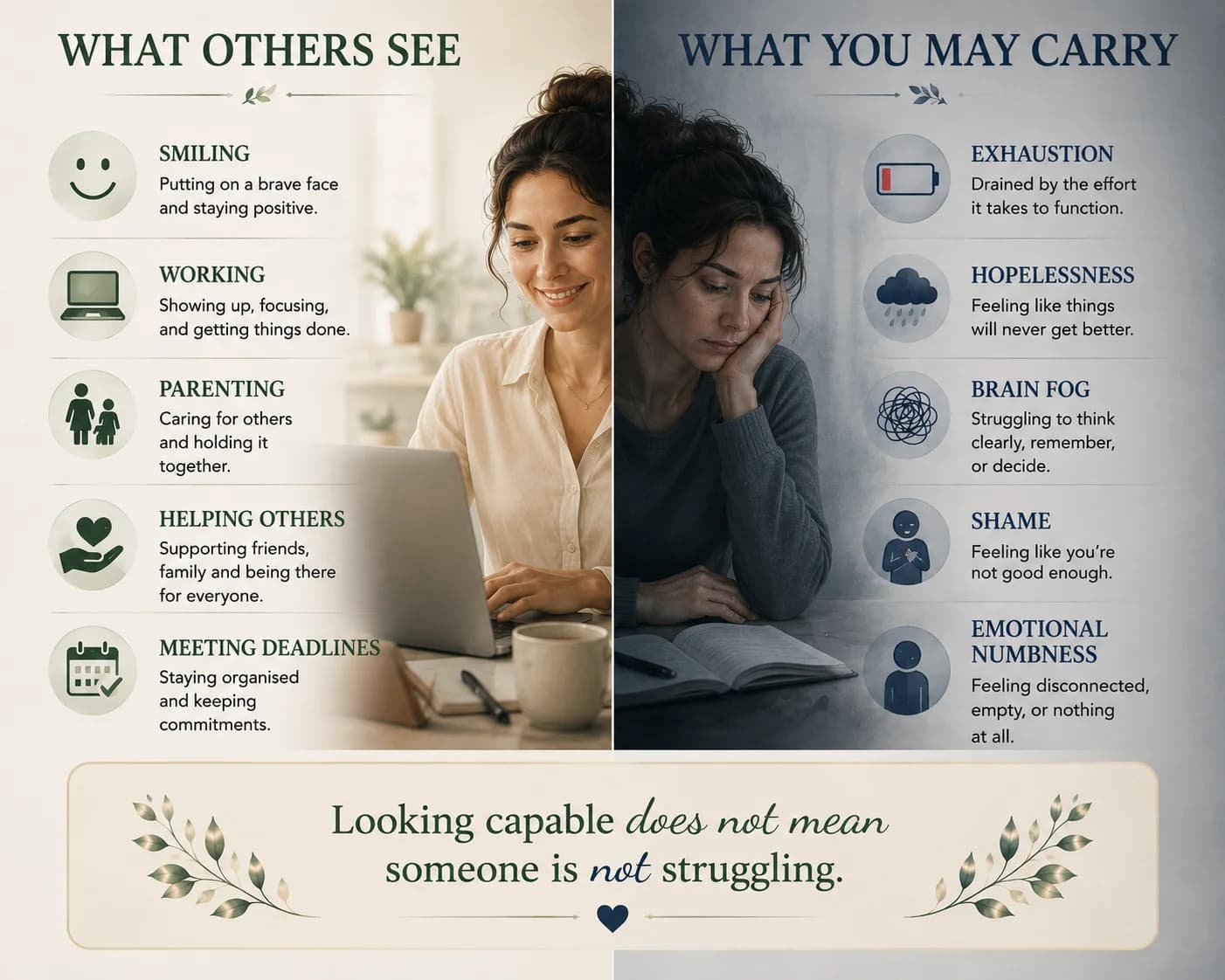
Some people maintain a high level of functioning while depressed: showing up to work, meeting deadlines, caring for children, appearing cheerful, keeping the household running, then falling apart the moment they're alone. "High-functioning depression" isn't a formal diagnosis, but it names something real: visible competence alongside significant internal suffering. Functioning doesn't mean someone is well. Often, it means they've simply become skilled at concealing how much effort that functioning takes.
Depression Across Life Stages
Children and teenagers may show depression through irritability, school refusal, falling grades, withdrawal from friends, physical complaints, risk-taking, sleep changes or loss of interest in activities. WHO data indicates depression and anxiety can significantly affect school attendance and daily functioning in adolescents [21].
During pregnancy and after birth, perinatal depression can involve intense guilt, anxiety, emotional detachment, difficulty bonding, frightening intrusive thoughts, and exhaustion well beyond what sleep deprivation alone would explain. It warrants professional support, never judgement.
In later life, depression is frequently mistaken for physical illness, normal ageing, or memory decline. It can present as fatigue, pain, sleep disturbance, appetite loss, slowed thinking, withdrawal, reduced self-care, or concentration and memory complaints. Physical illness, bereavement, caregiving strain and loneliness all raise vulnerability at this stage of life, and social isolation in particular is recognised as a key risk factor for mental health conditions in older adults [22].
Could Something Else Be Causing These Symptoms?
Several health conditions can resemble or worsen depression: thyroid disorders, anaemia, vitamin deficiencies, hormonal changes, sleep apnoea, chronic pain, neurological conditions, infections or inflammatory illness, medication side effects, alcohol or substance use, and grief, trauma or burnout. None of this means the symptoms aren't psychological, it means a thorough assessment considers the whole person. A healthcare professional will typically ask about symptoms, physical health, medication, sleep, substance use, recent life events and family history, and may recommend a physical examination or blood tests depending on presentation.
When to Seek Help
It's worth considering professional support when symptoms persist for most of the day over two weeks or more, interfere with work, study, relationships or self-care, continue worsening, lead to increased alcohol or substance use, drive withdrawal from ordinary life, or bring on feelings of hopelessness or worthlessness. The WHO describes a depressive episode as depressed mood or loss of pleasure present for most of the day, nearly every day, for at least two weeks, alongside other symptoms affecting daily functioning [2]. There's no need to wait until things become severe. Early support tends to prevent further decline.
A Note About Thoughts of Death or Self-Harm
Depression can sometimes bring thoughts such as "I wish I could disappear," "everyone would be better without me," "I don't want to wake up," or thoughts of self-harm or suicide. These require compassionate, prompt support. They are not attention-seeking; they are signs of significant pain. Anyone in immediate danger or unable to stay safe should contact local emergency services or an available crisis service, and should not remain alone. Talking about suicidal thoughts does not create them, it can open the door to safety, understanding and treatment.
Symptoms Are Signals, Not Identity
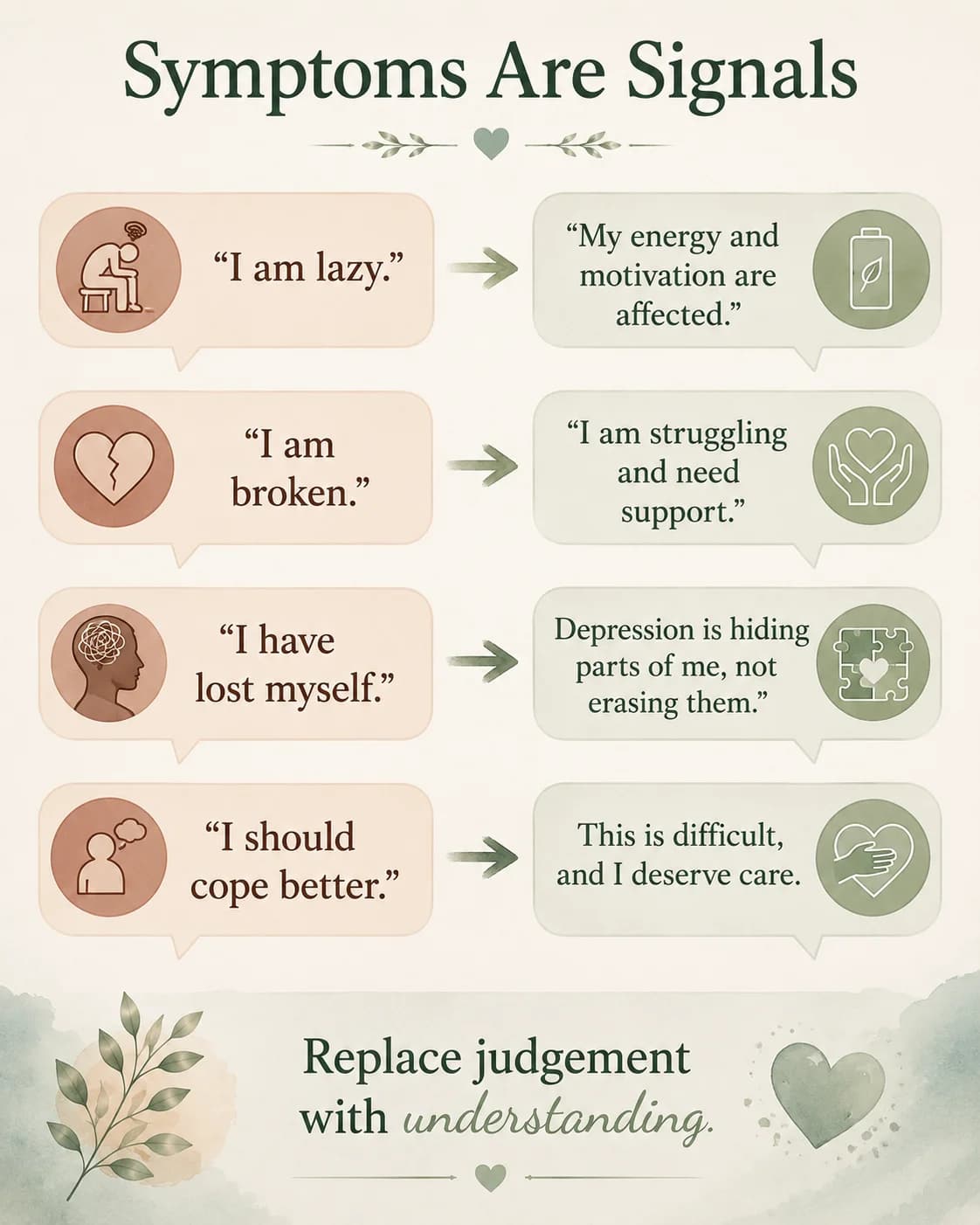
Depression tends to narrate itself unkindly: you are lazy, you are difficult, you are weak, you are no longer yourself. A more accurate read: my energy is affected, my nervous system is overwhelmed, my brain is processing information differently, and I'm experiencing symptoms that deserve care. The language used internally matters. It can turn shame into understanding, and understanding into action.
Recovery Often Appears Quietly
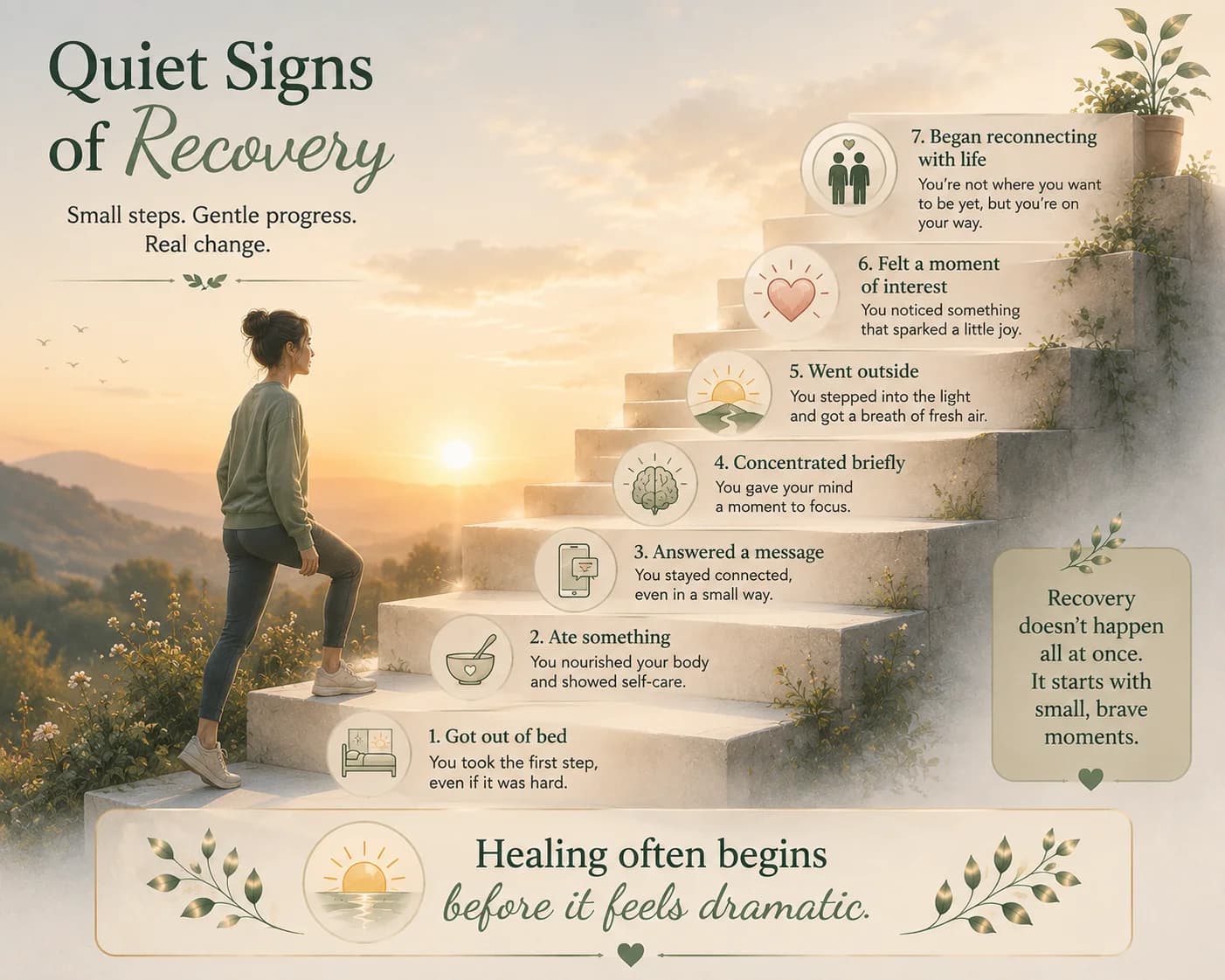
Symptoms rarely lift all at once. Recovery might first look like waking slightly less exhausted, concentrating for ten minutes, noticing hunger, replying to one person, laughing briefly, showering without as much effort, or feeling a flicker of interest in something again. These are easy to dismiss as small. They're evidence that mind and body are beginning to reconnect with life, and there's no need to feel fully well before recognising that progress.
References
-
World Health Organization. Depressive disorder (depression). Fact sheet, updated 29 August 2025.
-
American Psychiatric Association. (2022). Diagnostic and Statistical Manual of Mental Disorders (5th ed., text rev.; DSM-5-TR).
-
Plasticity of synapses and reward circuit function in the genesis and treatment of depression. (2022). Neuropsychopharmacology.
-
National Institute for Health and Care Excellence. (2022). Depression in adults: treatment and management (NG222).
-
World Health Organization. Mental health of adolescents. Fact sheet, updated 1 September 2025.
-
World Health Organization. Mental health of older adults. Fact sheet, updated 8 October 2025.
-
Treynor, W., Gonzalez, R., & Nolen-Hoeksema, S. (2003). Rumination reconsidered: A psychometric analysis. Cognitive Therapy and Research, 27(3), 247–259.