Introduction
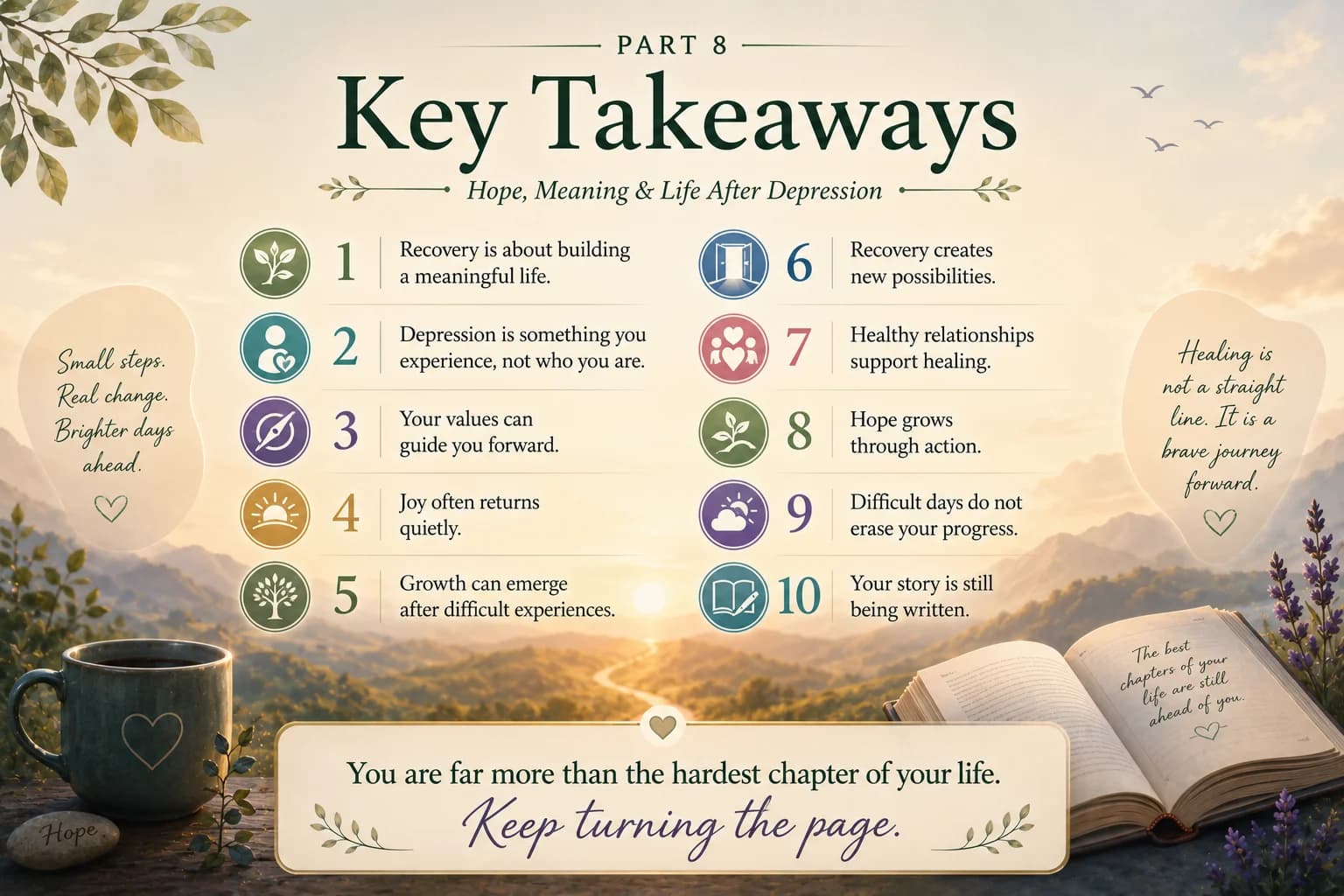
Reaching this chapter means you've already done something worth noticing: you chose to understand depression rather than simply fear it. You've learned how it affects the brain, why motivation disappears, what evidence-based treatment looks like, how to build practical daily skills, and how to recognise the early signs of relapse before it takes hold.
Which leaves one more question: what happens after recovery?
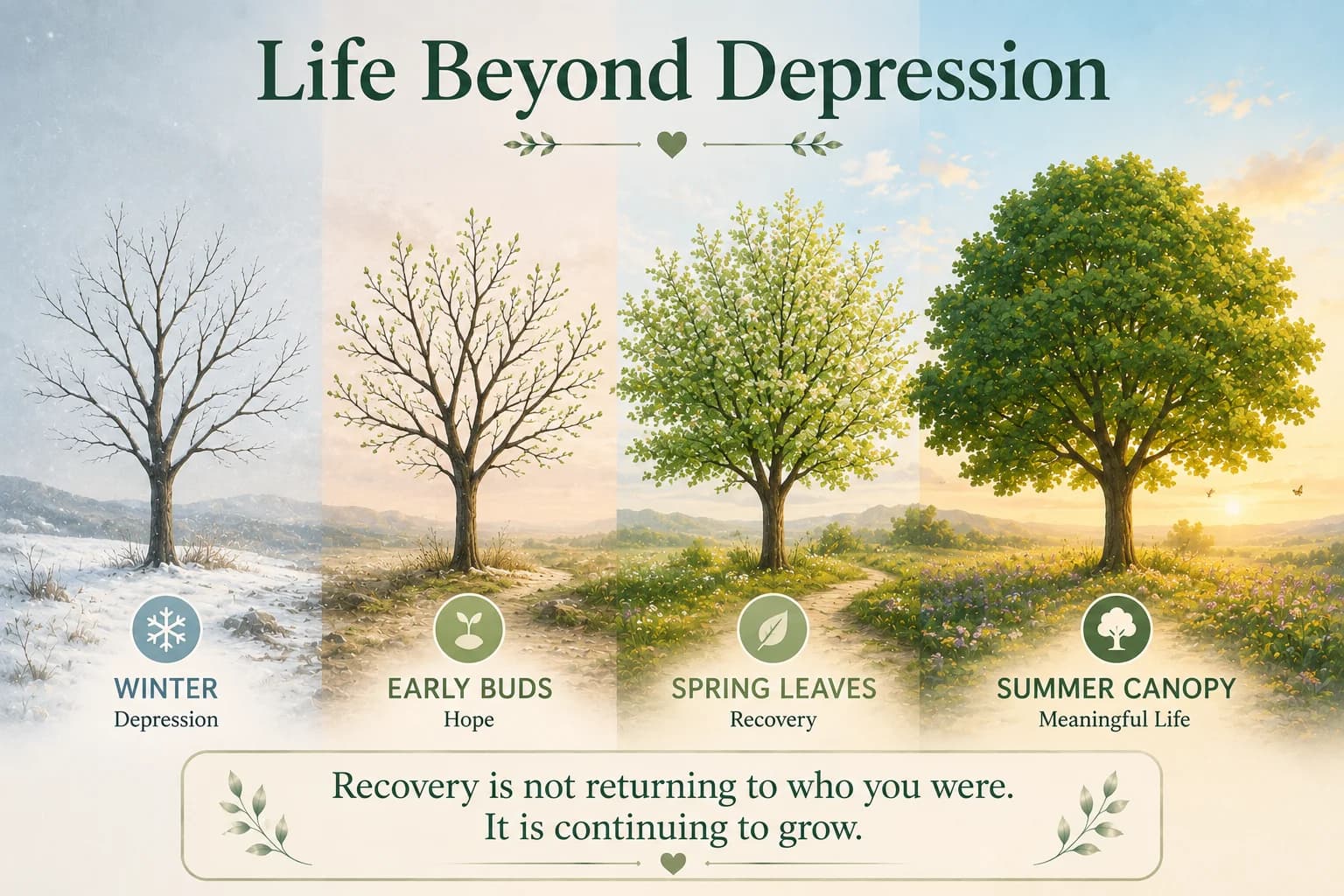
Many people picture recovery as a finish line, a day depression vanishes for good. Real life tends to be gentler and less absolute than that. Recovery isn't the absence of every difficult emotion. It's the gradual return of hope, curiosity and a sense of possibility, until, eventually, life becomes larger than the illness that once organised it.
Recovery Is About More Than Feeling Better
Most people start treatment wanting one thing: for the pain to stop. That's an entirely reasonable place to begin. But over time, many discover something they weren't necessarily looking for. Recovery isn't only about reducing sadness, it's about rebuilding a life that feels worth living.
Psychologists sometimes describe this as two related processes: recovery from depression, where symptoms ease, and recovery in life, where meaning, connection and purpose get rebuilt [18][28]. The second tends to outlast the first by a long way.
Rediscovering Who You Are
Depression has a way of convincing people it has become their identity: I am depressed, I am broken, I have nothing left. But depression is something a person experiences. It isn't who they are.
As recovery progresses, people often reconnect, gradually, with parts of themselves that seemed to have disappeared: curiosity, humour, creativity, kindness, confidence, a taste for adventure, the capacity for love. None of these were destroyed. They were obscured, for a time, by the weight of the illness. Recovery, more often than not, is less about becoming someone new and more about rediscovering someone who was there all along.
Your Values Can Guide You Forward
One of the more useful reframes in modern psychology comes from Acceptance and Commitment Therapy. Instead of asking "how do I get rid of difficult feelings," ACT asks "what kind of person do I want to be" [18][28]. Values, compassion, honesty, family, learning, courage, creativity, health, friendship, adventure, helping others, become a compass rather than a mood to wait for.
Motivation doesn't have to arrive first. Often, living in line with your values is what slowly generates hope, not the other way around.
Joy Often Returns Quietly
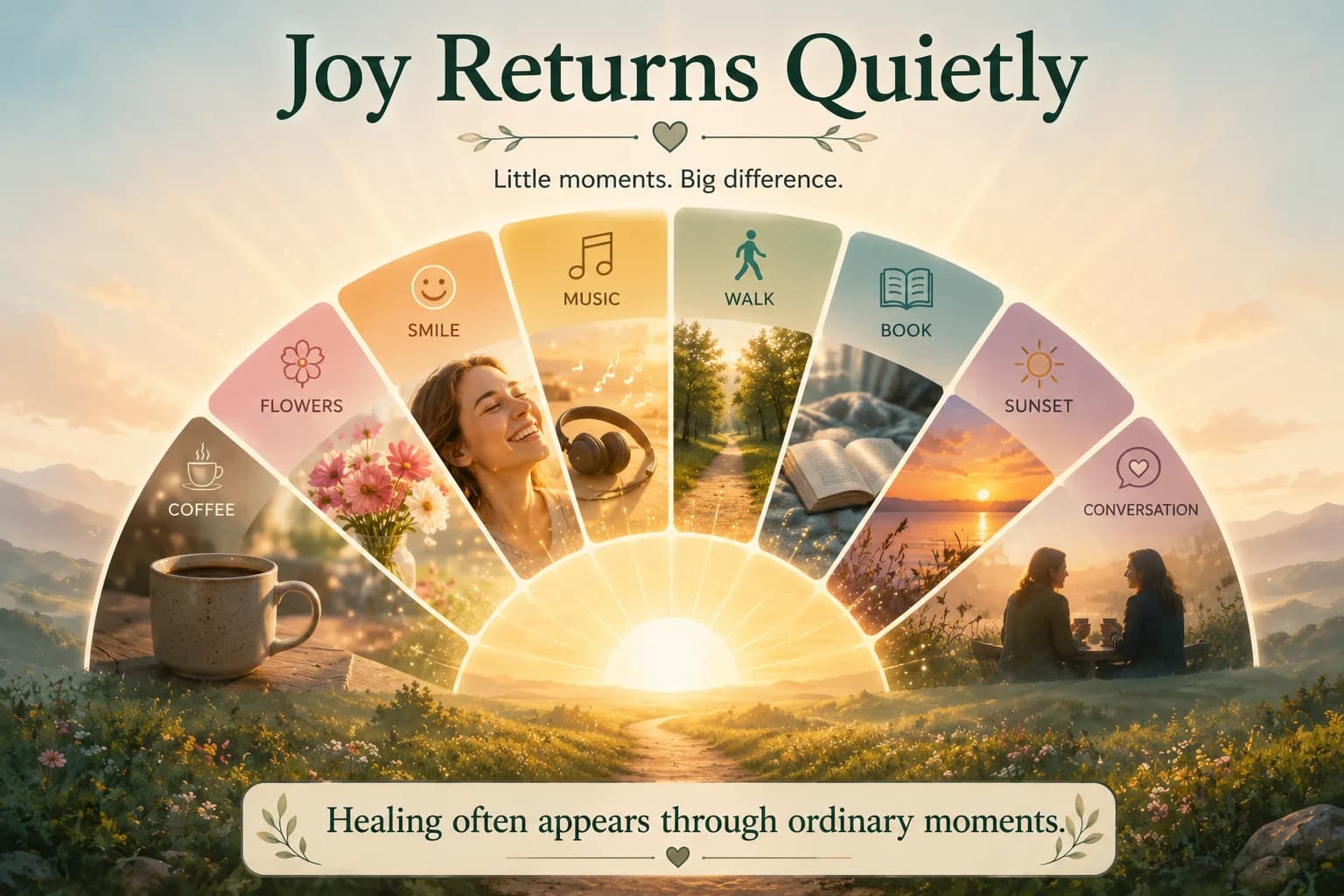
Happiness is often expected to arrive dramatically. In practice, it tends to slip back in almost unnoticed: a laugh, an enjoyed cup of coffee, a sunset actually seen, music that sounds beautiful again, a flicker of looking forward to tomorrow. These moments can seem too small to matter.
They're not. They're evidence that the brain is healing, and recovery consistently unfolds this way, gradually rather than all at once [4][11].
Growth After Difficult Experiences
No one chooses depression, and no one owes gratitude for having suffered through it. Depression is genuinely painful; it takes far more than it gives. And yet many people, looking back, describe emerging with deeper compassion, firmer boundaries, sharper self-awareness, or a clearer sense of what actually matters to them.
Psychologists call this post-traumatic growth [29]. It doesn't mean depression was good. It means people are remarkably capable of growing even out of profound suffering, not because of the suffering itself, but because of what they built in response to it.
Recovery Creates New Possibilities
As depression takes up less space, life tends to expand back into the room it left behind: learning, travelling, creating, working, volunteering, parenting, laughing, dreaming, planning, loving. Not because everything suddenly becomes easy, but because depression has stopped making every decision. Recovery creates room for possibility to exist again.
Your Relationships May Change
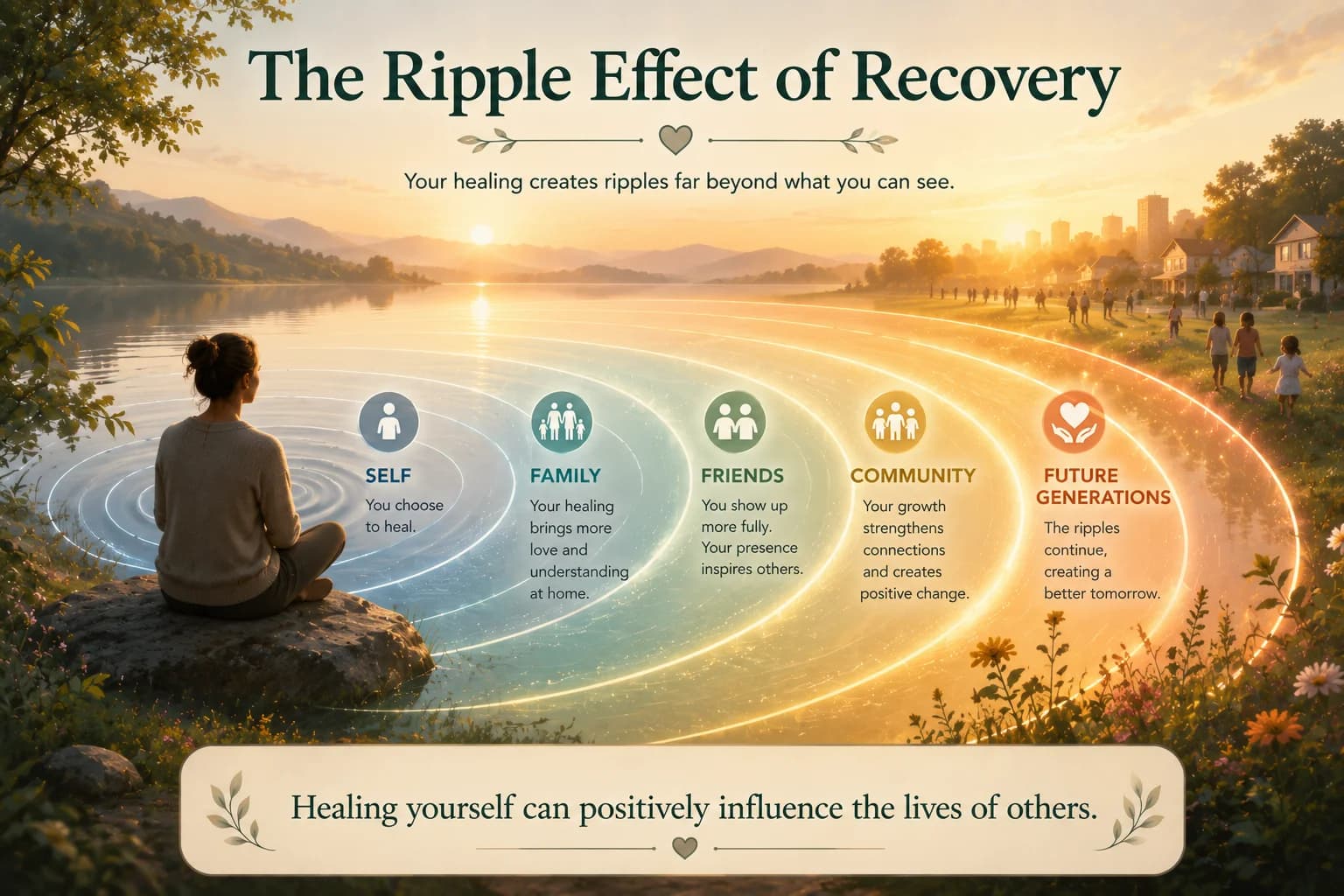
Recovery often reshapes relationships. Some deepen; others naturally fall away. It's common to discover healthier boundaries, greater confidence, more honest conversations, and stronger friendships and romantic relationships along the way. Healing yourself tends to change how you connect with everyone around you.
Hope Is Built Through Action
Hope is often mistaken for wishful thinking, but psychologically, it's something more concrete: a belief that one's own actions can shape the future, paired with a sense of having workable paths toward what matters [30]. Every small action strengthens that belief, and every skill built across this series has been, in its way, a contribution to it. Hope isn't a waiting room. It's something you participate in.
There Will Still Be Difficult Days
Recovery doesn't remove grief, stress, loss, disappointment or uncertainty, these belong to every human life, recovered or not. What changes is this: you now understand what's happening when it does. You have tools. You have experience. You know difficult emotions pass, that support exists, and that recovery is possible, because you've already been practising it.
Your Story Is Still Being Written
Depression sometimes insists, "this is how your story ends." Recovery's quiet answer is, "not yet."
No one can promise life will always be easy. But decades of research, clinical experience and countless individual recovery stories point to something genuinely hopeful: people recover, brains change, relationships heal, confidence returns, meaning grows, and life expands [2][11][26]. The future hasn't disappeared. It's still there, waiting.
A Letter to You
If you're reading this while still struggling, this part is for you.
You don't need everything figured out today. You don't need to become a different person overnight. You don't need to recover perfectly. You only need the next kind step, whatever size it happens to be. Some days that step will be large. Some days it will simply be getting out of bed. Both count.
You are not behind. You are healing. And healing takes the time it takes.
Final Thoughts
Depression may become one chapter of your life. It doesn't have to become the title. There will be chapters filled with connection, with courage, with ordinary mornings that feel peaceful again, and chapters you can't yet imagine.
Keep writing them. Your story isn't over. In many ways, it's only just beginning.
References
-
World Health Organization. Depressive disorder (depression). Fact sheet, updated 29 August 2025.
-
Liu, W., et al. (2017). The role of neural plasticity in depression: from hippocampus to prefrontal cortex. Neural Plasticity.
-
Plasticity of synapses and reward circuit function in the genesis and treatment of depression. (2022). Neuropsychopharmacology.
-
National Institute for Health and Care Excellence. (2022). Depression in adults: treatment and management (NG222).
-
American Psychological Association. (2019). Clinical Practice Guideline for the Treatment of Depression Across Three Age Cohorts.
-
Hayes, S. C., Luoma, J. B., Bond, F. W., Masuda, A., & Lillis, J. (2006). Acceptance and commitment therapy: Model, processes and outcomes. Behaviour Research and Therapy, 44(1), 1–25.
-
Solomon, D. A., et al. (2000). Multiple recurrences of major depressive disorder. American Journal of Psychiatry, 157(2), 229–233.
-
Hayes, S. C., Strosahl, K. D., & Wilson, K. G. (2016). Acceptance and Commitment Therapy: The Process and Practice of Mindful Change (2nd ed.). Guilford Press.
-
Tedeschi, R. G., Shakespeare-Finch, J., Taku, K., & Calhoun, L. G. (2018). Posttraumatic Growth: Theory, Research, and Applications. Routledge.
-
Snyder, C. R. (2002). Hope theory: Rainbows in the mind. Psychological Inquiry, 13(4), 249–275.
-
Seligman, M. E. P. (2011). Flourish: A Visionary New Understanding of Happiness and Well-being. Free Press.