Introduction
Say the word "depression" and most people picture sadness. But ask someone actually living with it, and the description is often different. Some describe numbness rather than tears. Others describe a fatigue that sleep doesn't touch. Many lose interest in things they used to love, and quietly blame themselves for "not trying hard enough."
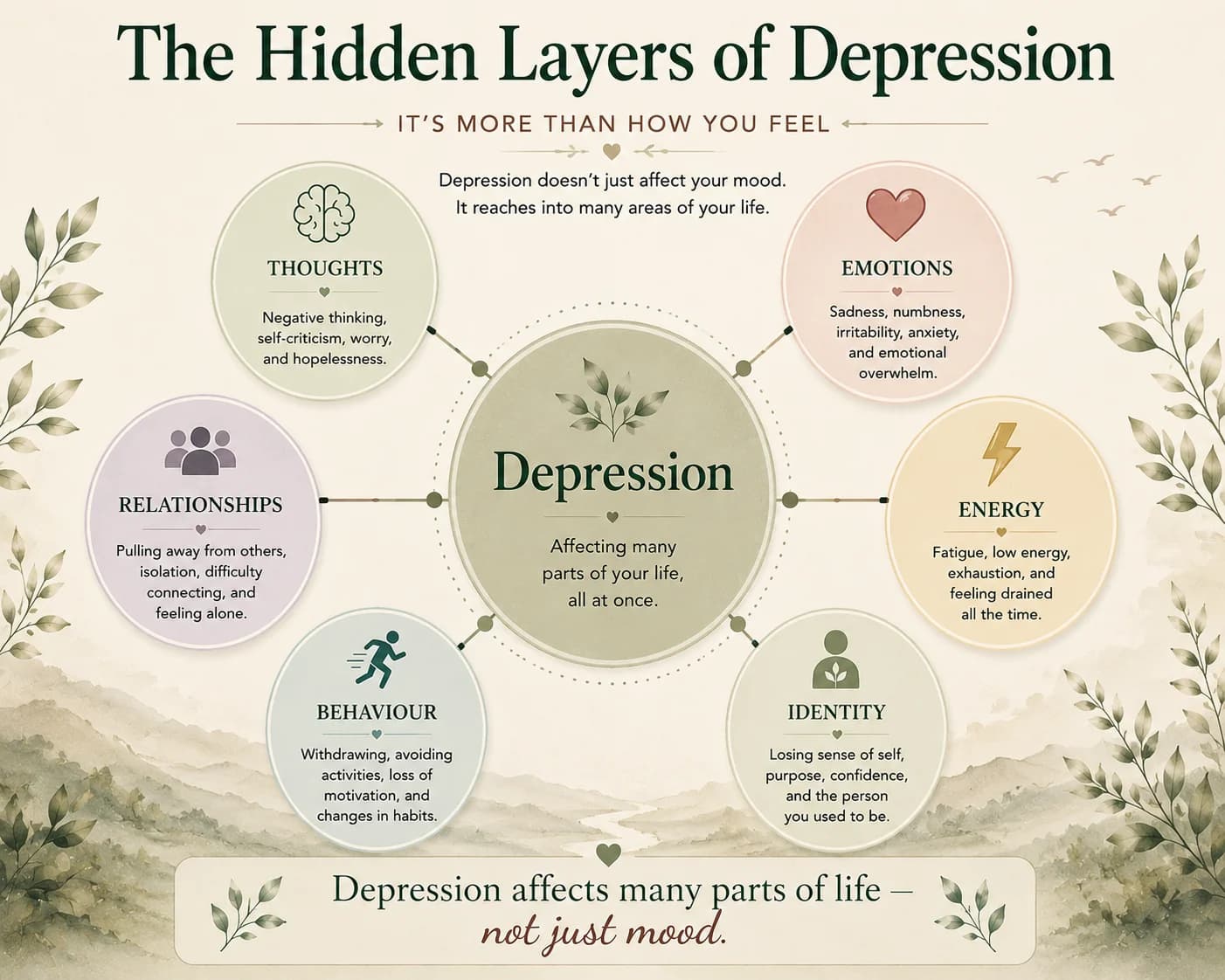
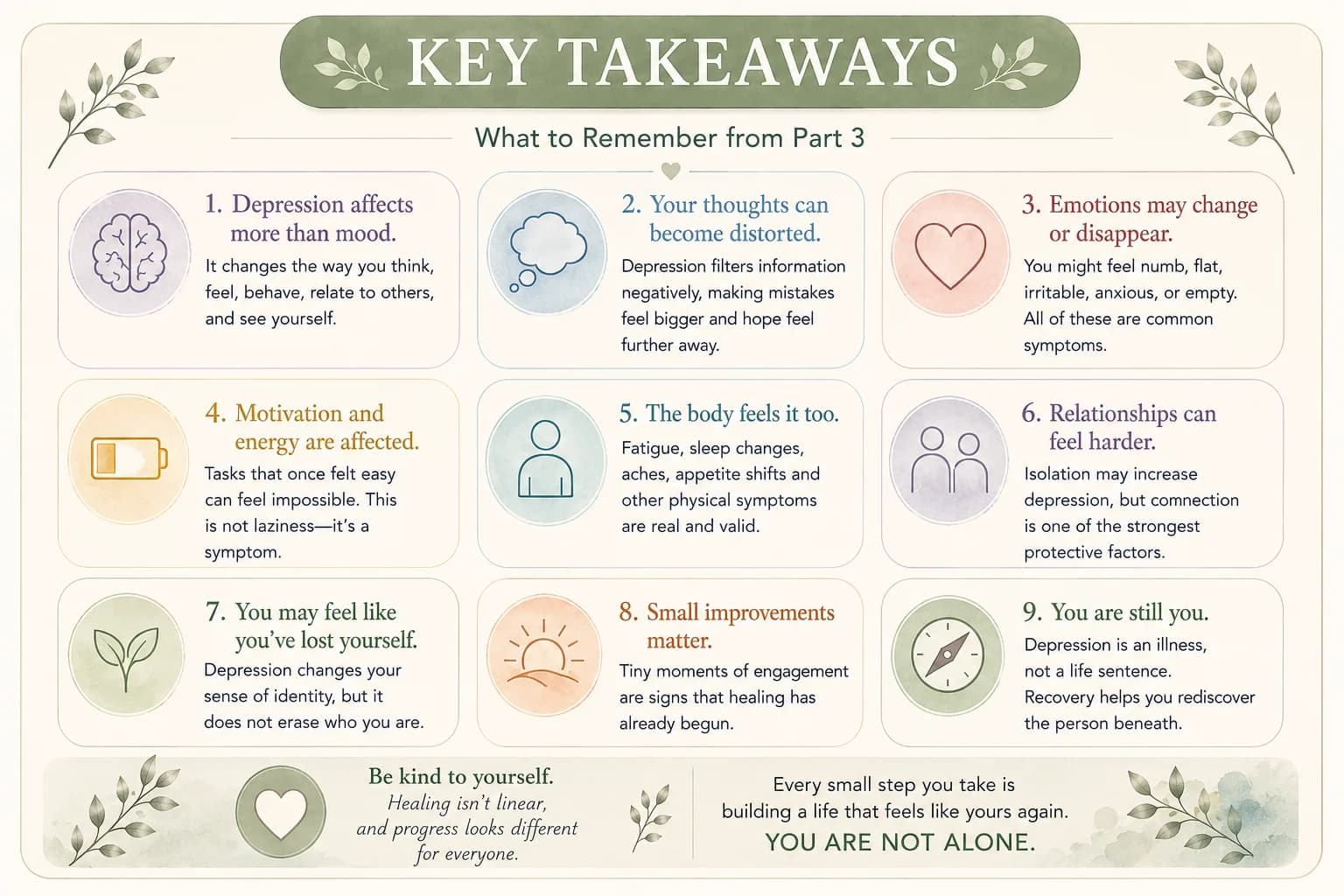
Depression reaches well beyond mood. It touches thinking, physical sensation, relationships and self-perception all at once, which is part of why it can feel less like an illness and more like a personality change. It isn't one. What follows are symptoms of a well-documented, treatable condition [7], not evidence of who someone has become.
How Depression Changes Thoughts
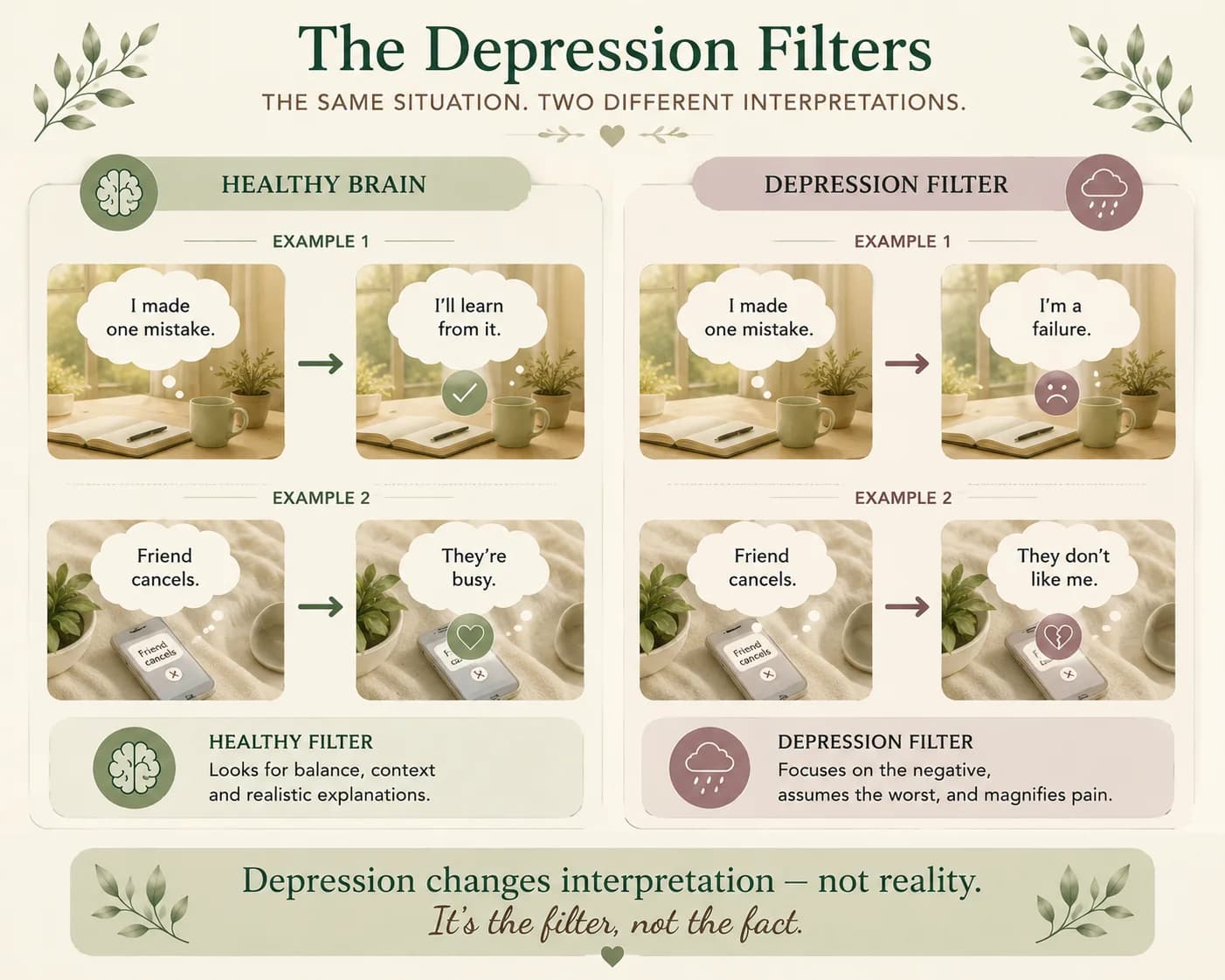
One of depression's most consistent effects is on thinking itself: harsh self-criticism, hopelessness, excessive guilt, indecision, overthinking, expecting the worst, a conviction of being a burden to others.
Psychologists describe this as negative cognitive bias, a systematic tilt in how information gets filtered [5][6][13]. Achievements shrink. Mistakes loom. Neutral situations get read as evidence of failure. None of this is a conscious choice; it's a feature of how depression alters information processing, first described in detail by Aaron Beck's foundational work on cognitive theory and still central to how clinicians understand the condition today [13].
How Depression Changes Emotions
The assumption that depression means constant crying holds true for some people and misses the experience entirely for others. Just as common are reports of emotional numbness, disconnection, emptiness, irritability, frustration, anxiety running alongside the low mood, or a general sense of feeling "flat."
"I don't even feel sad anymore. I just don't feel anything" is a sentence heard often in clinical settings. This blunting of emotional range is a recognised feature of depression, not a sign that someone has stopped caring.
How Depression Changes Motivation
Loss of motivation is perhaps the most misunderstood symptom of all. Well-meaning advice, "just get up," "go for a walk," "try harder", assumes motivation is a matter of effort. It isn't. Motivation is generated by the brain's reward system, and that system is one of the things depression directly disrupts [11].
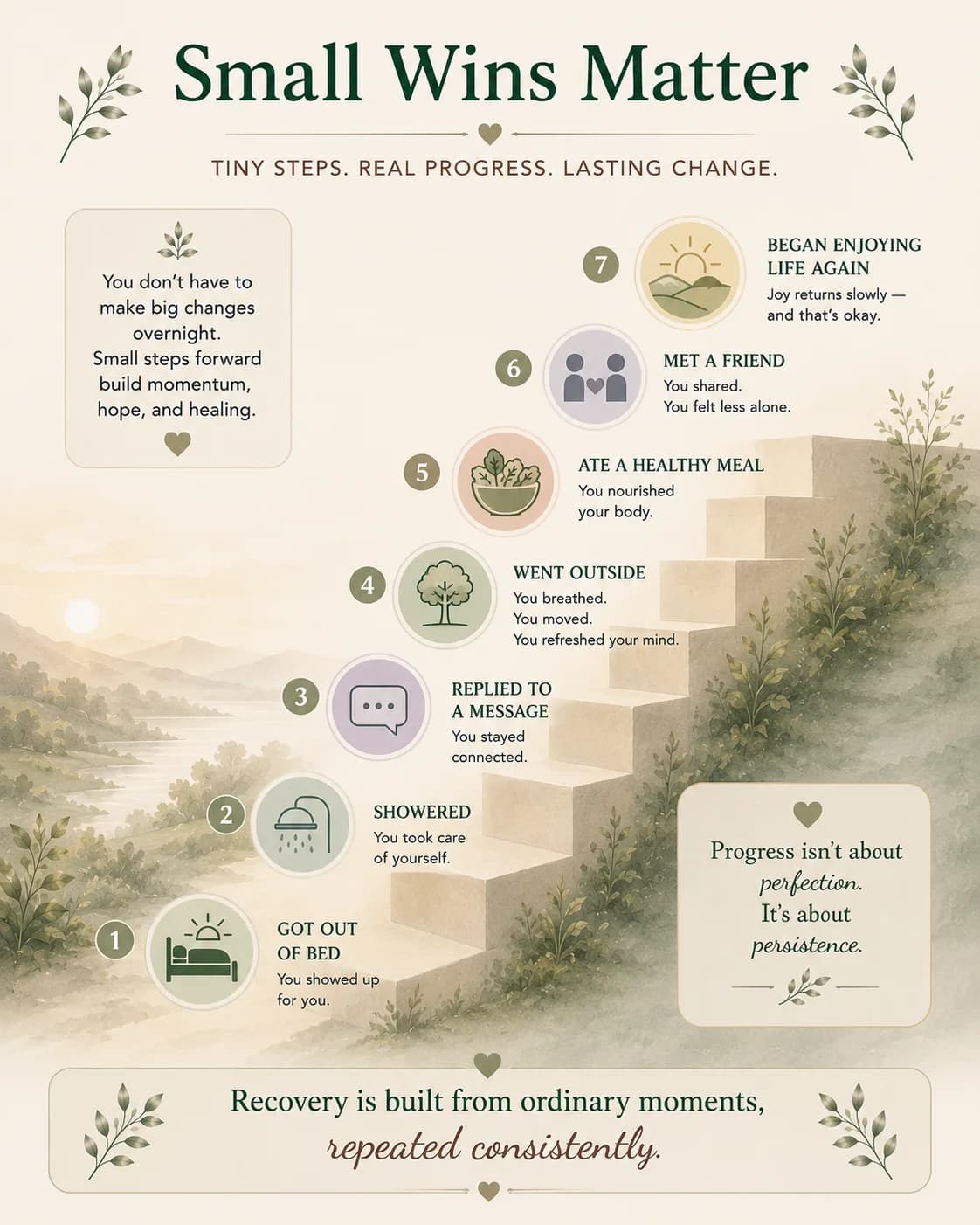
The result: showering, replying to a message, cooking dinner or getting dressed can start to feel disproportionately large. This isn't laziness. It's a reward system that has, temporarily, stopped generating the spark that normally gets us moving.
How Depression Changes the Body
Depression is a physical illness as much as a psychological one. Common physical symptoms include persistent fatigue, aches and pains, headaches, digestive discomfort, appetite and weight changes, slowed movement, and disrupted sleep, whether that means insomnia, early waking, or sleeping far more than usual.
The brain and body are in constant dialogue. These physical symptoms aren't imagined, and they aren't secondary to the "real" illness. They're a direct part of it.
How Depression Changes Relationships
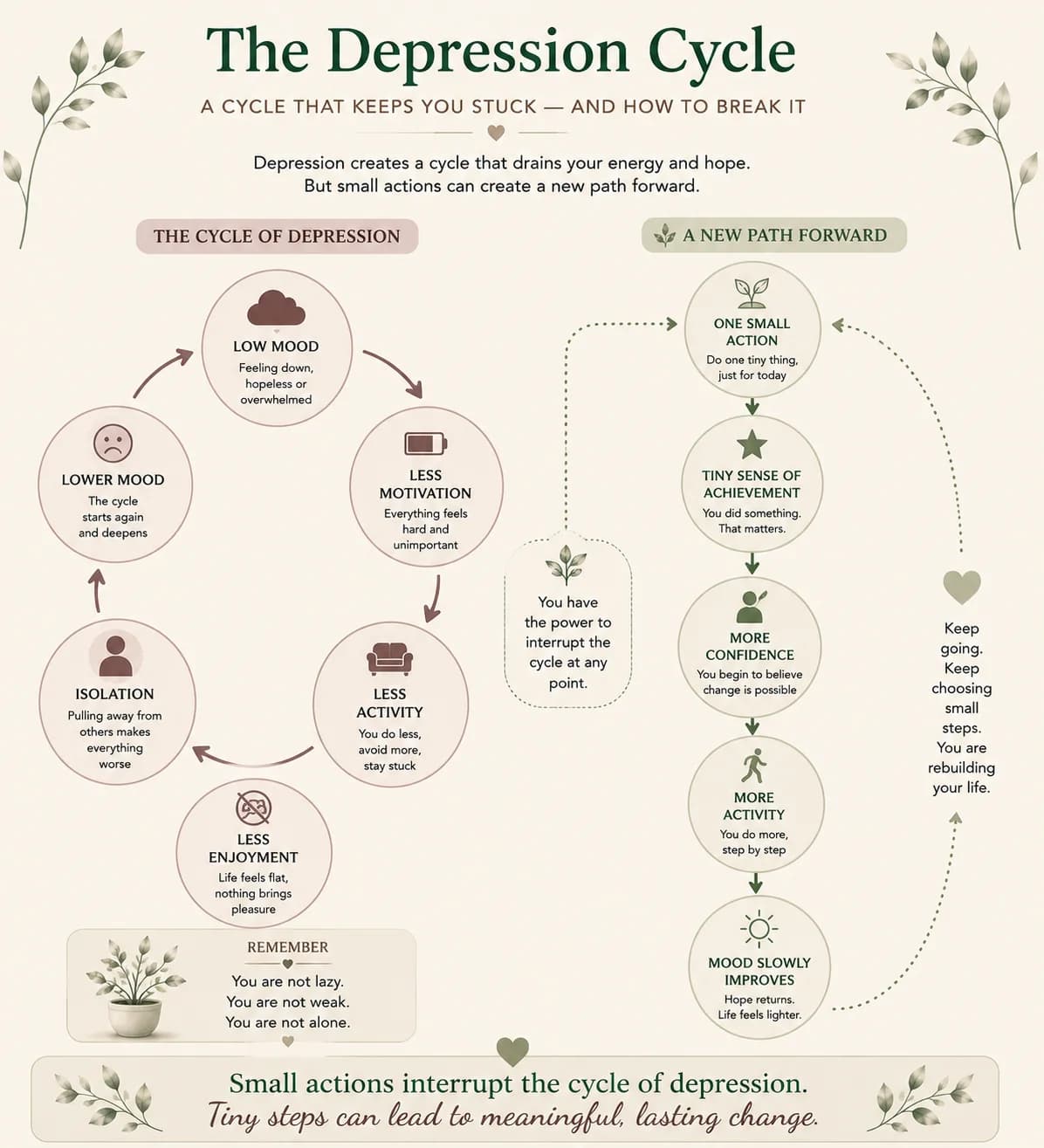
Withdrawal is one of depression's most common, and most misread, patterns. It rarely means someone has stopped caring. More often, social interaction has simply become exhausting in a way it wasn't before. Plans get cancelled, messages go unanswered, calls get avoided, and time alone increases.
The trouble is that isolation tends to deepen depression rather than relieve it, creating a loop where disconnection makes reconnecting feel even harder. This is exactly why supportive relationships remain one of the strongest protective factors during recovery, even when, especially when, they're the hardest thing to reach for.
How Depression Changes Identity
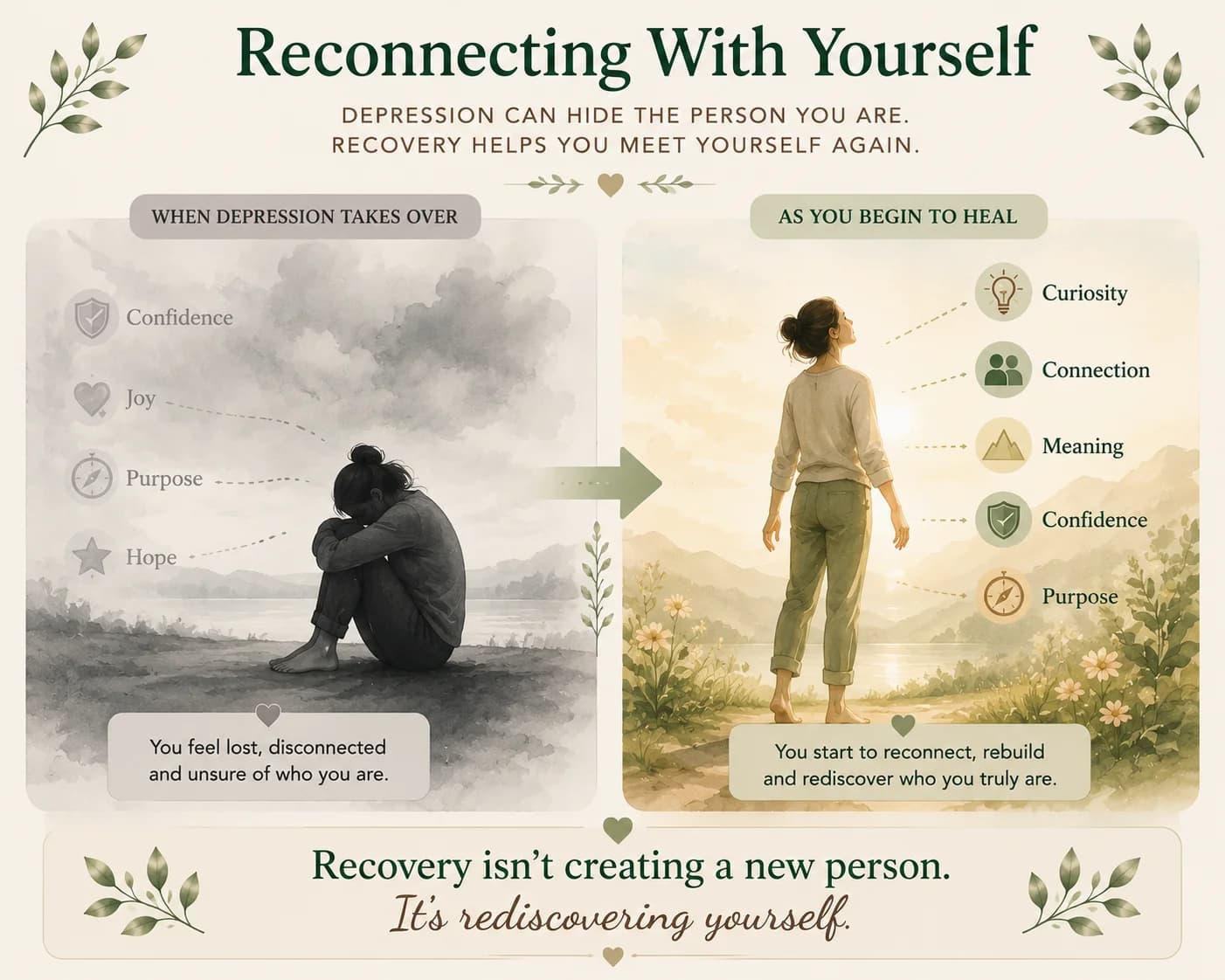
Perhaps the hardest part to put into words is the sense of having lost yourself. "I don't recognise who I've become" is a common refrain. Hobbies fall away, confidence fades, the future starts to feel closed off.
Depression is convincing on this point, insisting that this version of things is permanent. It isn't. What's shifted is brain function, not the person underneath it. Recovery is often described less as becoming someone new and more as slowly meeting yourself again.
Small Improvements Matter
Recovery rarely announces itself with happiness. It tends to begin quietly: one laugh, one answered message, noticing birdsong, cooking a proper meal, five minutes of actually enjoying a song. These moments can seem too small to count.
They're not. They're early signs that the brain is beginning to reconnect with life, and small moments like these consistently arrive before the larger shifts do.
You Are Still You
Depression can change energy, motivation, thought patterns and emotional range. It does not change who someone fundamentally is. The person who existed before depression is still there.
Recovery isn't about constructing someone new. It's about gradually uncovering the person depression has been obscuring.
References
-
World Health Organization. Depressive disorder (depression). Fact sheet, updated 29 August 2025.
-
A theory of the neural mechanisms underlying negative cognitive bias in major depression. (2024). Frontiers in Psychiatry.
-
Self-reported cognitive biases in depression: a meta-analysis. Clinical Psychology Review.
-
American Psychiatric Association. (2022). Diagnostic and Statistical Manual of Mental Disorders (5th ed., text rev.; DSM-5-TR).
-
Malhi, G. S., & Mann, J. J. (2018). Depression. The Lancet, 392(10161), 2299–2312.
-
Plasticity of synapses and reward circuit function in the genesis and treatment of depression. (2022). Neuropsychopharmacology.
-
Beck, A. T. (1979). Cognitive Therapy of Depression. Guilford Press.
-
Cuijpers, P., Miguel, C., Harrer, M., Plessen, C. Y., Ciharova, M., Ebert, D., & Karyotaki, E. (2023). Cognitive behavior therapy vs. control conditions, other psychotherapies, pharmacotherapies and combined treatment for depression: a comprehensive meta-analysis including 409 trials with 52,702 patients. World Psychiatry, 22(1), 105–115.
-
National Institute for Health and Care Excellence. (2022). Depression in adults: treatment and management (NG222).