Introduction
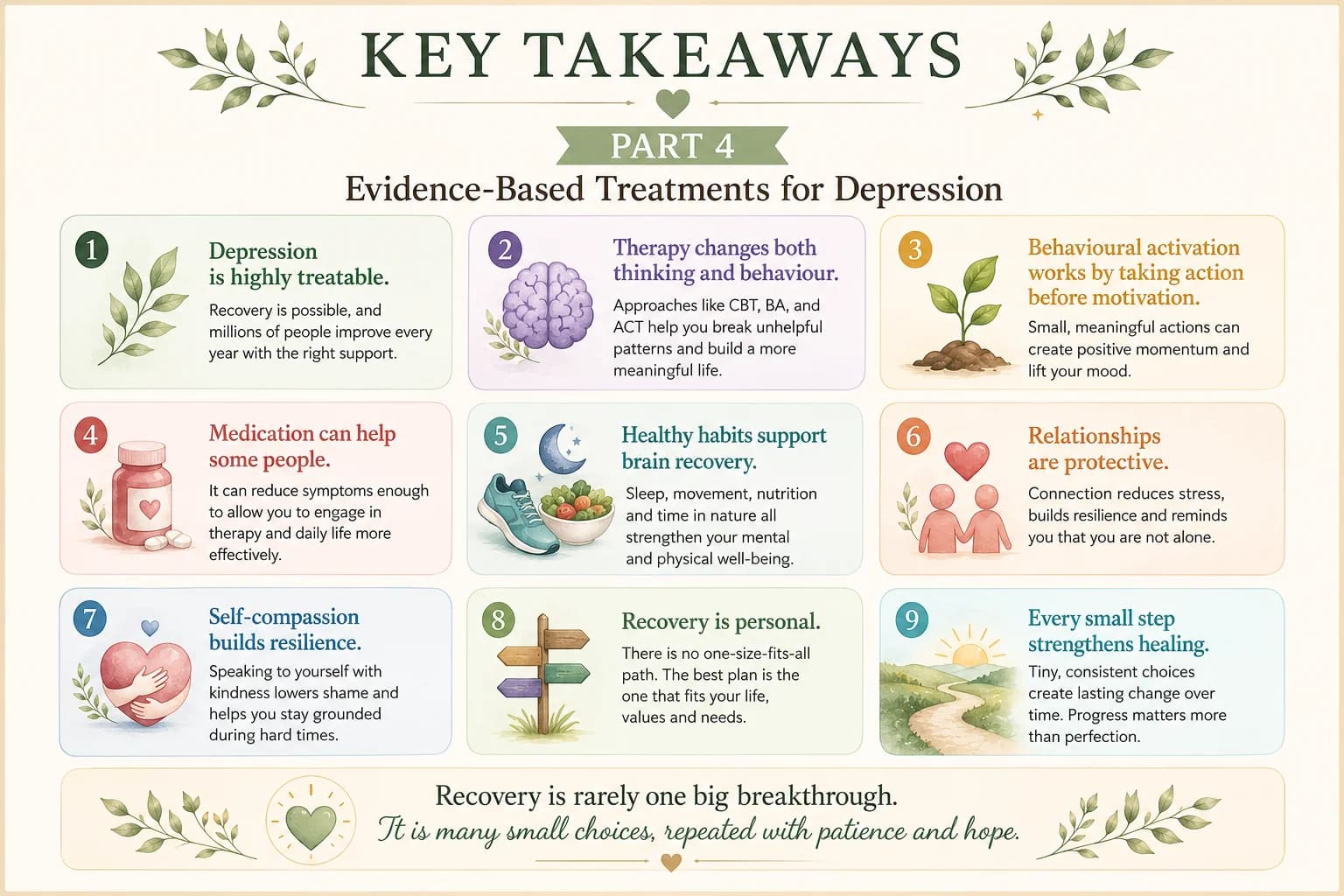
One of the most damaging myths about depression is that nothing can help. Living inside it long enough, many people start to believe this feeling is permanent. Decades of research say otherwise: depression is among the most treatable mental health conditions we know of. Every year, people improve through therapy, appropriate medication, lifestyle change, social support and practical coping skills [7][9].
There is no single "correct" treatment. The realistic goal is a personalised recovery plan, built gradually, that actually fits the life the person is living.
Therapy Works
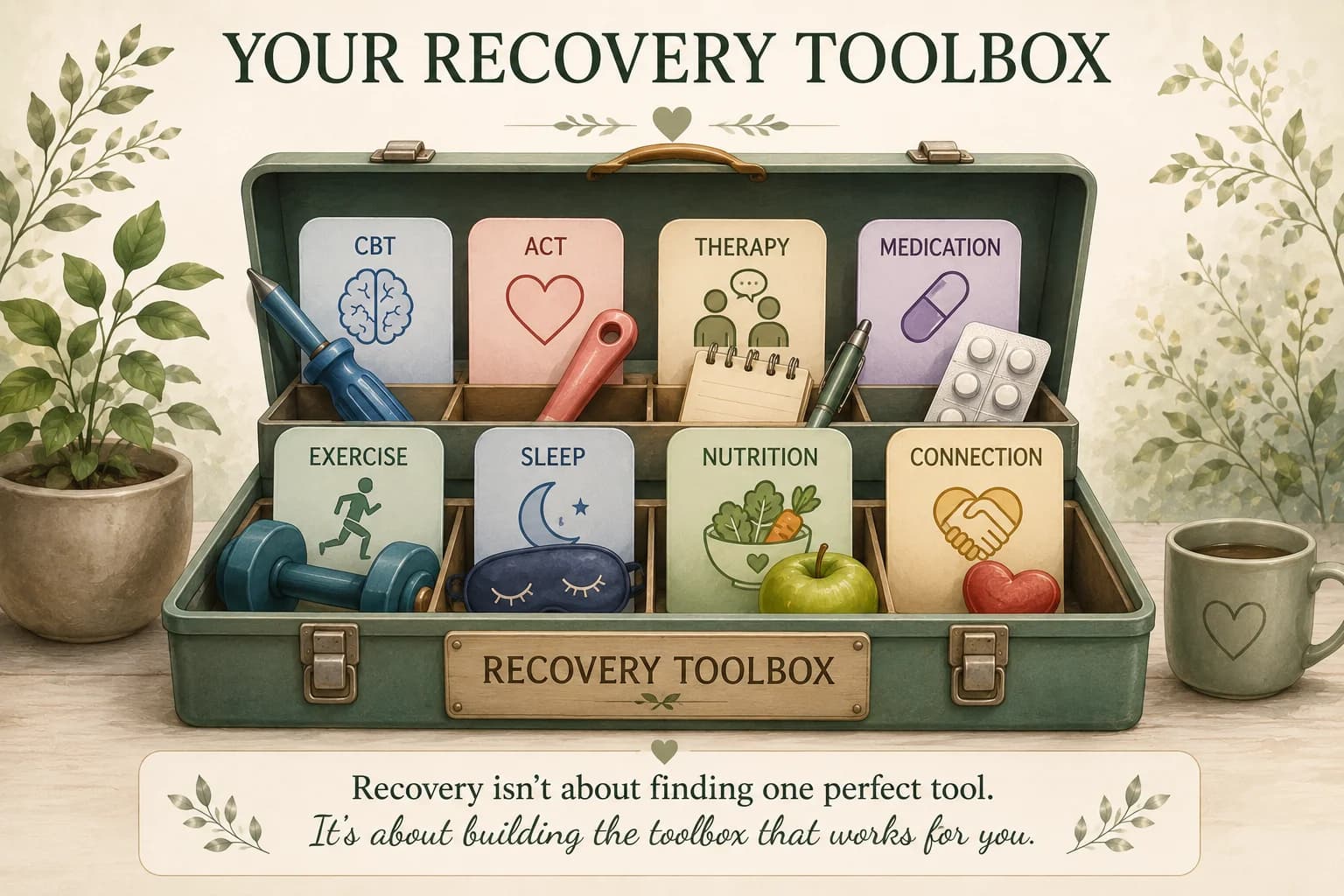
Psychological therapies remain among the most effective treatments for depression, and different approaches help in different ways [14].
Cognitive Behavioural Therapy (CBT) helps identify the thinking patterns that keep depression in place and offers practical ways to question them: Is this thought completely true? Is there another explanation? What would I say to someone I care about? With repetition, these questions become easier to ask and the new thinking patterns start to feel more automatic [13][17]. Comprehensive meta-analytic evidence, drawing on over 400 trials, continues to support CBT as one of the strongest-performing treatments for depression, whether used alone or alongside medication [14].
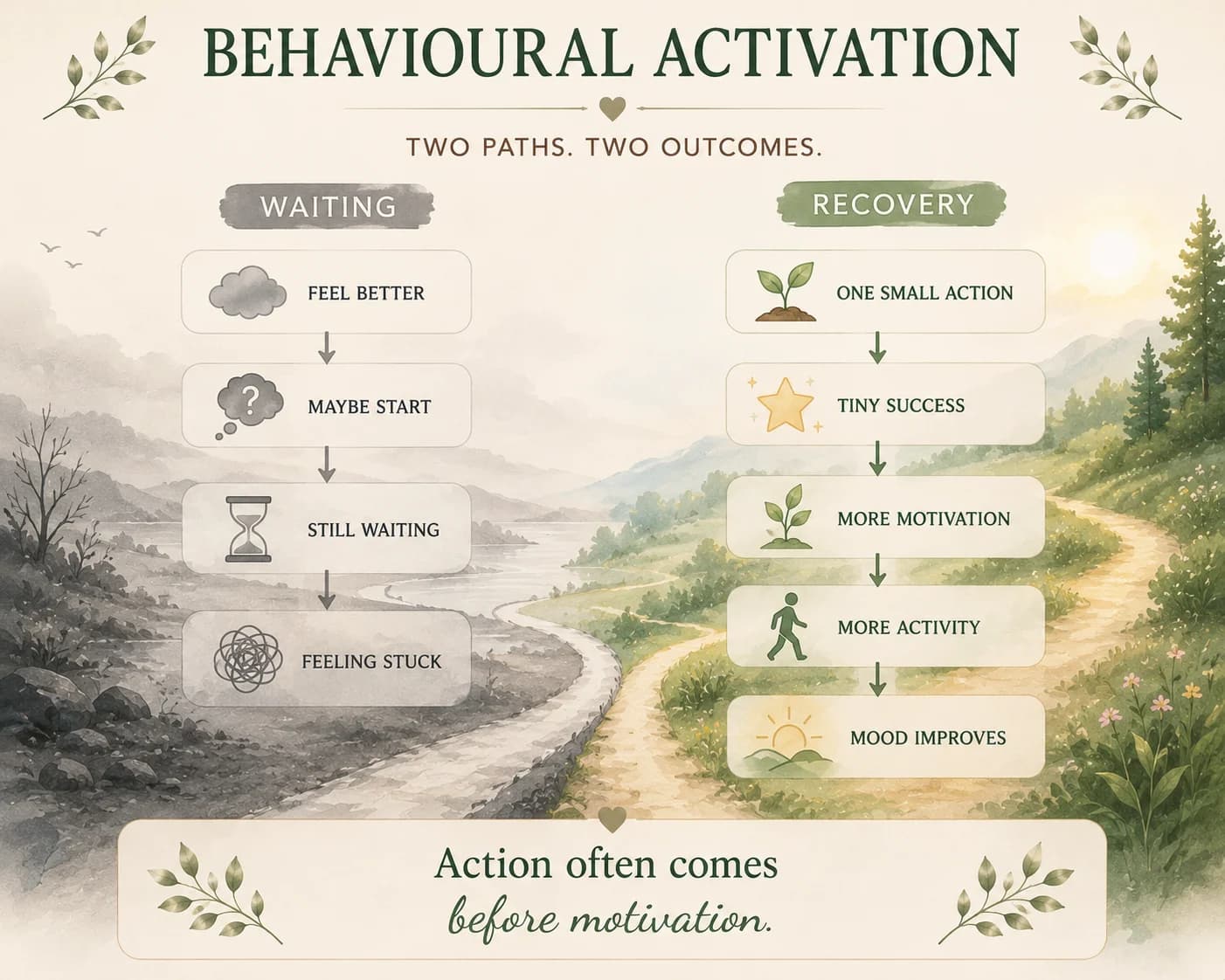
Behavioural Activation is deceptively simple and consistently well-supported: rather than waiting for motivation to return before acting, it encourages starting with small, meaningful activities first. Action tends to come before motivation, not after, and increasing positive activity has repeatedly been shown to reduce depressive symptoms [11][15].
Acceptance and Commitment Therapy (ACT) takes a different angle, teaching acceptance of difficult internal experiences rather than a fight to eliminate them, alongside a focus on personal values and meaningful action taken despite discomfort [18]. Recovery, in this model, is less about waiting for every painful feeling to vanish and more about building a life worth living around it.
Medication
Antidepressant medication can be genuinely helpful, particularly for moderate to severe depression [7][15]. It doesn't change who someone is, and it doesn't manufacture happiness from nothing. What it can do is reduce symptoms enough that the brain has more room to engage with therapy and rebuild healthier patterns. It tends to work best alongside psychological treatment and lifestyle support, not as a stand-alone fix, and treatment decisions should always sit with a qualified healthcare professional.
Lifestyle Is Treatment
Healthy habits aren't wellness clichés; they have a measurable effect on brain function.
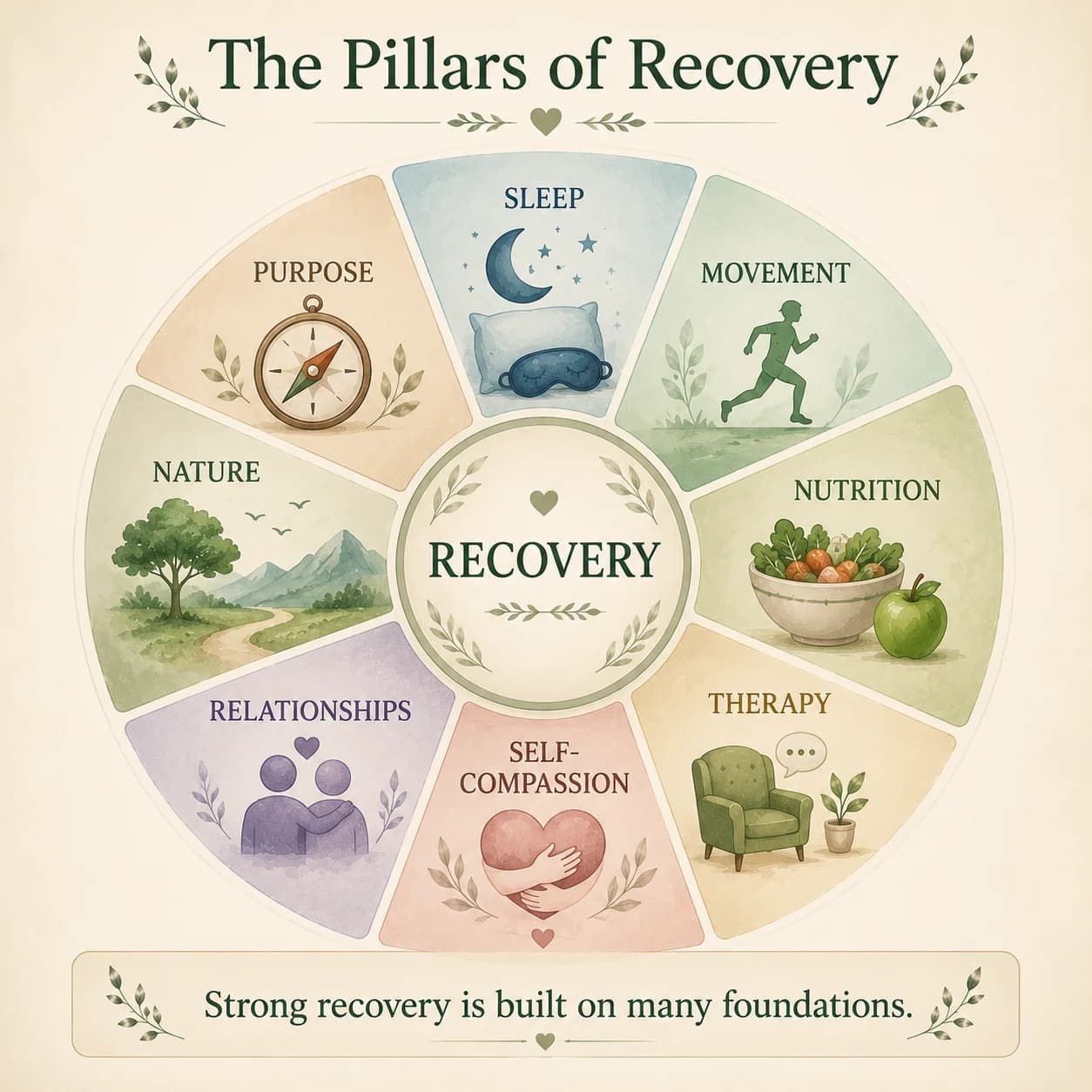
Sleep supports emotional regulation, memory, energy and the brain's broader capacity to recover.
Physical activity raises brain-derived neurotrophic factor (BDNF), supports dopamine and serotonin activity, and reduces inflammation. Recent dose-response research suggests even moderate, regular exercise, not just intense training, produces meaningful gains in BDNF and mood among people with depression [19]. A short walk counts.
Nutrition helps stabilise energy and supports brain health. There's no single correct diet here; consistency matters more than precision.
Time outdoors, even brief exposure to green space, has been associated with lower stress, improved mood and reduced rumination.
Connection Is Medicine
Depression tends to push people toward withdrawal. Recovery asks for a small, deliberate movement in the other direction. Supportive relationships reduce stress, build resilience, increase hope, encourage healthier routines, and offer the simple but powerful reminder that someone is not alone in this. Connection doesn't require a crowd. Often, recovery starts with just one person who can be trusted.
Self-Compassion
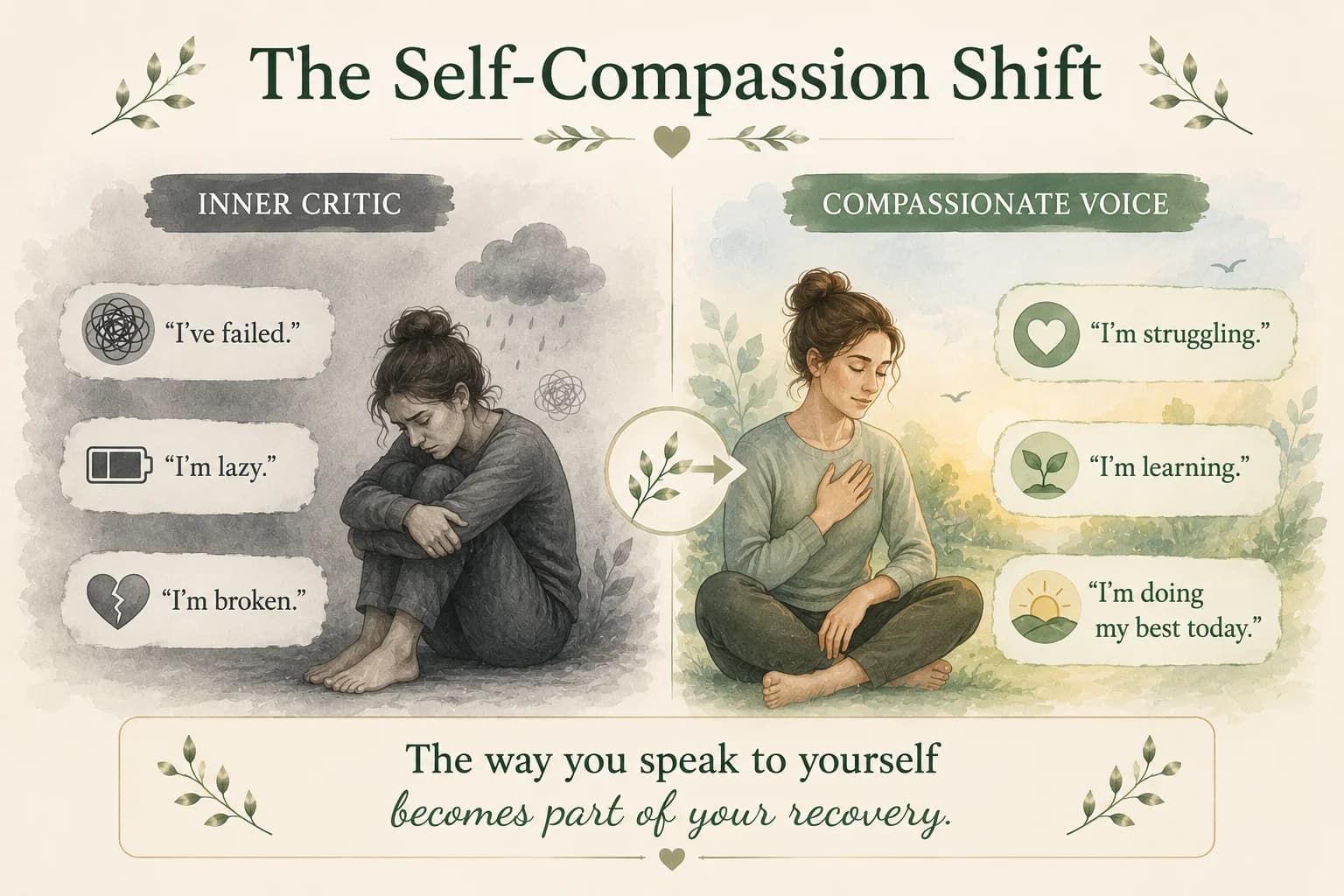
Many people speak to themselves far more harshly than they'd ever speak to someone they love. Self-compassion isn't self-pity, it's the practice of recognising "I am struggling," "I deserve kindness," and "I am doing my best today." Research links self-compassion to lower depression, reduced shame and greater resilience, with resilience often acting as part of the mechanism connecting the two [20].
Recovery Is Personal
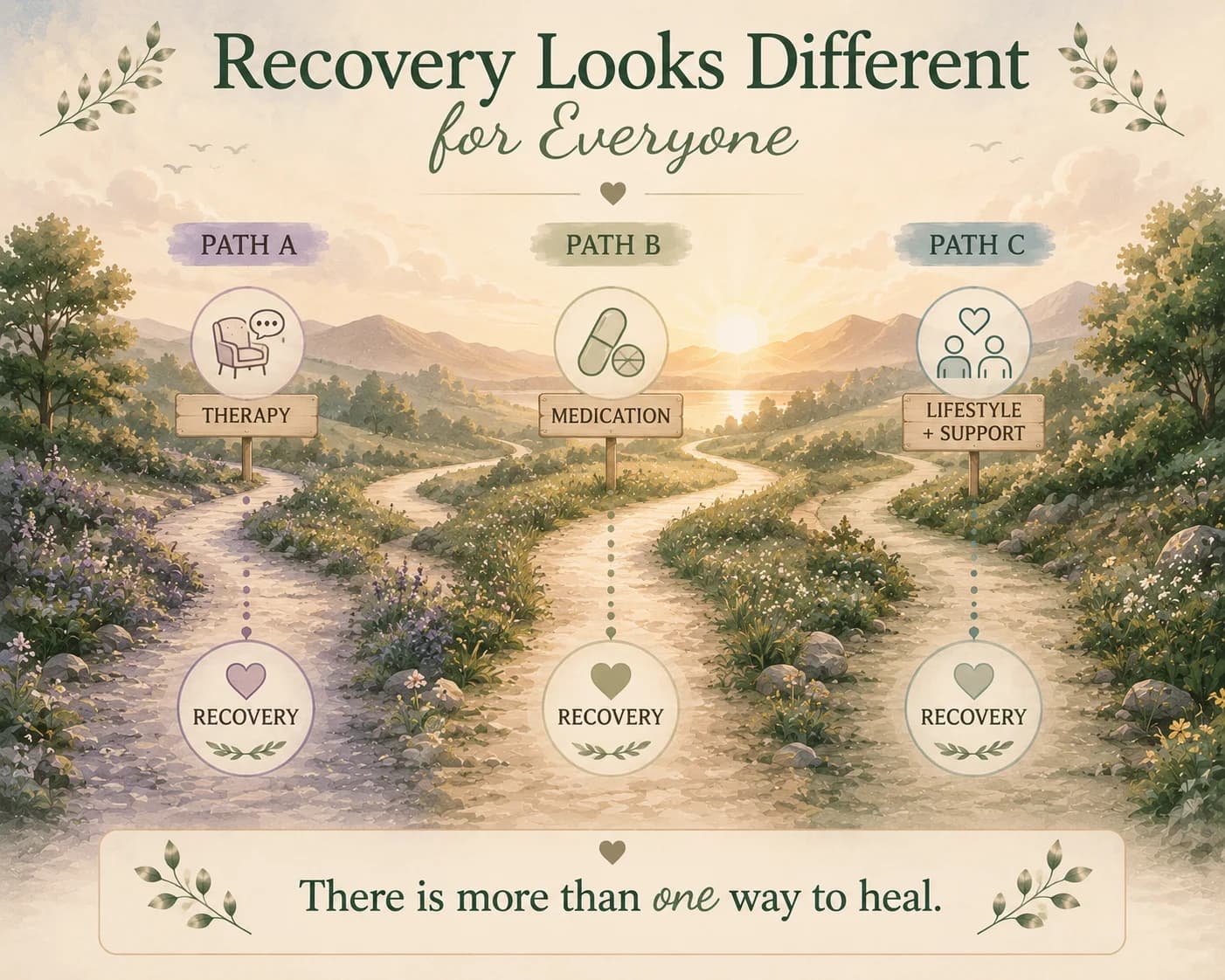
There's no single, universal recovery pathway. Some people improve most through therapy, others through medication, others through behavioural activation, exercise, or rebuilding relationships. Most people recover through some combination of several of these at once.
Think of it as building a toolbox rather than searching for one perfect key. Every healthy habit becomes another tool available for the harder days.
Hope Is Supported by Evidence
The strongest finding across decades of depression research is a simple one: people recover. Not at the same speed, and not by the same route, but recovery is a well-documented, realistic outcome. Every healthy choice gives the brain another opportunity to heal.
References
-
World Health Organization. Depressive disorder (depression). Fact sheet, updated 29 August 2025.
-
American Psychiatric Association. (2022). Diagnostic and Statistical Manual of Mental Disorders (5th ed., text rev.; DSM-5-TR).
-
Malhi, G. S., & Mann, J. J. (2018). Depression. The Lancet, 392(10161), 2299–2312.
-
Plasticity of synapses and reward circuit function in the genesis and treatment of depression. (2022). Neuropsychopharmacology.
-
Beck, A. T. (1979). Cognitive Therapy of Depression. Guilford Press.
-
Cuijpers, P., Miguel, C., Harrer, M., Plessen, C. Y., Ciharova, M., Ebert, D., & Karyotaki, E. (2023). Cognitive behavior therapy vs. control conditions, other psychotherapies, pharmacotherapies and combined treatment for depression. World Psychiatry, 22(1), 105–115.
-
National Institute for Health and Care Excellence. (2022). Depression in adults: treatment and management (NG222).
-
American Psychological Association. (2019). Clinical Practice Guideline for the Treatment of Depression Across Three Age Cohorts.
-
Beck, J. S. (2020). Cognitive Behavior Therapy: Basics and Beyond (3rd ed.). Guilford Press.
-
Hayes, S. C., Luoma, J. B., Bond, F. W., Masuda, A., & Lillis, J. (2006). Acceptance and commitment therapy: Model, processes and outcomes. Behaviour Research and Therapy, 44(1), 1–25.
-
The optimal type and dose of exercise for elevating brain-derived neurotrophic factor levels in patients with depression: a systematic review with pairwise, network, and dose–response meta-analyses. (2024). Depression and Anxiety.
-
Self-compassion and psychological distress: a meta-analysis. (2024). [systematic review].