Introduction
"What if it comes back?" is one of the most common fears once someone starts to feel better. It's a reasonable one. Depression does recur for many people, and research following patients over time has found that the risk of a further episode rises with each previous one [26]. But recurrence is not inevitable, and there are well-established strategies that meaningfully lower the risk.
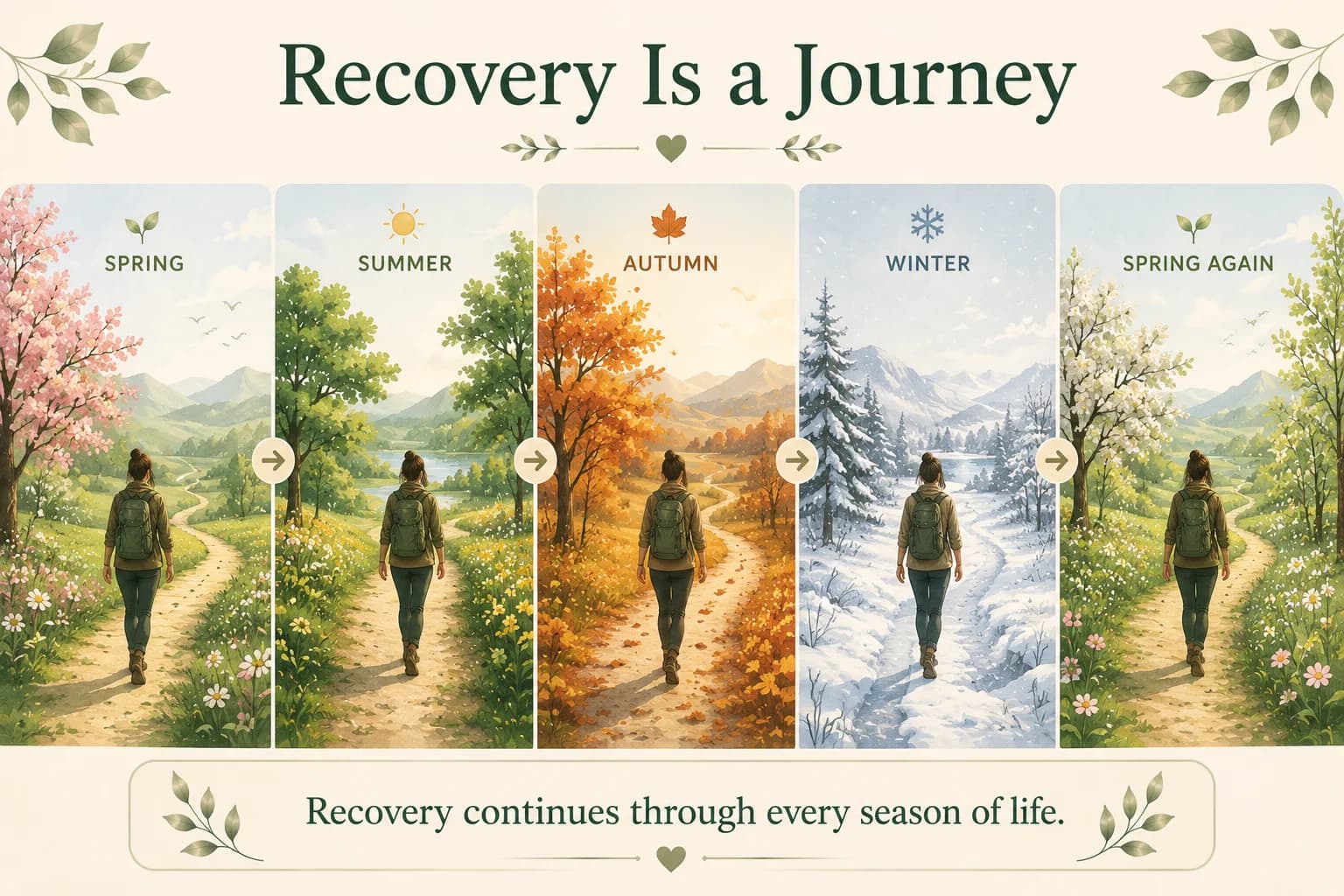
Recovery was never a guarantee that life stops being difficult. It's the accumulation of knowledge, habits and support that change how you respond when difficulty does arrive. Think of it the way you'd think about physical fitness: you don't exercise once and stay fit forever. You keep tending to it. Mental wellbeing works much the same way.
Recovery Is Not Perfection
A common misconception is that relapse begins with a single bad day. It doesn't. Stress, sadness, disappointment, grief, tiredness and low motivation are ordinary parts of being human. The real skill in recovery is learning to tell the difference between "I'm having a difficult day" and "my depression may be returning." Making that distinction reduces unnecessary fear while keeping you alert to genuine warning signs.
Know Your Personal Early Warning Signs
Depression rarely arrives overnight; it tends to build gradually. Early warning signs vary person to person, but often include sleeping much more or less, cancelling plans, withdrawing from friends, losing interest in hobbies, constant exhaustion, neglecting self-care, rising self-criticism, poor concentration, appetite changes, or a growing sense of hopelessness. Learning your own particular pattern is one of the most effective relapse-prevention skills available.
The Green, Yellow and Red Zone Approach
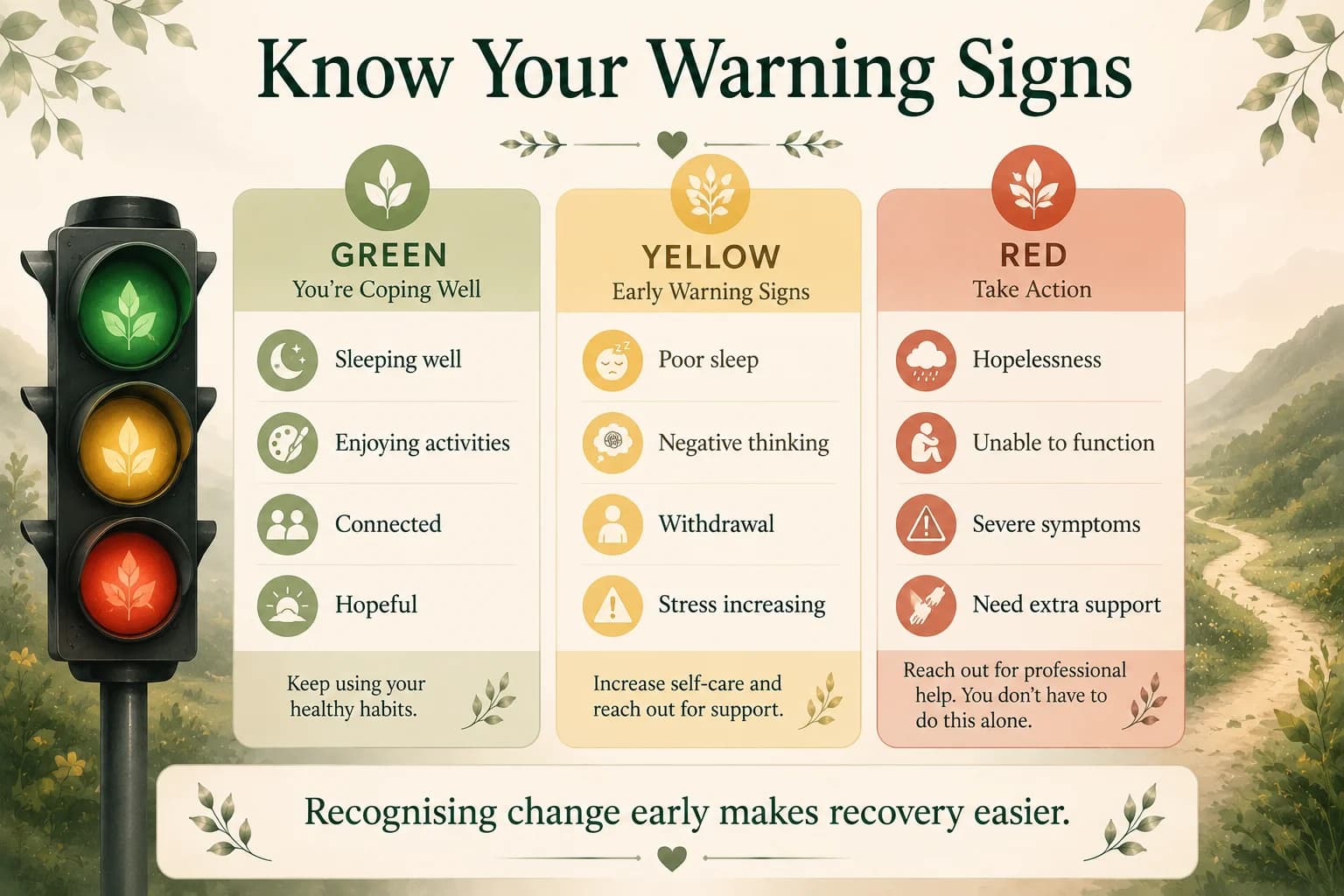
Many clinicians find it useful to frame recovery in three zones.
Green Zone: coping well, healthy routines intact, staying connected, mood relatively stable, still using the skills you've built.
Yellow Zone: early warning signs showing up, poor sleep, more negative thinking, reduced motivation, avoiding people, rising stress. This is the moment to increase self-care, not wait for things to worsen.
Red Zone: symptoms intensifying, daily functioning becoming difficult, hopelessness increasing. This is when professional support matters. Seeking it is a strength, not a failure.
Protect the Habits That Protect You
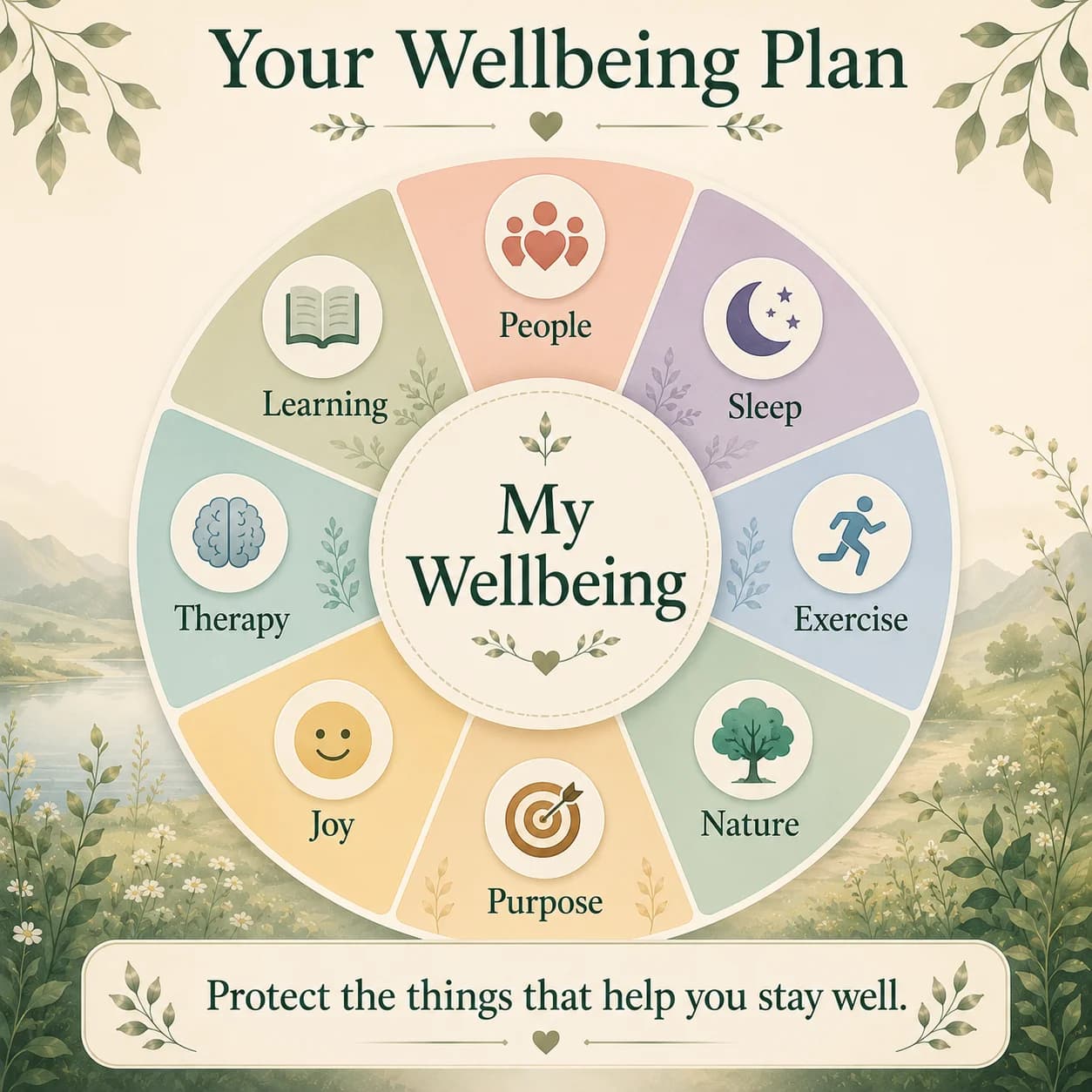
A common question during recovery is "when can I stop doing all this?" The honest answer mirrors physical health: the habits that helped you recover, regular sleep, movement, balanced nutrition, meaningful activity, social connection, time outdoors, relaxation, therapy when needed, are usually the same habits that keep you well [15]. Over time, they stop being "treatment" and become simply how you live.
Stress Does Not Always Cause Relapse
Stress raises vulnerability, but it doesn't automatically cause depression on its own. What tends to matter more is the surrounding context: coping skills, support, self-awareness, established recovery habits, and a willingness to ask for help early. You can't eliminate stress from life. You can build your capacity to recover from it.
Build Your Personal Wellbeing Plan
Worth writing down: What helps me feel like myself? What usually makes things worse? Who notices changes before I do? Who can I contact? What activities restore me? What reminders help when I forget how far I've come? Answering these in advance creates a personal reference point for harder days.
Continue Doing Things That Matter
Recovery isn't only about reducing symptoms, it's about building a life worth protecting. Continued investment in relationships, learning, hobbies, creativity, volunteering, spirituality, nature, physical health and purpose all contribute to resilience, not as extras, but as part of what keeps depression from having the last word.
Be Careful of the Inner Critic
The inner critic doesn't necessarily disappear with recovery. It may still say "you should be over this," "you've failed," "you've gone backwards." Recovery's answer: I've had difficult days before. My progress still counts. I know what helps. I don't have to do this perfectly. Compassion isn't only useful during depression itself, it actively protects recovery afterward.
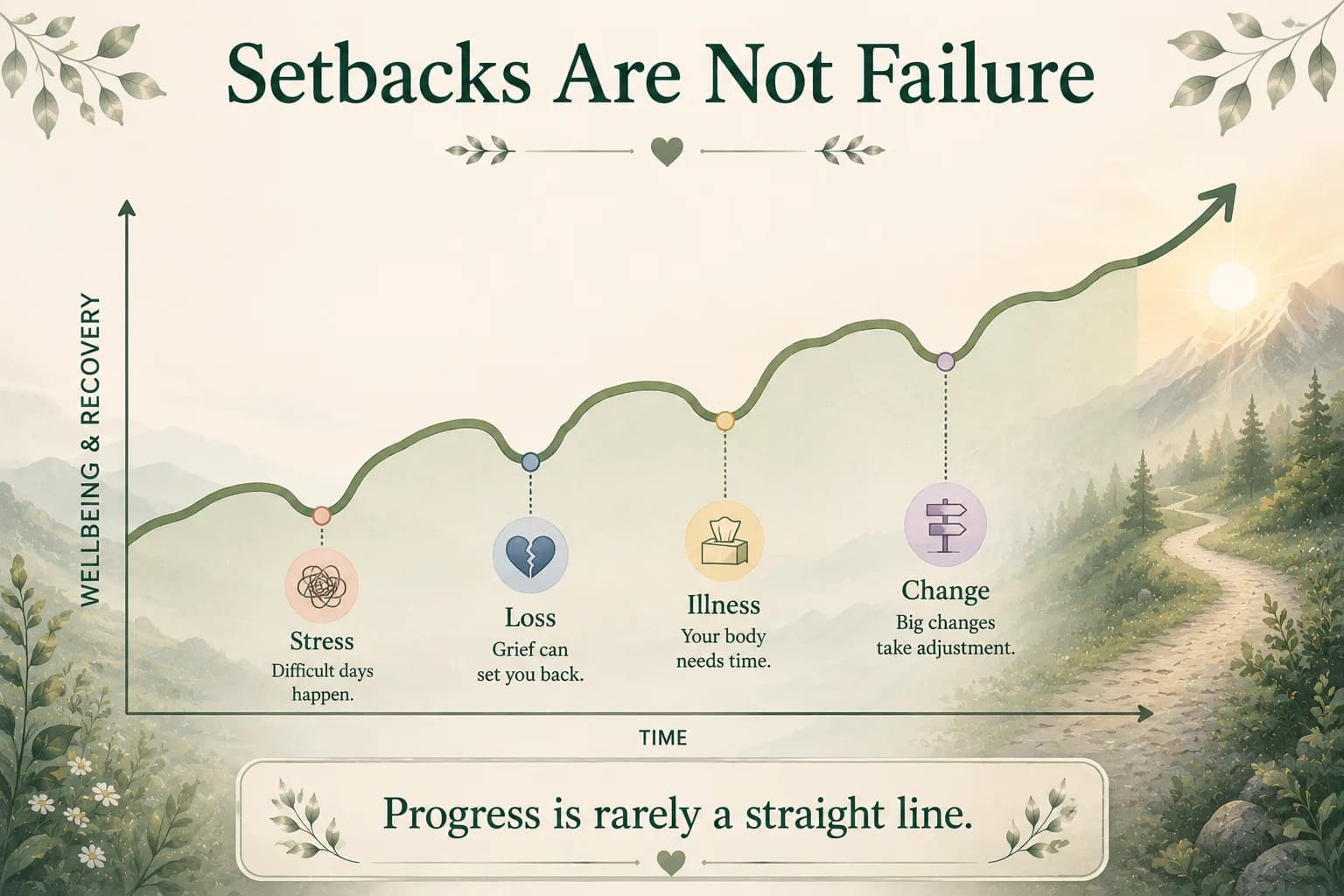
Setbacks Are Part of Recovery
Missing one piano practice doesn't erase what's already been learned. A setback, a hard week, added stress, returning symptoms, needing extra support, works the same way. It doesn't undo months or years of progress. Progress accumulates; it doesn't reset.
When Should You Ask for Help Again?
Reach out sooner rather than later if symptoms persist for two weeks or more, daily functioning worsens, sleep changes significantly, hopelessness increases, suicidal thoughts return, or strategies that used to help stop working. Earlier intervention is consistently linked to better outcomes [15][26]. There's no advantage to waiting until things become unbearable.
Recovery Can Become Your New Normal
Many people eventually notice something unexpected: they've stopped thinking about depression every day. Life becomes larger than the illness. Stress and hard weeks still happen, but depression is no longer running the show. Recovery becomes part of identity, not because the illness vanished entirely, but because confidence in navigating life has grown stronger than it.

Conclusion
Recovery isn't measured by never falling. It's measured by learning how to stand again. The aim was never to become a perfect person, it's to become a resilient one, and resilience is built through practice: one day, one choice, one act of self-compassion at a time.
References
-
World Health Organization. Depressive disorder (depression). Fact sheet, updated 29 August 2025.
-
National Institute for Health and Care Excellence. (2022). Depression in adults: treatment and management (NG222).
-
American Psychological Association. (2019). Clinical Practice Guideline for the Treatment of Depression Across Three Age Cohorts.
-
Solomon, D. A., Keller, M. B., Leon, A. C., Mueller, T. I., Lavori, P. W., Shea, M. T., Coryell, W., Warshaw, M., Turvey, C., Maser, J. D., & Endicott, J. (2000). Multiple recurrences of major depressive disorder. American Journal of Psychiatry, 157(2), 229–233; see also Biesheuvel-Leliefeld, K. E. M., Kok, G. D., Bockting, C. L. H., Cuijpers, P., Hollon, S. D., van Marwijk, H. W. J., & Smit, F. (2015). Effectiveness of psychological interventions in preventing recurrence of depressive disorder. Journal of Affective Disorders, 174, 400–410.
-
Segal, Z. V., Williams, J. M. G., & Teasdale, J. D. (2018). Mindfulness-Based Cognitive Therapy for Depression (2nd ed.). Guilford Press.