Explora la biblioteca
Recursos que coinciden
Preparado para el volumen actual y para crecer sin agregar más ruido arriba.
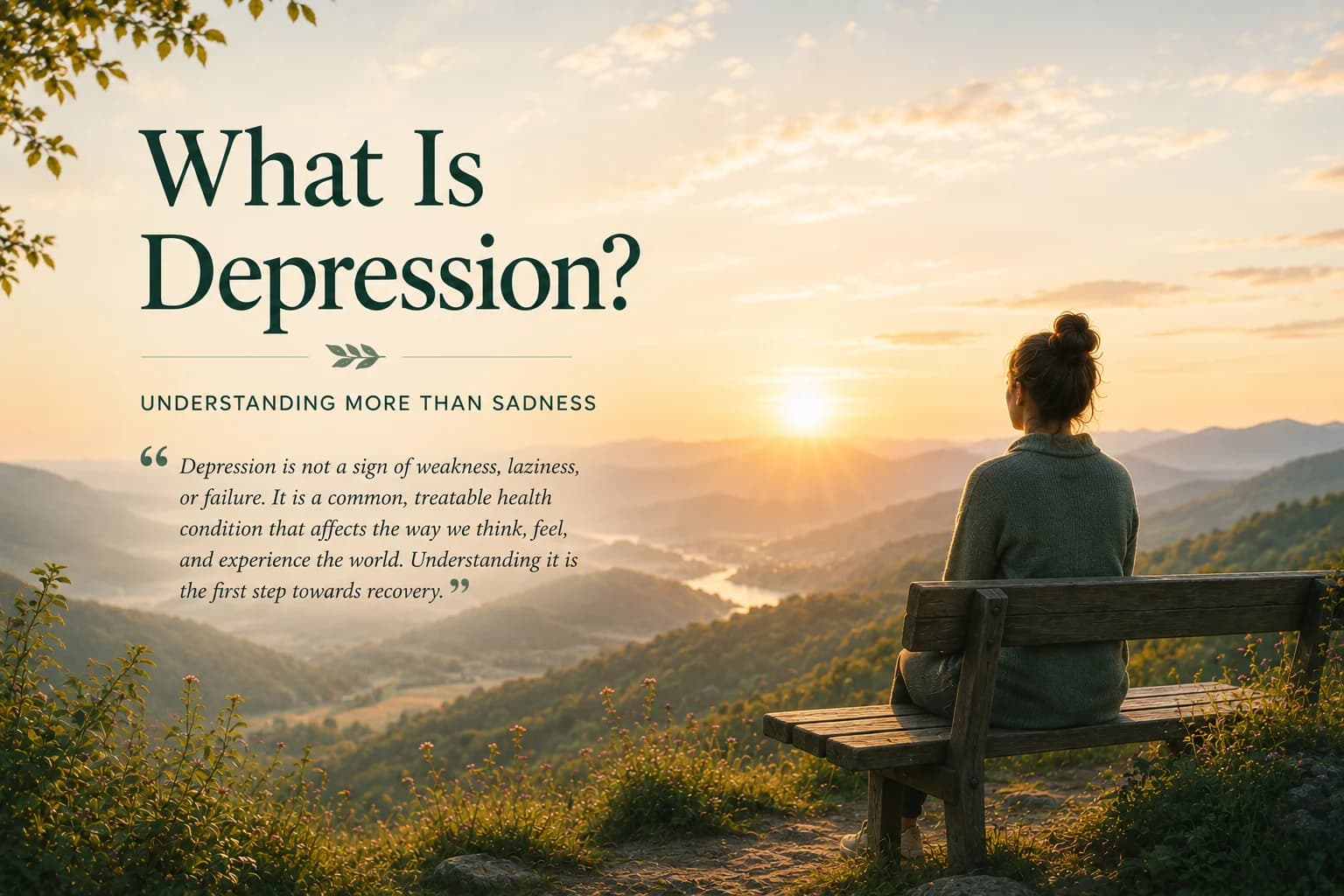
Parte 1: ¿Qué es la depresión? Entender que es más que tristeza
Una introducción en lenguaje claro a la depresión como una condición de salud frecuente y tratable que afecta el estado de ánimo, el cuerpo, el pensamiento y la percepción.
Mejor para
Útil para entender la depresión como algo más que tristeza, incluido por qué aparece y por qué la recuperación es realista.
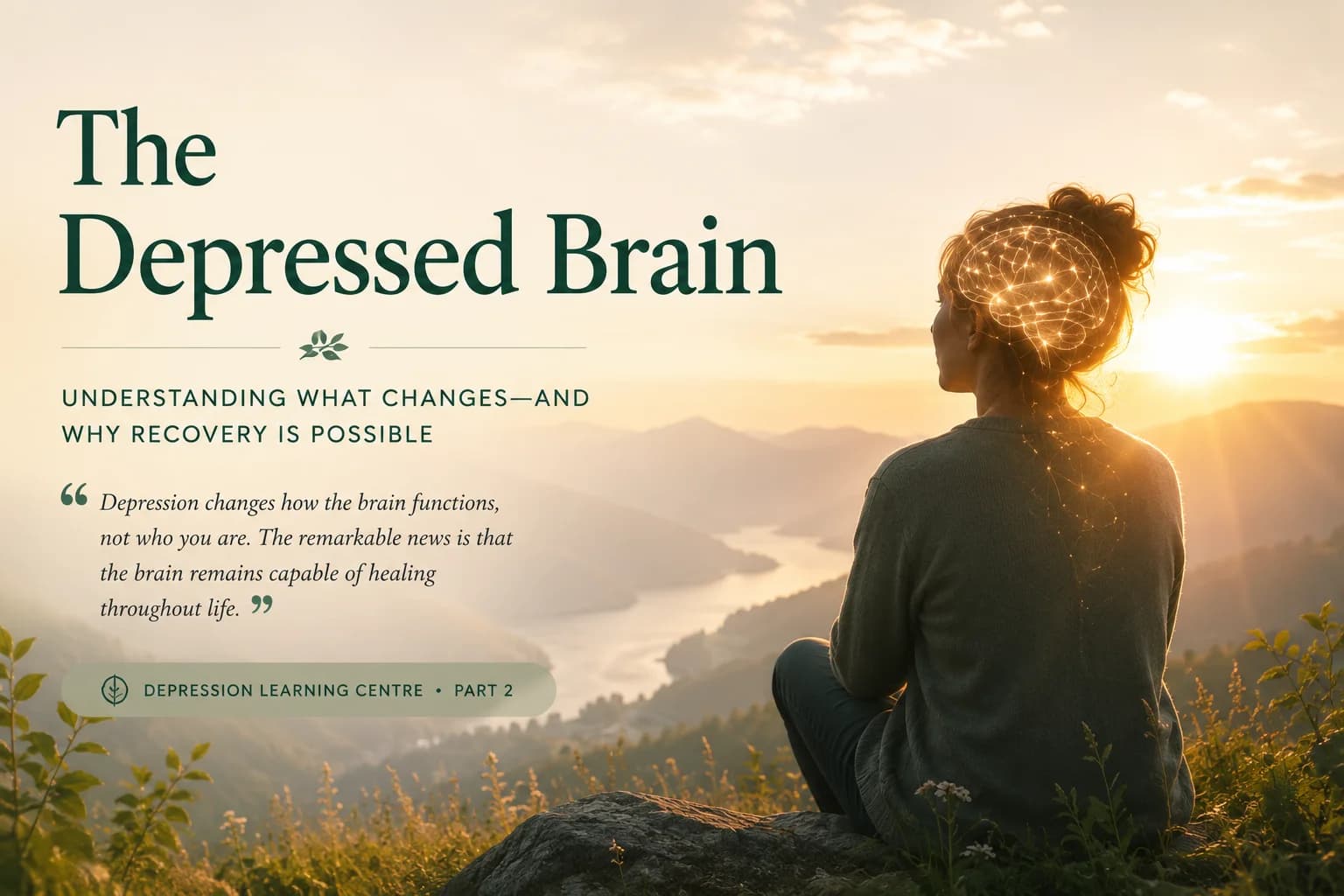
Parte 2: El cerebro deprimido: entender qué cambia — y por qué la recuperación es posible
Una explicación accesible de cómo la depresión afecta las redes cerebrales, el sistema de recompensa, las hormonas del estrés y la neuroplasticidad.
Mejor para
Útil para entender qué cambia en el cerebro deprimido y por qué la recuperación sigue siendo posible.
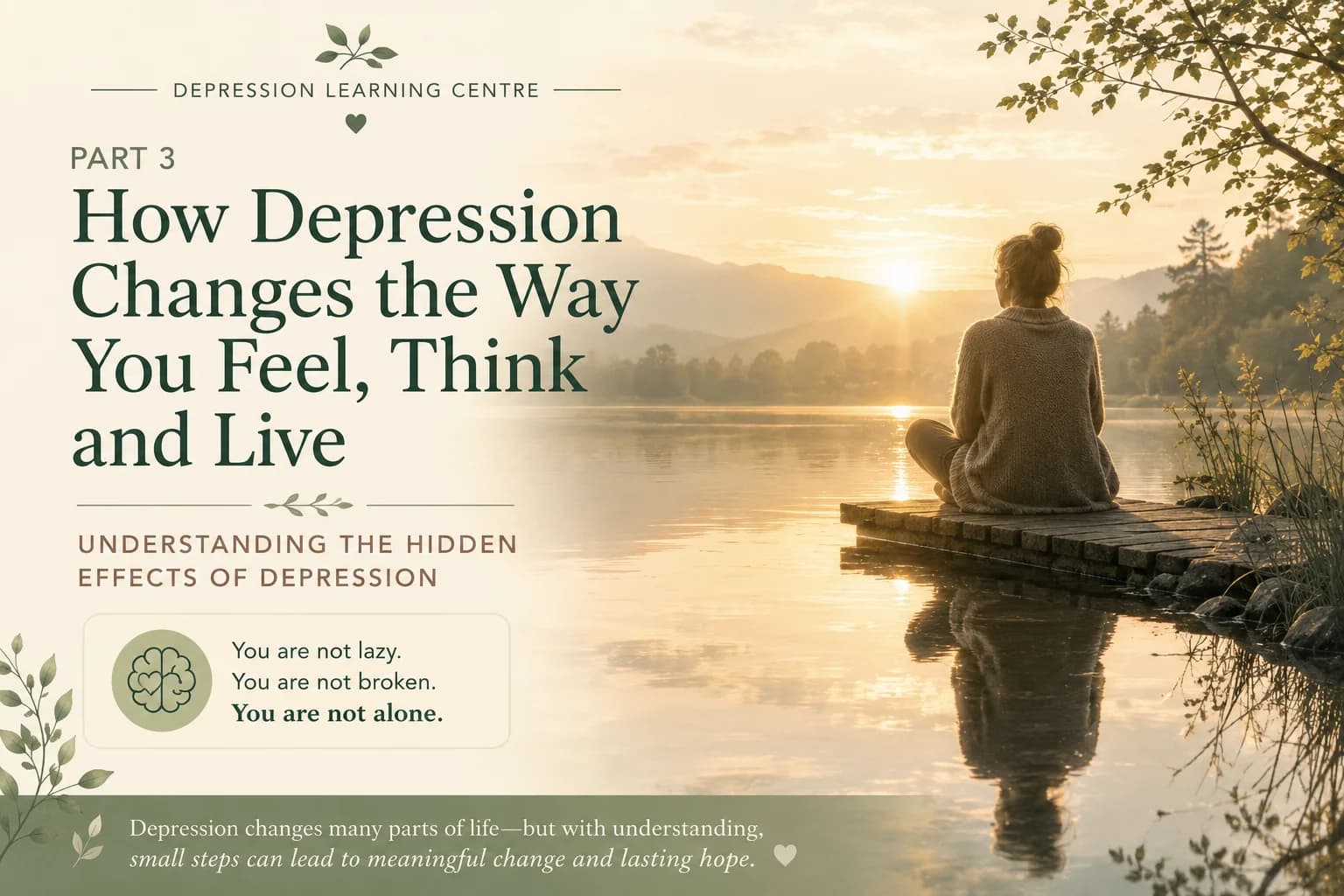
Parte 3: Cómo la depresión cambia la forma en que sientes, piensas y vives: entender los efectos ocultos de la depresión
Una guía sobre los efectos ocultos de la depresión y por qué los cambios en el pensamiento, las emociones, la conducta y la conexión son síntomas, no fallas personales.
Mejor para
Útil para reconocer cómo la depresión afecta los pensamientos, las emociones, la motivación, el cuerpo, las relaciones y la identidad.

Parte 4: Tratamientos basados en la evidencia para la depresión: la recuperación es posible — y hay muchas formas de lograrla
Un panorama de los caminos de recuperación de la depresión, incluidos la terapia cognitivo-conductual, la activación conductual, la medicación, los hábitos de vida, el apoyo y la autocompasión.
Mejor para
Útil para entender los tratamientos de la depresión basados en la evidencia: terapia, medicación, estilo de vida, conexión y autocompasión.
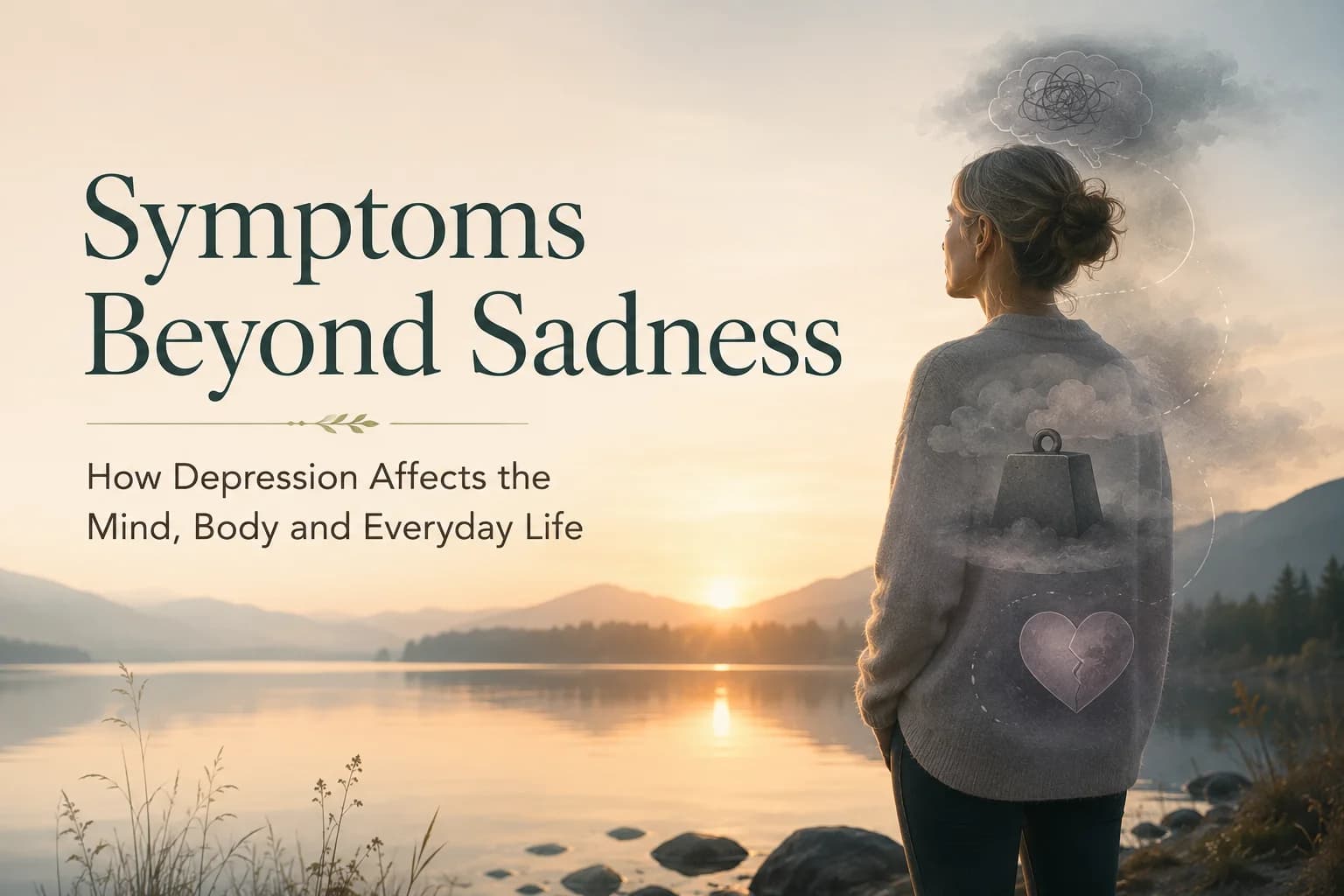
Parte 5: Síntomas más allá de la tristeza: cómo la depresión afecta la mente, el cuerpo y la vida cotidiana
Una guía centrada en los síntomas sobre las muchas formas en que la depresión puede aparecer en el ánimo, el pensamiento, el cuerpo, el sueño, el apetito, la conducta y la identidad.
Mejor para
Útil para entender los muchos síntomas de la depresión: emocionales, cognitivos, físicos, sexuales, conductuales y ocultos.
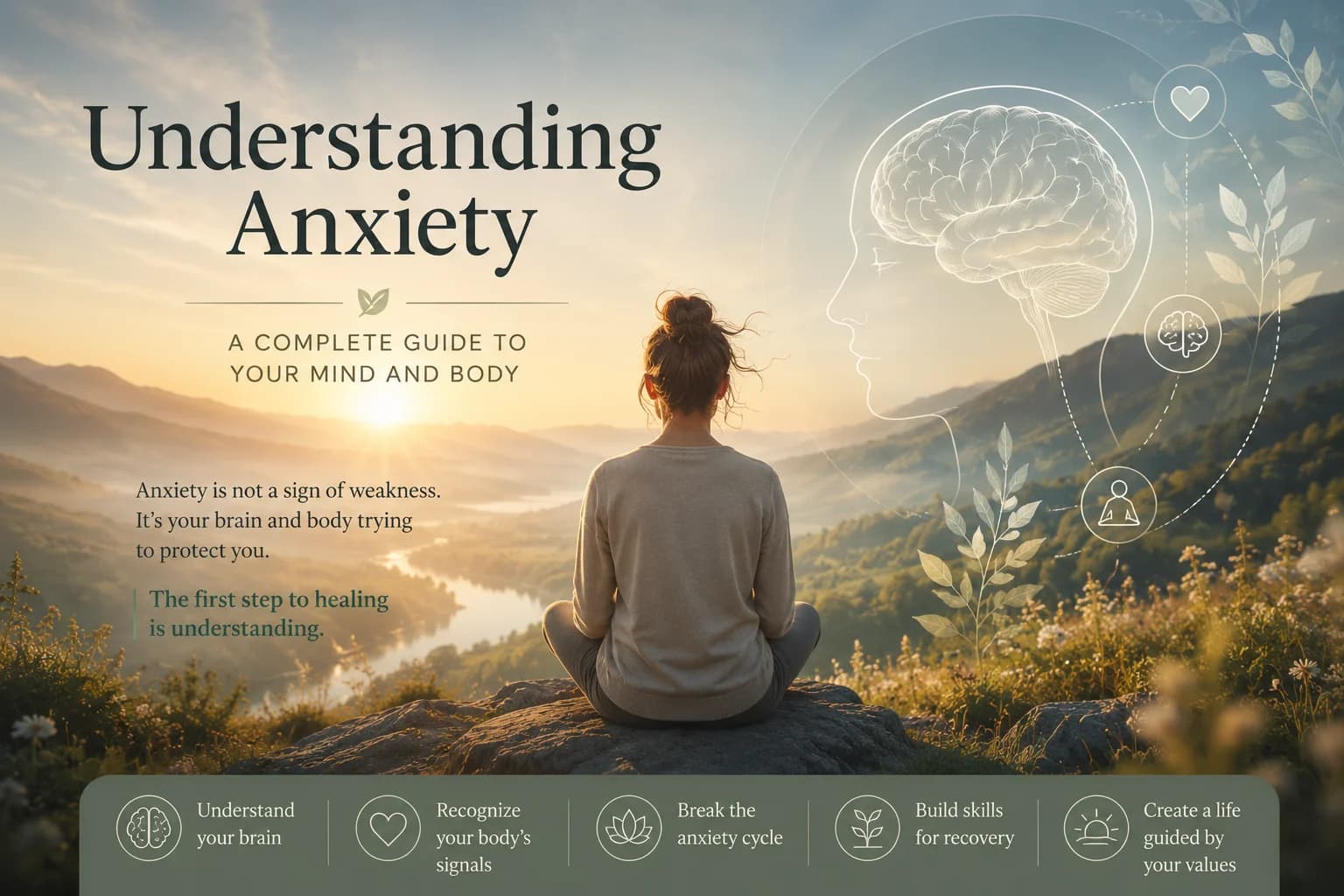
Parte 1: ¿Qué es la ansiedad y por qué ocurre?
Una introducción clara a la ansiedad como sistema de alarma protector, incluida la diferencia entre miedo y ansiedad, y por qué el cerebro puede responder a la incertidumbre como si fuera peligro.
Mejor para
Útil para entender qué es la ansiedad, por qué aparece y cómo el sistema de alarma del cerebro puede volverse demasiado protector.
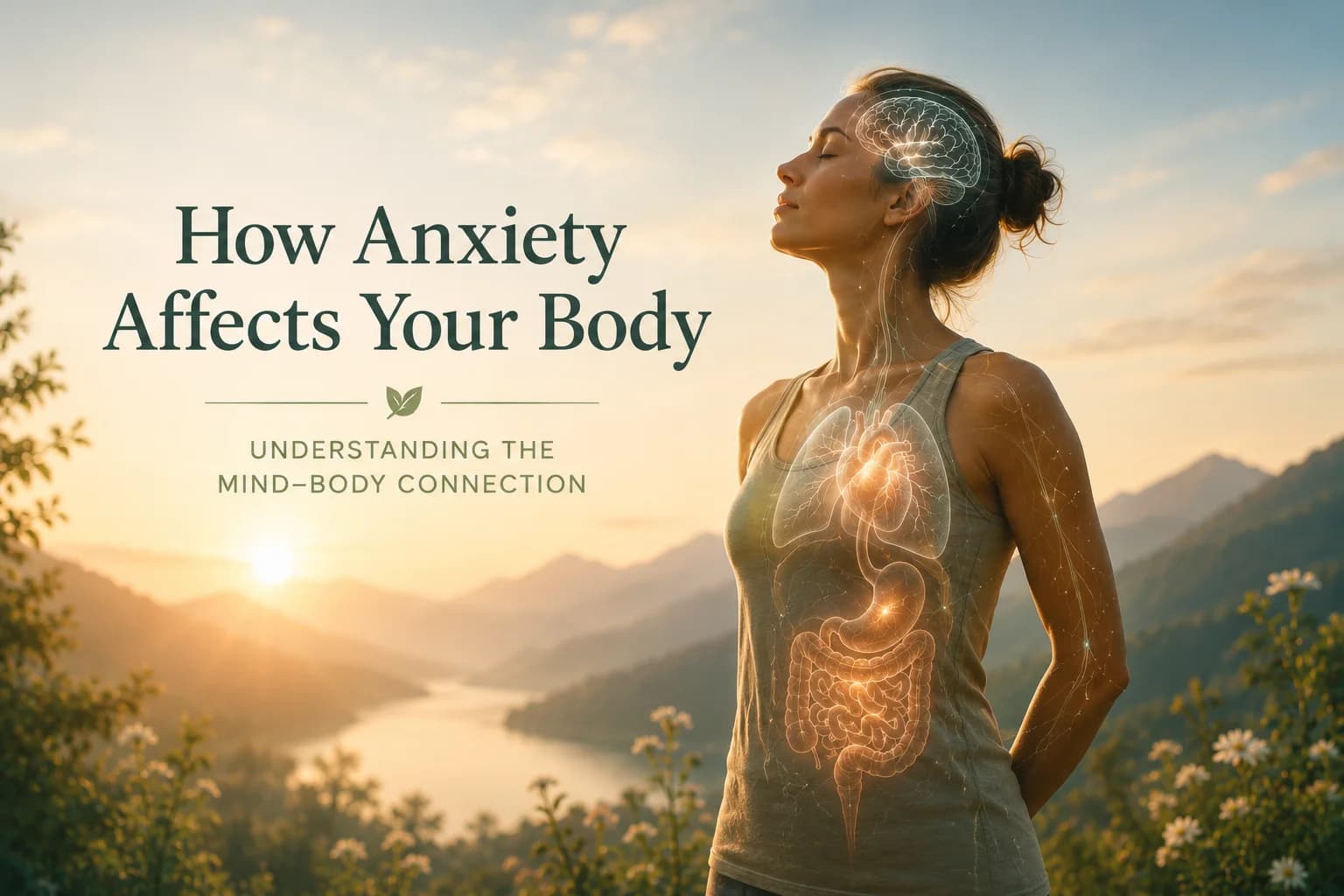
Parte 2: Reconocer los síntomas de la ansiedad
Una guía práctica sobre cómo la ansiedad puede afectar los pensamientos, las emociones, la conducta y el cuerpo, y por qué sus síntomas pueden sentirse tan físicos.
Mejor para
Útil para reconocer síntomas emocionales, cognitivos, físicos y conductuales de ansiedad sin asumir que algo está mal contigo.
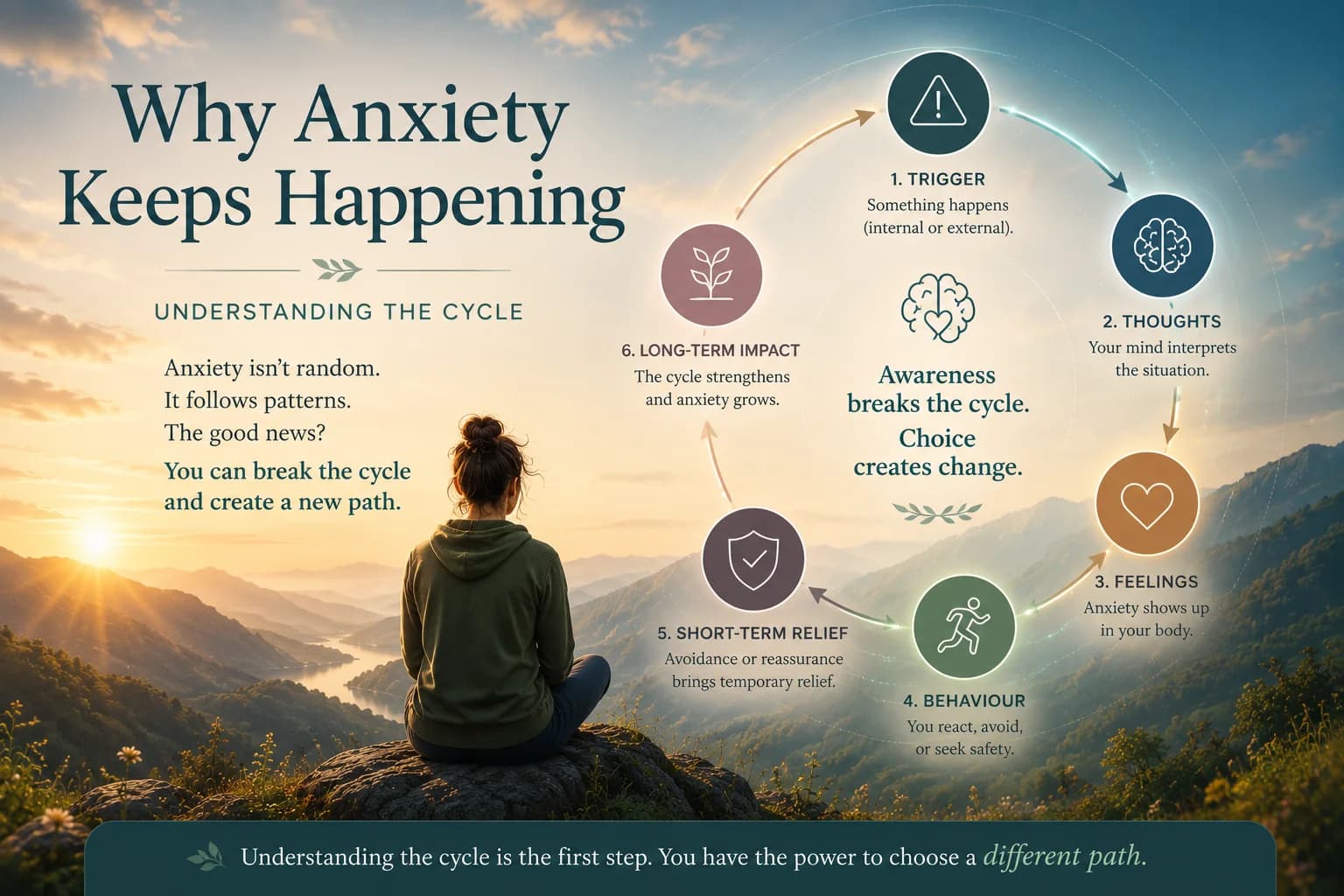
Parte 3: Por qué la ansiedad se siente tan real: entender el ciclo de la ansiedad
Una explicación sencilla del ciclo de ansiedad, la evitación, las conductas de seguridad y cómo el cerebro aprende poco a poco que está a salvo mediante nuevas experiencias.
Mejor para
Útil para entender por qué la ansiedad parece tan real y cómo evitar situaciones puede enseñar, sin querer, al cerebro a seguir teniendo miedo.
Parte 4: Comprender los diferentes tipos de trastornos de ansiedad
Un panorama de patrones frecuentes de trastornos de ansiedad y de lo que comparten: sobreestimar el peligro, subestimar la capacidad de afrontamiento y aprender algo nuevo.
Mejor para
Útil para comprender distintos patrones de ansiedad, como ansiedad generalizada, pánico, ansiedad social, ansiedad por la salud, fobias, ansiedad por separación y agorafobia.

Parte 5: Cómo afecta la ansiedad al cuerpo: por qué los síntomas físicos se sienten tan reales
Una explicación centrada en el cuerpo sobre los síntomas de ansiedad, las hormonas del estrés, la conexión intestino-cerebro y cómo su interpretación puede hacer que las sensaciones asusten.
Mejor para
Útil para entender las palpitaciones, la opresión en el pecho, los síntomas estomacales, los mareos, el hormigueo y otras sensaciones físicas de ansiedad.

Parte 6: Tratamientos para la ansiedad basados en la evidencia: ¿qué funciona de verdad?
Un panorama equilibrado de tratamientos y apoyos para la ansiedad, como la TCC, la terapia de exposición, la ACT, la atención plena, los medicamentos, los hábitos y los pasos pequeños y repetidos.
Mejor para
Útil para comparar apoyos para la ansiedad basados en evidencia, como TCC, terapia de exposición, ACT, atención plena, medicamentos y cambios de hábitos.
Centro de Aprendizaje · /es/recursos
Empieza con lo que estás enfrentando y elige el siguiente paso útil
El Centro de Aprendizaje de Jenora organiza recursos de recuperación, salud mental y apoyo práctico alrededor de necesidades reales. Los formatos siguen disponibles, pero ya no son el punto de partida.
Empieza aquí
¿Con qué necesitas ayuda?
Estos son grupos públicos de temas. El contenido conserva temas internos más específicos para búsqueda, recursos relacionados, rutas y crecimiento futuro.
Navegación secundaria
Refinar por formato
Los formatos ayudan cuando la necesidad ya está clara. No son la arquitectura principal.
Mostrando 11 recursos
Ruta
Volver a casa después de rehab
Una ruta secuenciada formada con recursos existentes. Cada paso conserva su URL pública actual.
Paso 1 · Comprender
¿Qué pasa el primer fin de semana después de salir de rehabilitación?
See what the first weekend home usually looks like, so nothing catches you off guard.
Abrir pasoPaso 2 · Preparar
Lista de verificación de Jenora para las primeras 72 horas en casa
Walk through the first 72 hours with a simple checklist.
Abrir pasoPaso 3 · Planificar
Planificador de Jenora para mi primera semana en casa
Plan mornings, daytime, and evenings for the week ahead.
Abrir pasoPaso 4 · Conectar
Mi plan de apoyo y seguridad de Jenora
Decide now who and what will help if things get hard.
Abrir pasoPaso 5 · Reflexionar
Revisión de Jenora de mi primera semana
Look back at the first week and adjust without judging yourself.
Abrir pasoPaso 6 · Continuar
Encontrar tu ritmo después de la rehabilitación
Keep building a routine that can actually hold up.
Abrir pasoExplore the Understanding Depression Series
An eight-part plain-language series about what depression is, how it affects the brain, body, motivation, and identity, and how recovery can be rebuilt through evidence-based support and small steps.
Parte 1: ¿Qué es la depresión? Entender que es más que tristeza
Una introducción en lenguaje claro a la depresión como una condición de salud frecuente y tratable que afecta el estado de ánimo, el cuerpo, el pensamiento y la percepción.
Parte 2: El cerebro deprimido: entender qué cambia — y por qué la recuperación es posible
Una explicación accesible de cómo la depresión afecta las redes cerebrales, el sistema de recompensa, las hormonas del estrés y la neuroplasticidad.
Parte 3: Cómo la depresión cambia la forma en que sientes, piensas y vives: entender los efectos ocultos de la depresión
Una guía sobre los efectos ocultos de la depresión y por qué los cambios en el pensamiento, las emociones, la conducta y la conexión son síntomas, no fallas personales.
Parte 4: Tratamientos basados en la evidencia para la depresión: la recuperación es posible — y hay muchas formas de lograrla
Un panorama de los caminos de recuperación de la depresión, incluidos la terapia cognitivo-conductual, la activación conductual, la medicación, los hábitos de vida, el apoyo y la autocompasión.
Parte 5: Síntomas más allá de la tristeza: cómo la depresión afecta la mente, el cuerpo y la vida cotidiana
Una guía centrada en los síntomas sobre las muchas formas en que la depresión puede aparecer en el ánimo, el pensamiento, el cuerpo, el sueño, el apetito, la conducta y la identidad.
Explore the Understanding Anxiety Series
An eight-part plain-language series about what anxiety is, how it affects the mind and body, why it can feel so convincing, and how recovery grows through evidence-based skills and small daily steps.
Parte 1: ¿Qué es la ansiedad y por qué ocurre?
Una introducción clara a la ansiedad como sistema de alarma protector, incluida la diferencia entre miedo y ansiedad, y por qué el cerebro puede responder a la incertidumbre como si fuera peligro.
Parte 2: Reconocer los síntomas de la ansiedad
Una guía práctica sobre cómo la ansiedad puede afectar los pensamientos, las emociones, la conducta y el cuerpo, y por qué sus síntomas pueden sentirse tan físicos.
Parte 3: Por qué la ansiedad se siente tan real: entender el ciclo de la ansiedad
Una explicación sencilla del ciclo de ansiedad, la evitación, las conductas de seguridad y cómo el cerebro aprende poco a poco que está a salvo mediante nuevas experiencias.
Parte 4: Comprender los diferentes tipos de trastornos de ansiedad
Un panorama de patrones frecuentes de trastornos de ansiedad y de lo que comparten: sobreestimar el peligro, subestimar la capacidad de afrontamiento y aprender algo nuevo.
Parte 5: Cómo afecta la ansiedad al cuerpo: por qué los síntomas físicos se sienten tan reales
Una explicación centrada en el cuerpo sobre los síntomas de ansiedad, las hormonas del estrés, la conexión intestino-cerebro y cómo su interpretación puede hacer que las sensaciones asusten.
Parte 6: Tratamientos para la ansiedad basados en la evidencia: ¿qué funciona de verdad?
Un panorama equilibrado de tratamientos y apoyos para la ansiedad, como la TCC, la terapia de exposición, la ACT, la atención plena, los medicamentos, los hábitos y los pasos pequeños y repetidos.